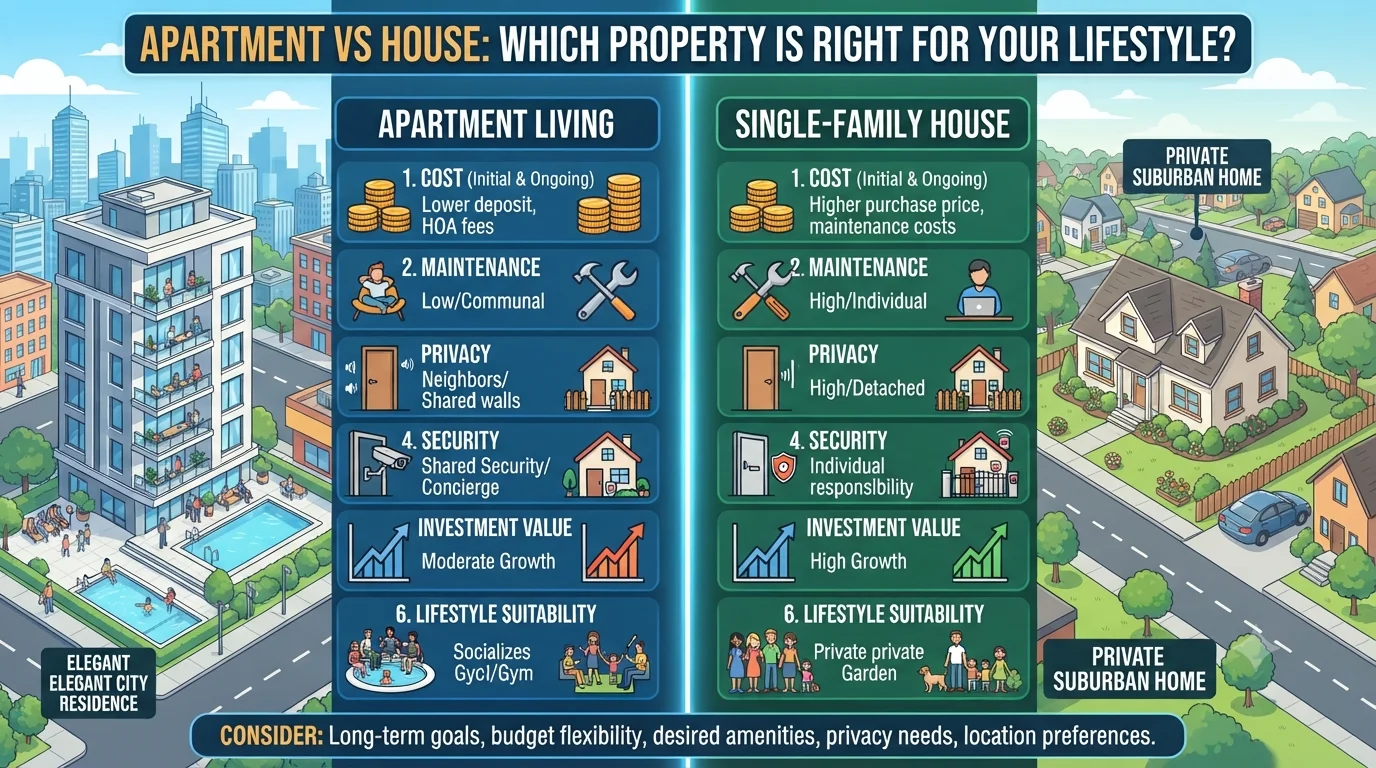
The debate surrounding apartment vs house goes far beyond square footage. It involves finances, maintenance responsibilities, long-term investment potential, security, privacy, daily convenience, and personal preferences. There is no universally “better” option. Instead, the best choice depends on your lifestyle, budget, future goals, and expectations.
Many buyers begin their search asking questions such as:
- Should I choose an apartment or a house?
- Is buying an apartment a better investment?
- Is buying a house worth the extra cost?
- Which property appreciates faster?
- Which option requires less maintenance?
This guide answers those questions by comparing apartments and houses from every major perspective, helping you make a confident and informed decision.
read more about house vs villa
Understanding the Difference Between Apartments and Houses
Before comparing the advantages and disadvantages, it’s important to understand the basic distinction.
What Is an Apartment?
An apartment is an individual residential unit located within a larger building shared by multiple owners or tenants.
Apartment buildings often include shared facilities such as:
- Elevators
- Parking garages
- Security services
- Swimming pools
- Gyms
- Gardens
- Children’s play areas
- Reception areas
Owners typically pay monthly maintenance or homeowners’ association (HOA) fees to maintain these shared amenities.
What Is a House?
A house is a standalone residential property built on its own piece of land.
Unlike apartments, homeowners generally have full responsibility for maintaining:
- Roof
- Exterior walls
- Garden
- Driveway
- Utilities
- Fencing
- Landscaping
Houses offer greater independence but also require greater responsibility.
Apartment vs House: Quick Overview
| Feature | Apartment | House |
|---|---|---|
| Purchase Price | Usually Lower | Usually Higher |
| Maintenance | Low | High |
| Privacy | Moderate | Excellent |
| Outdoor Space | Limited | Large |
| Security | High | Depends on Location |
| Monthly Costs | HOA Fees | Maintenance Costs |
| Investment Potential | Strong in Cities | Strong Long Term |
| Flexibility | Good | Excellent |
| Family Space | Limited | Larger |
| Customization | Restricted | Extensive |
Purchase Cost Comparison
Price is often the first consideration.
Buying an Apartment
In most cities, buying an apartment requires a lower initial investment.
Advantages include:
- Smaller down payment
- Lower purchase price
- Reduced closing costs
- Easier mortgage qualification
This makes apartments attractive for:
- First-time buyers
- Young professionals
- Small families
- Retirees
Buying a House
Buying a house generally involves:
- Higher purchase price
- Larger down payment
- Higher insurance costs
- Larger mortgage payments
However, buyers often receive:
- More land
- More living space
- Better long-term flexibility
Although houses require greater financial commitment, they may provide greater long-term value.
Monthly Ownership Costs
Purchase price is only one part of ownership.
Ongoing expenses differ significantly.
Apartment Costs
Owners usually pay:
- HOA fees
- Building maintenance fees
- Shared utility expenses
- Parking fees
These predictable costs simplify budgeting.
House Costs
Homeowners must cover:
- Roof repairs
- Exterior maintenance
- Landscaping
- Plumbing repairs
- Driveway maintenance
- Fence repairs
- Pest control
Unexpected maintenance expenses can become substantial.
read more about pet-friendly home
Maintenance Responsibilities
Maintenance is one of the biggest differences in the apartment vs house comparison.
Apartment Maintenance
Most exterior maintenance is handled by property management.
Typical responsibilities include:
- Elevator servicing
- Hallway cleaning
- Exterior painting
- Landscaping
- Snow removal
- Security systems
Owners mainly maintain the interior of their unit.
House Maintenance
House owners manage everything.
Responsibilities include:
- Roof inspections
- HVAC servicing
- Lawn care
- Gutter cleaning
- Exterior painting
- Tree trimming
- Drainage systems
While houses provide independence, maintenance requires time and money.
Privacy Comparison
Privacy significantly affects daily living.
Apartment Privacy
Apartment residents typically share:
- Walls
- Ceilings
- Floors
- Hallways
- Parking areas
Noise from neighboring units may occasionally become an issue.
Privacy levels depend heavily on building construction.
House Privacy
Houses generally offer:
- Separate structures
- Private entrances
- Private yards
- Greater distance between neighbors
This creates a quieter and more private environment.
For buyers prioritizing peace and personal space, houses often provide a better experience.
Outdoor Living Space
Outdoor space has become increasingly important.
Apartment Living
Outdoor options may include:
- Balcony
- Shared courtyard
- Rooftop terrace
- Community gardens
Space remains limited.
House Living
Homeowners often enjoy:
- Backyard
- Front yard
- Garden
- Patio
- Driveway
- Outdoor entertaining areas
Families with children and pets often prefer these additional spaces.
Security Considerations
Security remains a major deciding factor.
Apartment Security
Modern apartment buildings frequently include:
- Controlled entry
- Security cameras
- Reception staff
- Security guards
- Gated parking
- Intercom systems
Shared security reduces individual responsibility.
House Security
Security depends on:
- Neighborhood
- Alarm systems
- Fencing
- Outdoor lighting
- Cameras
- Smart locks
Although homeowners have greater control, they also assume greater responsibility.
Lifestyle Suitability
Choosing between apartment or house depends heavily on lifestyle.
Apartments Are Ideal For
- Young professionals
- Students
- Frequent travelers
- Couples
- Retirees
- Urban workers
Apartment living offers convenience and lower maintenance.
Houses Are Better For
- Large families
- Pet owners
- Garden enthusiasts
- Remote workers
- Long-term homeowners
Greater space supports more flexible lifestyles.
Investment Value
Both property types can generate strong returns.
Apartment Investment
Advantages include:
- Strong rental demand
- Lower purchase cost
- Easier property management
- Popular urban locations
City apartments often attract:
- Students
- Professionals
- Expats
This supports consistent rental income.
House Investment
Houses often appreciate because land increases in value over time.
Benefits include:
- Larger appreciation potential
- Development opportunities
- Expansion possibilities
- Higher resale prices
Location remains the most important factor.
Rental Income Potential
Investors should evaluate rental markets carefully.
Apartment Rentals
Often produce:
- Stable occupancy
- Lower maintenance
- Predictable expenses
High-density urban areas typically maintain strong demand.
House Rentals
May generate:
- Higher monthly rent
- Family tenants
- Longer lease periods
However, maintenance costs may also increase.
Customization Options
Customization differs significantly.
Apartment Restrictions
Owners often face HOA regulations regarding:
- Exterior modifications
- Balcony changes
- Windows
- Flooring
- Noise
- Renovations
Changes usually require approval.
House Flexibility
Homeowners may:
- Add rooms
- Build garages
- Install pools
- Expand kitchens
- Landscape gardens
- Remodel freely
This flexibility appeals to long-term owners.
Parking Comparison
Parking varies considerably.
Apartments
Parking may include:
- Underground garages
- Assigned spaces
- Shared parking
Additional vehicles may require extra fees.
Houses
Most houses include:
- Private driveways
- Garages
- Additional parking spaces
This offers greater convenience.
Space Comparison
Living space influences comfort.
| Feature | Apartment | House |
|---|---|---|
| Bedrooms | Usually 1–3 | Usually 2–6+ |
| Storage | Limited | Extensive |
| Outdoor Area | Balcony | Yard |
| Expansion | Rare | Possible |
| Parking | Shared | Private |
| Living Area | Smaller | Larger |
Resale Value Considerations
Resale depends on:
- Location
- Market conditions
- Property condition
- Neighborhood development
Generally:
Well-maintained apartments in desirable urban areas retain strong demand.
Well-located houses often appreciate significantly over long periods because of land ownership.
Neither option guarantees better resale value in every market.
Common Buyer Profiles
First-Time Buyer
Often chooses an apartment because:
- Lower cost
- Simpler maintenance
- Easier financing
Growing Family
Usually prefers a house for:
- Additional bedrooms
- Outdoor space
- Privacy
Retiree
May prefer an apartment because maintenance responsibilities decrease considerably.
Investor
May select either option depending on local rental demand and appreciation forecasts.
Common Mistakes Buyers Make
Many buyers focus only on purchase price.
Other important considerations include:
- Monthly maintenance costs
- Future family plans
- Commute time
- School districts
- Neighborhood growth
- Resale potential
- HOA regulations
- Long-term affordability
Considering these factors prevents costly mistakes.
Financial Planning Before Buying
Whether buying an apartment or buying a house, buyers should prepare carefully.
Recommended steps include:
- Determine a realistic budget
- Build emergency savings
- Compare mortgage options
- Calculate ongoing ownership costs
- Research neighborhoods
- Review future development plans
- Inspect the property thoroughly
Preparation reduces financial stress after purchase.
Choosing between an apartment and a house is not only about your current needs—it is also about your future. The property you buy today may influence your finances, lifestyle, family life, and investment returns for decades.
While the first part of this guide explained the fundamental differences in the apartment vs house debate, this section focuses on long-term ownership, investment performance, maintenance costs, appreciation, resale potential, and practical buying scenarios.
Whether you are considering buying an apartment in a busy city center or buying a house in a suburban neighborhood, understanding these long-term factors will help you make a smarter investment.
Long-Term Cost of Ownership
Many buyers focus only on the purchase price.
However, true ownership costs extend far beyond the mortgage.
Apartment Ownership Costs
Typical long-term expenses include:
- Homeowners association (HOA) fees
- Building maintenance contributions
- Elevator maintenance
- Shared utility expenses
- Building insurance contributions
- Parking fees
- Renovation assessments
These costs are generally predictable because they are shared among all residents.
House Ownership Costs
Homeowners typically pay for everything themselves.
Examples include:
- Roof replacement
- Exterior painting
- Landscaping
- Plumbing repairs
- Electrical upgrades
- Foundation maintenance
- Pest control
- Fence repairs
- Driveway resurfacing
Although these expenses may occur less frequently, individual repair costs can be significant.
read more about pet-friendly communities
Investment Appreciation
Property appreciation depends on many variables.
Important factors include:
- Location
- Economic growth
- Infrastructure development
- Population growth
- Employment opportunities
- Transportation access
- School quality
Both apartments and houses can appreciate substantially in desirable areas.
Apartment Appreciation
Apartments often perform well in:
- Major cities
- Financial districts
- University areas
- Tourist destinations
Strong demand helps support prices.
House Appreciation
Houses typically benefit from land ownership.
Land is limited, making it increasingly valuable in growing communities.
For this reason, houses often experience stronger appreciation over very long periods.
Rental Investment Comparison
Many buyers purchase property for rental income.
Both options offer advantages.
Apartments
Benefits include:
- Lower purchase price
- Higher rental demand in cities
- Easier tenant management
- Lower maintenance responsibilities
Apartments are particularly attractive to:
- Students
- Young professionals
- Business travelers
- Couples
Houses
Rental houses often attract:
- Families
- Long-term tenants
- Corporate relocations
Advantages include:
- Higher monthly rent
- Longer lease periods
- Lower tenant turnover
However, maintenance costs may also be higher.
Liquidity and Resale
Liquidity refers to how easily a property can be sold.
Apartment Resale
Apartments often sell faster in urban markets because they appeal to:
- First-time buyers
- Investors
- Downsizers
- Young professionals
Smaller purchase prices also increase the buyer pool.
House Resale
Houses sometimes require longer selling periods because of higher prices.
However, desirable family neighborhoods often maintain strong resale demand.
The better choice depends largely on local market conditions.
Lifestyle Scenarios
The answer to apartment or house depends heavily on personal priorities.
Scenario One: Young Professional
Needs:
- Short commute
- Low maintenance
- Modern amenities
- Walkable neighborhood
Recommended choice:
Apartment
Scenario Two: Newly Married Couple
Needs:
- Affordable ownership
- Future flexibility
- Moderate maintenance
Either option may work depending on financial circumstances.
Scenario Three: Growing Family
Needs:
- More bedrooms
- Outdoor play space
- Privacy
- Better schools
Recommended choice:
House
Scenario Four: Retired Couple
Needs:
- Low maintenance
- Security
- Healthcare access
- Convenience
Recommended choice:
Apartment
Scenario Five: Investor
Needs:
- Strong rental demand
- Reliable appreciation
- Positive cash flow
The ideal property depends entirely on the local market.
Family Considerations
Families should evaluate more than square footage.
Important factors include:
Schools
School quality significantly affects property values.
Safety
Neighborhood safety influences daily life and resale potential.
Outdoor Space
Children often benefit from private gardens.
Future Expansion
Families frequently require additional space as children grow.
Houses generally provide greater flexibility.
Remote Work Considerations
Remote work has changed housing preferences.
Many professionals now require:
- Home offices
- Quiet environments
- Extra rooms
- Outdoor relaxation areas
While apartments may include shared workspaces, houses usually provide greater flexibility for dedicated offices.
Privacy Comparison
Privacy remains one of the strongest advantages of detached houses.
Apartment Living
Shared walls may result in:
- Noise from neighbors
- Shared hallways
- Elevator traffic
- Limited outdoor privacy
Modern construction can reduce many of these concerns.
House Living
Detached homes provide:
- Greater personal space
- Fewer shared areas
- Private gardens
- Reduced noise
Buyers prioritizing privacy often prefer houses.
Security Comparison
Security should always be considered.
Apartments
Many apartment communities include:
- Security guards
- Controlled access
- CCTV
- Reception services
- Secure parking
Shared security often reduces homeowner responsibilities.
Houses
Homeowners may install:
- Alarm systems
- Cameras
- Motion lighting
- Smart locks
- Security fencing
Although these systems are effective, responsibility remains with the owner.
Maintenance Comparison
| Maintenance Area | Apartment | House |
|---|---|---|
| Exterior Repairs | Shared | Owner |
| Roof | Shared | Owner |
| Landscaping | Shared | Owner |
| Elevators | Shared | Not Applicable |
| Plumbing | Partial | Owner |
| Interior Repairs | Owner | Owner |
| Building Insurance | Partial | Owner |
| Snow Removal | Usually Shared | Owner |
Maintenance responsibilities represent one of the largest differences between apartments and houses.
Lifestyle Flexibility
Apartments
Ideal for people who:
- Travel frequently
- Prefer minimal maintenance
- Enjoy city living
- Value convenience
Houses
Ideal for people who:
- Want private gardens
- Need additional storage
- Own multiple vehicles
- Plan long-term residency
Financial Risk
Every real estate purchase involves risk.
Apartment Risks
Potential concerns include:
- Rising HOA fees
- Building management issues
- Shared maintenance decisions
- Limited renovation freedom
House Risks
Potential concerns include:
- Unexpected repairs
- Higher insurance costs
- Larger maintenance budgets
- Property tax increases
Understanding these risks improves long-term planning.
Future Property Value
No property guarantees appreciation.
However, several factors consistently support value growth.
Examples include:
- Expanding infrastructure
- New transportation
- Employment growth
- Quality schools
- Healthcare facilities
- Retail development
Regardless of property type, location remains the single most important investment factor.
Questions Every Buyer Should Ask
Before purchasing, consider:
- How long will I live here?
- Can I comfortably afford monthly costs?
- Will my family grow?
- Do I value privacy?
- Do I enjoy maintaining property?
- Is rental income important?
- Could I resell easily?
- Does the location support future appreciation?
These questions often reveal the most suitable option.
Apartment vs House: Final Comparison
| Category | Apartment | House |
|---|---|---|
| Purchase Price | Lower | Higher |
| Maintenance | Easier | More Demanding |
| Outdoor Space | Limited | Extensive |
| Privacy | Moderate | Excellent |
| Security | Often Better | Depends on Owner |
| Investment | Strong Urban Markets | Strong Long-Term Growth |
| Rental Demand | Excellent in Cities | Strong for Families |
| Customization | Limited | Extensive |
| Storage | Smaller | Larger |
| Lifestyle Flexibility | Urban Living | Family Living |
Frequently Asked Questions
Is buying an apartment cheaper than buying a house?
In most markets, buying an apartment requires a lower initial investment and lower ongoing maintenance costs, although HOA fees should always be considered.
Is buying a house a better investment?
Buying a house often provides greater long-term appreciation because land generally increases in value over time. However, location remains more important than property type.
Which property has better resale value?
Both apartments and houses can achieve strong resale values depending on location, market demand, condition, and neighborhood development.
Which property requires less maintenance?
Apartments typically require much less maintenance because building management handles many exterior responsibilities.
Which option offers more privacy?
Detached houses provide significantly greater privacy than apartments.
Should first-time buyers choose an apartment or house?
Many first-time buyers begin with apartments because they are generally more affordable and easier to maintain. However, buyers planning long-term family living may benefit from purchasing a house if financially feasible.
Which property is better for rental investment?
Apartments often perform well in city centers with strong demand from professionals and students, while houses attract families seeking long-term rentals.
The apartment vs house decision ultimately depends on your financial situation, personal priorities, and long-term goals. Apartments offer affordability, convenience, enhanced security, and reduced maintenance, making them ideal for professionals, first-time buyers, retirees, and urban lifestyles. Houses provide greater privacy, larger living spaces, outdoor areas, and stronger customization opportunities, making them well suited for growing families and buyers planning long-term residence.
When deciding between an apartment or house, avoid focusing solely on purchase price. Evaluate ongoing ownership costs, maintenance responsibilities, future family needs, neighborhood quality, investment potential, and resale opportunities. Likewise, whether you are buying an apartment or buying a house, selecting the right location remains the most important factor influencing long-term property value and overall satisfaction.
By carefully comparing both options across financial, practical, and lifestyle considerations, you can choose a property that supports not only your current needs but also your future ambitions, ensuring your investment continues to provide value for many years to come.
The decision between an apartment and a house is rarely based on a single factor. Most buyers evaluate affordability, convenience, long-term investment potential, family needs, maintenance responsibilities, and lifestyle preferences before making their choice. While both property types can be excellent investments, the right option depends on how well the property supports your present situation and future plans.
This final section of the apartment vs house guide brings together everything discussed so far and provides practical recommendations for different buyer profiles, investment strategies, resale considerations, and financial planning. Whether you are debating apartment or house for your first purchase or comparing opportunities for long-term investment, these insights will help you make a well-informed decision.
read more about preparing your home for a dog
Understanding Total Ownership Value
Many people compare only the purchase price, but experienced real estate professionals evaluate total ownership value.
Total ownership includes:
- Purchase cost
- Financing expenses
- Property taxes
- Insurance
- Maintenance
- Utility costs
- Appreciation potential
- Rental opportunities
- Resale value
- Quality of life
Looking at the complete picture helps buyers avoid unexpected financial burdens later.
Cost Comparison Over Time
Although buying an apartment often requires a smaller initial investment, ownership costs accumulate differently over the years.
Apartment owners may pay:
- Monthly association fees
- Shared building maintenance
- Elevator repairs
- Common-area expenses
- Facility management costs
House owners typically avoid HOA fees but may encounter:
- Roof replacement
- Exterior renovations
- Landscaping expenses
- Heating and cooling system replacements
- Plumbing and electrical repairs
Neither option is automatically less expensive over the long term. Costs simply occur in different ways.
Lifestyle-Based Property Comparison
Different lifestyles require different types of homes.
Busy Professionals
Professionals with demanding careers usually appreciate:
- Low maintenance
- Secure buildings
- Central locations
- Nearby transportation
- Modern amenities
Apartments often meet these needs effectively.
Families with Children
Families typically prioritize:
- Larger living areas
- Multiple bedrooms
- Private gardens
- Nearby schools
- Safe neighborhoods
Detached houses generally provide these advantages.
Frequent Travelers
People who travel regularly often prefer apartments because:
- Maintenance responsibilities are reduced.
- Security is usually stronger.
- Lock-and-leave convenience is greater.
Retirees
Many retirees downsize from houses to apartments in order to reduce maintenance while maintaining comfortable living conditions.
Investment Performance in Different Markets
Real estate performance depends heavily on local conditions.
Strong Urban Markets
In major cities, apartments often experience:
- High rental demand
- Faster occupancy
- Strong liquidity
- Consistent appreciation
Growing Suburban Areas
Houses may outperform apartments where:
- Population growth is increasing.
- Families dominate demand.
- Land becomes increasingly scarce.
Always evaluate local trends rather than relying on national averages.
Rental Income Considerations
Investors comparing buying an apartment with buying a house should analyze rental demand carefully.
Apartment Investment Advantages
- Lower entry cost
- Strong demand from professionals
- Easier management
- Lower vacancy risk in urban centers
House Investment Advantages
- Larger rental income
- Family tenants
- Longer lease agreements
- Higher appreciation potential
Rental performance ultimately depends on location and tenant demand.
Resale Strategy
Successful buyers consider resale before purchasing.
Ask yourself:
- Will this neighborhood continue growing?
- Are schools improving?
- Are transportation projects planned?
- Is commercial development expanding nearby?
Properties located in growing communities generally experience stronger resale demand regardless of whether they are apartments or houses.
Privacy and Independence
Privacy remains one of the biggest differences between apartments and houses.
Apartment Living
Residents typically share:
- Hallways
- Parking areas
- Elevators
- Building entrances
- Recreational facilities
While modern construction improves sound insulation, complete privacy can be difficult to achieve.
House Living
Detached homes provide:
- Separate entrances
- Private gardens
- Independent outdoor areas
- Greater distance from neighbors
For buyers seeking maximum privacy, houses usually provide a superior experience.
Security Comparison
Security requirements differ depending on the property type.
Apartments
Many apartment communities offer:
- Security guards
- Access control
- Surveillance cameras
- Reception desks
- Gated entrances
These features reduce personal security responsibilities.
Houses
Homeowners can install:
- Alarm systems
- Smart locks
- Motion sensors
- Outdoor cameras
- Security lighting
Although highly effective, these systems require additional investment and maintenance.
Flexibility for Future Changes
One advantage of buying a house is flexibility.
Homeowners may eventually:
- Add another bedroom
- Expand the kitchen
- Build a home office
- Install a swimming pool
- Create outdoor entertainment areas
- Construct additional storage
Apartment owners generally face more restrictions because of building regulations and homeowners’ association rules.
Environmental Considerations
Sustainability is becoming increasingly important.
Modern apartment buildings often include:
- Energy-efficient lighting
- Shared heating systems
- Water-saving technologies
- Waste management programs
Detached houses provide greater opportunities for:
- Solar panel installation
- Rainwater harvesting
- Home gardens
- Electric vehicle charging stations
The better option depends on individual priorities and available infrastructure.
Remote Work and Home Offices
Remote work has permanently changed housing preferences.
Many buyers now prioritize:
- Dedicated office space
- Quiet working environments
- Reliable internet
- Natural lighting
- Flexible room layouts
While some luxury apartments provide coworking spaces, detached houses generally offer greater flexibility for permanent home offices.
Property Comparison Matrix
| Category | Apartment | House |
|---|---|---|
| Initial Purchase Cost | Lower | Higher |
| Maintenance Responsibility | Low | High |
| Outdoor Space | Limited | Extensive |
| Privacy | Moderate | High |
| Security | Usually Excellent | Depends on Owner |
| Monthly Expenses | HOA Fees | Maintenance Costs |
| Customization | Limited | Extensive |
| Rental Demand | Strong in Cities | Strong for Families |
| Expansion Potential | Very Limited | High |
| Long-Term Flexibility | Moderate | Excellent |
Decision Checklist Before Buying
Before choosing between an apartment or house, consider the following checklist.
Financial Readiness
- Stable income
- Emergency savings
- Affordable mortgage
- Comfortable monthly budget
Lifestyle Needs
- Commute distance
- Family size
- Pets
- Outdoor activities
- Privacy preferences
Future Plans
- Career growth
- Marriage
- Children
- Relocation
- Retirement
Property Evaluation
- Neighborhood quality
- School districts
- Infrastructure
- Transportation
- Property condition
- Future development
Completing this checklist helps reduce emotional decision-making.
Common Buyer Mistakes
Many buyers focus only on attractive listings without considering long-term implications.
Common mistakes include:
Buying Beyond Budget
Higher mortgage payments may limit future financial flexibility.
Ignoring Maintenance
Unexpected repairs can become expensive.
Choosing the Wrong Location
A great property in a poor location rarely performs well.
Overlooking Future Needs
A property suitable today may become unsuitable within a few years.
Failing to Compare Multiple Options
Viewing several properties improves decision quality.
Tips for First-Time Buyers
If this is your first property purchase:
- Establish a realistic budget.
- Compare mortgage options.
- Research neighborhoods carefully.
- Schedule professional inspections.
- Calculate all ownership costs.
- Avoid emotional purchases.
- Think about resale value from the beginning.
Patience often leads to better investment decisions.
Frequently Asked Questions
Is an apartment or house better for first-time buyers?
Many first-time buyers prefer apartments because they generally require lower upfront costs and less maintenance. However, buyers planning to remain in one location for many years may find greater long-term value in a house.
Which property type appreciates faster?
There is no universal answer. Apartments often appreciate strongly in major cities, while houses may experience greater long-term appreciation due to land ownership. Local market conditions remain the deciding factor.
Is buying an apartment a good investment?
Yes. Buying an apartment can provide strong rental income, lower maintenance responsibilities, and excellent appreciation in high-demand urban areas.
Is buying a house better for families?
In many cases, yes. Buying a house offers larger living areas, private outdoor space, greater privacy, and more flexibility for growing families.
Which property is easier to maintain?
Apartments generally require significantly less maintenance because building management handles many shared responsibilities.
What should investors prioritize?
Investors should evaluate rental demand, neighborhood growth, vacancy rates, appreciation potential, operating costs, and long-term resale opportunities before purchasing either property type.
read more about housewarming gifts
The apartment vs house decision is not about determining which property type is universally better—it is about identifying which one best aligns with your financial situation, lifestyle, and long-term objectives. Apartments provide affordability, convenience, enhanced security, and minimal maintenance, making them attractive for professionals, retirees, first-time buyers, and investors targeting urban markets. Houses, on the other hand, deliver greater privacy, larger living spaces, outdoor areas, customization opportunities, and long-term flexibility that appeal to families and buyers seeking permanent residences.
When evaluating apartment or house, take time to compare every aspect of ownership, including purchase costs, maintenance obligations, investment performance, rental potential, resale value, neighborhood quality, and future life plans. Whether you choose buying an apartment or buying a house, the most successful real estate decisions are based on careful research, realistic budgeting, and a clear understanding of both present needs and future goals.
Ultimately, the right property is the one that not only fits your current lifestyle but also supports your financial security, personal comfort, and long-term ambitions for many years to come.