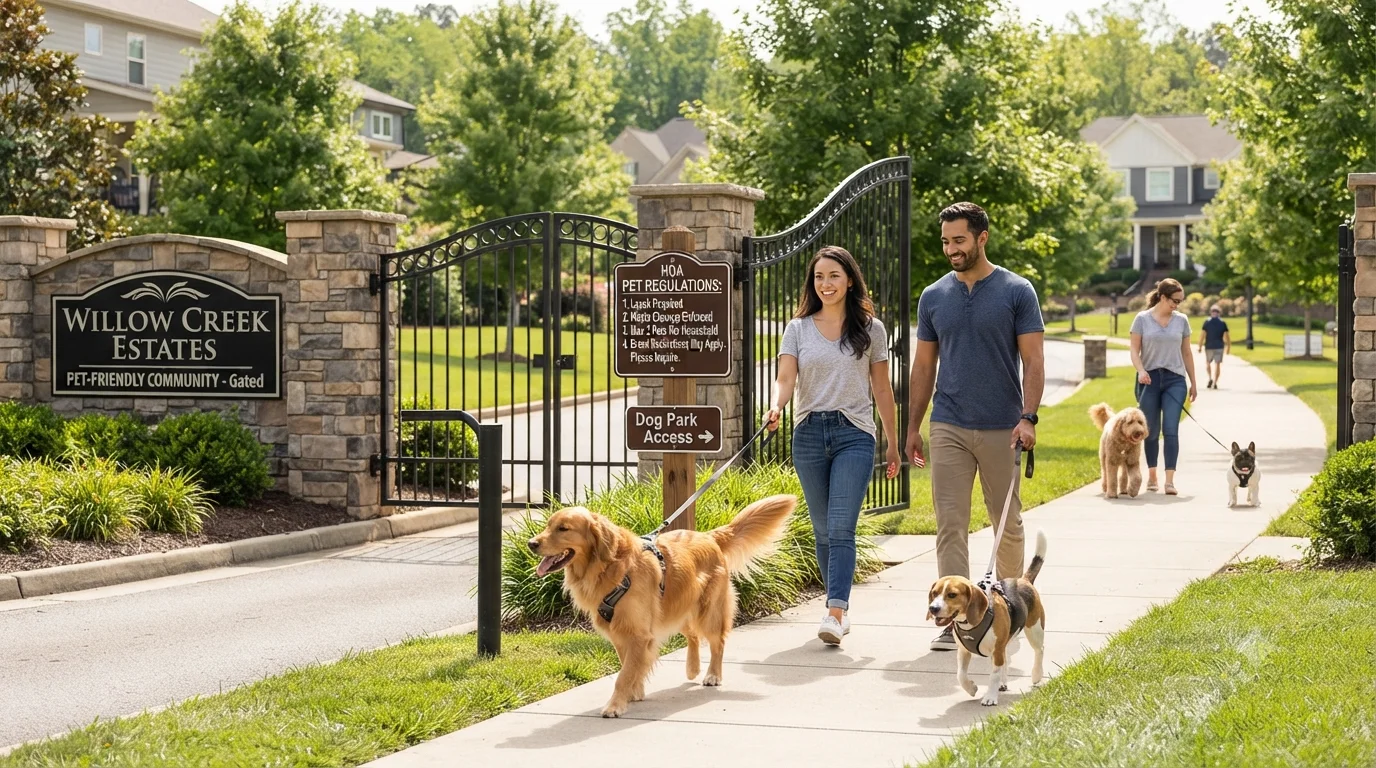
Buying a home is one of the biggest decisions people make, and for many families, pets are an important part of that decision. Dog owners do not only look for a beautiful house, good location, and modern facilities—they also want a community where their pets can live comfortably and safely.
The demand for pet-friendly communities has increased significantly as more people consider dogs as members of their families. Many buyers now search for neighborhoods that provide a welcoming environment for pets, including walking areas, open spaces, and reasonable pet policies.
However, one common question remains: Are dogs allowed in gated communities?
The answer depends on the specific community, its management rules, homeowners association regulations, and local laws. Some gated communities are designed to welcome pets, while others have strict restrictions regarding the number, size, or breed of dogs residents can own.
Understanding these rules before purchasing a property can help buyers avoid unexpected problems and ensure that their lifestyle matches the community’s regulations.
read more about housewarming gifts
Understanding Pet-Friendly Communities
A pet-friendly community is a residential area that allows residents to own pets while providing rules and facilities that support responsible pet ownership.
These communities recognize that many homeowners have dogs and other animals, so they create policies that balance the needs of pet owners with the comfort of all residents.
A truly pet-friendly community may offer:
- Walking paths suitable for dogs.
- Green spaces.
- Pet waste stations.
- Open outdoor areas.
- Clear and reasonable pet guidelines.
- A welcoming attitude toward responsible owners.
Being pet-friendly does not mean there are no rules. Most communities establish regulations to maintain cleanliness, safety, and harmony among neighbors.
Are Dogs Allowed in Gated Communities?
Many gated communities allow dogs, but permission is usually based on specific conditions.
Unlike traditional neighborhoods where homeowners may have fewer restrictions, gated communities often have organized management systems that create detailed rules for residents.
Dogs may be allowed with requirements such as:
- Registering pets with management.
- Following leash regulations.
- Cleaning after pets.
- Limiting the number of animals.
- Following size or breed restrictions.
Before purchasing a home, buyers should always review the community’s pet policy rather than assuming dogs are automatically allowed.
Why Some Gated Communities Restrict Pets
Although many people love dogs, some communities create restrictions because of concerns related to safety, cleanliness, and resident comfort.
Common reasons for pet restrictions include:
Noise Concerns
Some communities limit pets because excessive barking can disturb neighbors.
Management may establish rules regarding:
- Quiet hours.
- Noise complaints.
- Responsible pet behavior.
Safety Concerns
Some communities create regulations to prevent situations involving:
- Aggressive behavior.
- Uncontrolled animals.
- Pets entering restricted areas.
Cleanliness and Maintenance
Pets can affect shared spaces if owners are not responsible.
Communities may require:
- Immediate waste removal.
- Proper disposal of pet waste.
- Restrictions in certain landscaped areas.
Resident Preferences
Not all residents are comfortable around animals. Some communities try to create rules that respect both pet owners and residents who prefer limited pet interaction.
Types of Gated Communities That Allow Dogs
Many modern developments understand that pet ownership is increasingly common. As a result, more gated communities that allow dogs are being created.
These communities may include features specifically designed for pets.
Dog-Friendly Residential Developments
Some communities actively promote themselves as dog-friendly because they understand the needs of pet owners.
They may provide:
- Dog parks.
- Pet walking areas.
- Outdoor spaces.
- Pet-friendly facilities.
These neighborhoods often attract families who want a lifestyle that includes their pets.
Luxury Gated Communities and Pet Policies
Luxury communities may have different approaches to pets.
Some high-end developments welcome dogs but maintain detailed regulations to preserve appearance and cleanliness.
Rules may include:
- Breed limitations.
- Weight restrictions.
- Designated walking areas.
- Registration requirements.
The presence of rules does not necessarily mean a community is unfriendly to pets. In many cases, clear regulations help create a better experience for everyone.
read more about new home gifts
Understanding HOA Pet Rules
In many gated communities, pet policies are controlled by a homeowners association, commonly known as an HOA.
HOA pet rules are regulations created to manage different aspects of community living, including pet ownership.
These rules may determine:
- Whether pets are allowed.
- How many pets residents can have.
- Where pets can walk.
- What responsibilities owners have.
Before buying a property, reviewing HOA documents is one of the most important steps for dog owners.
Common HOA Pet Rules in Gated Communities
HOAs often create similar types of pet regulations.
Pet Registration Requirements
Some communities require residents to register their pets.
Registration may include:
- Pet information.
- Vaccination records.
- Owner contact details.
This helps management maintain accurate records and handle any issues.
Number of Pets Allowed
Some communities limit the number of pets per household.
For example, regulations may restrict residents to:
- One dog.
- Two pets total.
- A specific number based on property size.
These rules are usually designed to prevent overcrowding and reduce potential issues.
Size and Weight Restrictions
Some HOAs create limits based on dog size.
Examples include:
- Maximum weight requirements.
- Restrictions on very large breeds.
- Rules for apartment-style properties.
These restrictions may exist because smaller homes or shared buildings have different space limitations.
Breed Restrictions
Some communities have breed-specific rules.
These restrictions may be based on concerns about:
- Safety.
- Insurance requirements.
- Community preferences.
However, breed rules vary widely between locations and communities.
Buyers should always check the exact policy rather than relying on general assumptions.
Leash Requirements
One of the most common pet rules is requiring dogs to remain on a leash in shared areas.
Leash rules help:
- Protect other residents.
- Prevent conflicts between animals.
- Keep pets safe.
Even in communities with large open spaces, leash policies are often part of responsible pet ownership.
Cleaning Responsibilities
Most pet-friendly communities require owners to clean up after their dogs.
Responsible owners should:
- Carry waste bags.
- Remove waste immediately.
- Keep shared areas clean.
Failure to follow these rules may result in warnings or fines.
Pet Behavior Requirements
Many communities expect owners to control their pets’ behavior.
Rules may address:
- Excessive barking.
- Aggressive behavior.
- Damage caused by pets.
A pet-friendly community usually depends on responsible owners who respect their neighbors.
What Buyers Should Check Before Purchasing
For dog owners, buying a home in a gated community requires more research than simply asking whether pets are allowed.
Before purchasing, buyers should review several important factors.
Read the Community’s Pet Policy
The first step is obtaining the official pet rules.
Ask for:
- HOA regulations.
- Community guidelines.
- Pet-related documents.
Do not rely only on verbal statements from sales representatives or neighbors.
Written rules are the most reliable source.
Check for Breed and Size Restrictions
A buyer should confirm whether their dog meets the community requirements.
Important questions include:
- Are certain breeds restricted?
- Is there a weight limit?
- Are puppies treated differently?
- Are there restrictions on multiple dogs?
These details can prevent future conflicts.
Ask About Pet Fees or Deposits
Some communities charge additional fees related to pets.
These may include:
- Registration fees.
- Deposits.
- Maintenance charges.
Understanding these costs before buying helps avoid surprises.
Evaluating Pet Facilities Before Buying a Home
For many dog owners, finding a home in a gated community is not only about whether pets are technically allowed. The quality of life for both the owner and the dog depends on whether the community provides an environment where pets can live comfortably.
A community may allow dogs but still lack important features that make pet ownership easier.
Before purchasing a property, buyers should evaluate whether the neighborhood offers:
- Safe walking areas.
- Green spaces.
- Convenient outdoor access.
- Pet waste stations.
- Nearby veterinary services.
- Comfortable spaces for daily activities.
A truly welcoming pet-friendly community considers the practical needs of residents with animals, not just allowing them under strict rules.
Checking Outdoor Spaces for Dogs
Outdoor space is one of the most important factors for dog owners.
Dogs need regular activity for:
- Physical health.
- Mental stimulation.
- Social development.
- Reducing boredom.
When visiting a gated community, buyers should look for:
- Sidewalks.
- Walking trails.
- Parks.
- Open areas.
A community with safe walking routes makes puppy walking and daily exercise much easier.
However, buyers should also check whether these areas are actually available for pets or if restrictions apply.
Some communities may have:
- Pet-free gardens.
- Restricted playground areas.
- Limited walking zones.
Understanding these details helps buyers choose a suitable neighborhood.
The Importance of Dog Parks in Communities
Some modern dog-friendly neighborhoods include dedicated dog parks.
A dog park can provide several benefits:
- A safe place for dogs to exercise.
- Opportunities for socialization.
- A convenient location for owners.
- Better use of community spaces.
However, having a dog park does not automatically guarantee that every dog will enjoy it.
Owners should consider:
- Their dog’s personality.
- Social behavior.
- Training level.
Some dogs enjoy interacting with others, while others prefer quiet walks.
read more about pet-friendly apartment
Reviewing Community Rules for Shared Areas
Even in gated communities that allow dogs, shared spaces often have specific regulations.
Common rules include:
- Dogs must remain on a leash.
- Owners must clean waste immediately.
- Pets cannot enter certain facilities.
- Dogs must be supervised.
These rules are designed to balance different lifestyles.
A good pet policy protects:
- Dog owners.
- Children.
- Elderly residents.
- People who do not own pets.
Understanding HOA Enforcement Policies
Knowing that HOA rules exist is not enough. Buyers should also understand how those rules are enforced.
Important questions include:
- Who manages pet complaints?
- Are there fines for violations?
- How are disputes handled?
- Can rules change in the future?
A community with unclear enforcement may create problems later.
For example, one homeowner may believe a certain behavior is acceptable while another considers it a violation.
Clear enforcement creates a more predictable living environment.
Can HOA Rules Change After Buying?
Many buyers assume that once they purchase a property, the community rules will remain the same forever. However, HOAs may update regulations depending on their governing documents and local laws.
Potential changes may affect:
- Pet limits.
- Registration requirements.
- Common area access.
- Fees.
Before purchasing, buyers should review:
- Current HOA documents.
- Recent rule changes.
- Meeting records if available.
This helps identify whether pet policies are stable or frequently changing.
Apartment-Style Gated Communities and Dog Ownership
Not all gated communities consist of large houses. Many include apartments, townhomes, or smaller residential units.
Pet rules may be stricter in these developments because:
- Space is more limited.
- Residents share walls.
- Noise concerns are greater.
Apartment-style communities may have additional requirements related to:
- Dog size.
- Balcony use.
- Elevator behavior.
- Common hallway cleanliness.
Dog owners should consider whether the property type matches their pet’s needs.
Choosing the Right Home Layout for Dogs
The home itself matters as much as the community rules.
When choosing a property, dog owners should consider:
Ground-Floor Homes
Ground-floor properties may be convenient because:
- Outdoor access is easier.
- Bathroom breaks are faster.
- Older dogs may have fewer mobility challenges.
Homes With Private Outdoor Areas
A private yard can provide:
- Safe play space.
- Training opportunities.
- More freedom.
However, yards do not replace daily walks and interaction.
Smaller Homes
Smaller properties can still work well for dogs if owners provide:
- Regular exercise.
- Mental stimulation.
- Proper routines.
A well-exercised dog can adapt to many living environments.
Pet Policies and Rental Considerations
People renting inside gated communities should also review pet regulations carefully.
Rental agreements may include:
- Pet approval requirements.
- Additional deposits.
- Restrictions on breeds or sizes.
- Rules about damages.
Renters should confirm both:
- The community’s HOA rules.
- The landlord’s pet policy.
A landlord may have additional requirements beyond community regulations.
How to Prepare Your Dog for Community Living
Living in a gated community requires responsible pet ownership.
Dogs should ideally learn:
- Basic obedience commands.
- Leash manners.
- Calm behavior around strangers.
- Appropriate bathroom habits.
Important training skills include:
- Walking politely.
- Responding when called.
- Staying calm around other dogs.
A well-trained dog is more likely to have positive interactions with neighbors.
Responsible Pet Ownership in Shared Communities
A successful pet-friendly community depends on cooperation between residents.
Dog owners should:
- Respect quiet hours.
- Keep pets controlled.
- Clean shared areas.
- Follow HOA pet rules.
- Consider neighbors’ comfort.
Responsible behavior helps maintain a positive image of pet owners within the community.
Managing Barking Concerns
Barking is one of the most common complaints in residential communities.
Dogs may bark because of:
- Boredom.
- Anxiety.
- Lack of training.
- Environmental triggers.
Owners can reduce barking by:
- Providing enough exercise.
- Using training techniques.
- Creating a comfortable home environment.
Addressing barking issues helps prevent conflicts with neighbors.
Pet Insurance and Community Requirements
Some communities may recommend or require additional protection related to pets.
Pet insurance can help owners manage:
- Veterinary costs.
- Unexpected health issues.
While not always required, responsible planning helps owners handle emergencies without financial stress.
Preparing Documents Before Moving In
Some gated communities require specific pet documentation.
Common requirements may include:
- Vaccination records.
- Registration forms.
- Identification details.
- Health certificates.
Preparing these documents early makes the moving process smoother.
Questions Buyers Should Ask Before Purchasing
Before signing a purchase agreement, dog owners should ask:
- Are dogs allowed?
- Are there breed restrictions?
- Is there a weight limit?
- How many pets are permitted?
- Are there pet fees?
- Are dogs allowed in all outdoor areas?
- Are there nearby walking spaces?
- Can HOA rules change?
- What happens after complaints?
Getting clear answers prevents unexpected problems.
The Benefits of Living in a Pet-Friendly Community
Choosing a community that welcomes dogs can improve the experience of both owners and pets.
Benefits include:
Better Social Opportunities
Dogs and owners may meet other residents with similar lifestyles.
More Convenient Exercise
Nearby walking areas make daily routines easier.
Increased Comfort
Owners feel more relaxed knowing their pets are accepted.
Stronger Community Connection
Pet-friendly environments often encourage more interaction among neighbors.
The Growing Demand for Dog-Friendly Neighborhoods
The real estate market has changed as more families consider pets when choosing homes.
Today, buyers increasingly search for:
- Dog-friendly neighborhoods.
- Safe outdoor spaces.
- Flexible HOA regulations.
- Pet-focused amenities.
Developers are responding by creating communities that recognize pets as an important part of modern family life.
Finding the right home as a dog owner requires careful research. While many gated communities allow pets, each community has its own regulations regarding ownership, behavior, and shared spaces.
Understanding HOA pet rules, checking available facilities, and reviewing restrictions before purchasing can help buyers make confident decisions.
A true pet-friendly community provides more than permission to own a dog—it creates an environment where pets and people can live comfortably together.