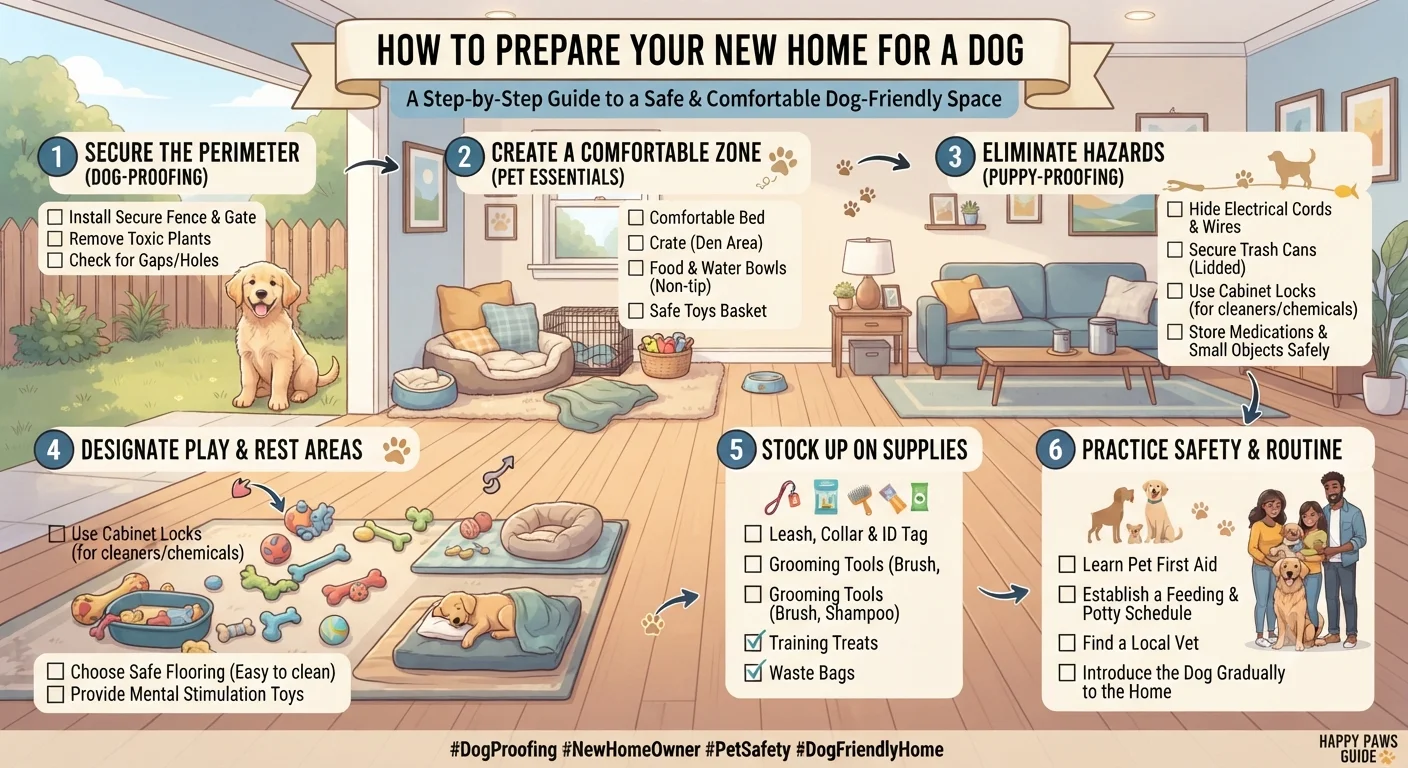
Moving into a new home is an exciting milestone, and for many families, it also marks the beginning of a new chapter with a dog. Whether you are adopting a playful puppy, welcoming an adult rescue, or relocating with a longtime canine companion, preparing your home properly can make the transition smoother for both you and your pet.
Many new owners focus on buying food, toys, and a comfortable bed, but preparing your home for a dog involves much more than shopping for supplies. Every room should be evaluated from a dog’s perspective to eliminate hazards, reduce stress, and create a safe environment where your pet can explore confidently.
A thoughtfully designed dog-friendly home helps prevent accidents, supports healthy behavior, and encourages positive habits from the first day. Likewise, creating a proper dog-proof house protects not only your pet but also your furniture, valuables, and home itself.
This practical guide walks you through every stage of preparing a new home, from safety inspections and essential supplies to room-by-room planning and long-term maintenance.
read more about new home gifts
Why Preparing Your Home Matters
Dogs experience major life changes when moving into unfamiliar surroundings.
Everything is new, including:
- Smells
- Sounds
- Flooring
- Furniture
- People
- Daily routines
Without preparation, dogs may experience stress, anxiety, destructive behavior, or accidents.
Proper planning helps them:
- Feel secure.
- Learn house rules faster.
- Adjust to new routines.
- Develop confidence.
- Build trust with family members.
Whether you are welcoming a puppy or an adult dog, preparation lays the foundation for a happy relationship.
Start Before Your Dog Arrives
The best time to begin preparing your home for a dog is before your pet enters the house.
Walking through your home with a dog’s curiosity in mind helps identify hidden dangers that humans often overlook.
Ask yourself questions like:
- Can a dog chew this?
- Can it swallow this?
- Could it knock this over?
- Is this toxic?
- Is there an escape route?
Thinking proactively reduces potential risks.
Understand Your Dog’s Needs
Different dogs require different environments.
Consider factors such as:
- Age
- Breed
- Size
- Energy level
- Medical conditions
- Previous living situation
For example:
A young Labrador puppy will require extensive puppy-proof home preparation because of its high energy and chewing habits.
An older rescue dog may instead need quiet spaces and easy access around the home.
Dog-Proof the Entryway
The entrance is one of the first areas your dog will explore.
Ensure that:
- Doors close securely.
- Gates latch properly.
- Shoes are stored safely.
- Cleaning chemicals are inaccessible.
- Leashes are easily accessible.
Adding a storage area near the entrance for walking supplies helps establish daily routines.
Secure Electrical Cords
Chewing electrical cords can cause severe injuries.
Protect cables by:
- Using cord covers.
- Hiding wires behind furniture.
- Securing loose cables.
- Unplugging unused electronics.
Puppies are especially attracted to dangling cords.
Creating a proper dog-proof house includes removing these tempting hazards.
Store Household Chemicals Safely
Many common cleaning products are dangerous for dogs.
Keep products such as:
- Bleach
- Detergents
- Floor cleaners
- Drain cleaners
- Disinfectants
inside locked cabinets or high shelves.
Never leave open containers unattended during cleaning.
Remove Toxic Plants
Several decorative plants commonly found in homes can be poisonous to dogs.
Before bringing your dog home, inspect both indoor and outdoor plants.
Replace potentially harmful varieties with pet-safe alternatives whenever possible.
read more about pet-friendly apartment
Secure Trash Bins
Dogs often investigate garbage because of food smells.
Use trash cans with:
- Tight-fitting lids
- Locking mechanisms
- Heavy bases
Kitchen garbage can contain:
- Chicken bones
- Chocolate
- Coffee grounds
- Grapes
- Onions
Many of these foods are toxic to dogs.
Protect Valuable Items
Young dogs frequently chew objects while exploring.
Move valuable items including:
- Shoes
- Glass decorations
- Electronics
- Remote controls
- Children’s toys
out of reach until your dog learns household rules.
Create a Safe Sleeping Area
Every dog benefits from having a quiet resting place.
Choose an area that provides:
- Comfortable bedding
- Good ventilation
- Low household traffic
- Easy access to water
A dedicated resting area helps dogs feel secure during their adjustment period.
Choose the Right Dog Bed
Select a bed appropriate for your dog’s:
- Size
- Age
- Sleeping style
Puppies often appreciate beds with raised edges because they provide a sense of security.
Senior dogs may benefit from orthopedic mattresses.
Designate a Feeding Area
Consistency helps dogs adapt more quickly.
Create a permanent feeding station that includes:
- Food bowls
- Water bowls
- Easy-to-clean flooring
- Storage for food
Avoid moving feeding locations frequently.
Puppy-Proof Your Living Room
Living rooms contain numerous potential hazards.
Inspect carefully for:
- Loose wires
- Small decorations
- Candles
- Coins
- Batteries
- Children’s toys
Puppies naturally investigate everything using their mouths.
A proper puppy-proof home minimizes opportunities for dangerous chewing.
Protect Furniture
During the adjustment period, dogs may scratch or chew furniture.
Prevent damage by:
- Providing chew toys.
- Supervising exploration.
- Using protective covers.
- Redirecting inappropriate chewing immediately.
Punishment is generally less effective than positive redirection.
Install Baby Gates
Baby gates help manage access to different areas of the home.
They are particularly useful for:
- Puppies
- Newly adopted dogs
- Dogs recovering from surgery
Controlled access reduces stress while supporting training.
Prepare the Kitchen
The kitchen contains many hazards.
Store safely:
- Sharp utensils
- Food
- Cleaning supplies
- Plastic bags
- Alcohol
- Medicines
Never leave food unattended on countertops if your dog can reach it.
Make Bathrooms Safe
Bathrooms may contain:
- Medications
- Razors
- Hair products
- Cleaning chemicals
Always close toilet lids because some dogs drink toilet water.
Store medications inside secure cabinets.
Organize Laundry Rooms
Laundry areas often contain toxic substances.
Keep:
- Detergent pods
- Fabric softeners
- Bleach
- Dryer sheets
well out of your dog’s reach.
Prepare Bedrooms
Bedrooms should provide calm environments.
Keep:
- Jewelry
- Charging cables
- Cosmetics
- Small accessories
stored securely.
Some owners choose to allow dogs in bedrooms, while others establish separate sleeping spaces.
Consistency is more important than the specific rule.
Dog-Proof Staircases
If your home includes stairs, evaluate whether your dog can use them safely.
Puppies may require supervision because excessive stair climbing can place stress on developing joints.
Older dogs may eventually benefit from non-slip stair treads.
Improve Floor Safety
Slippery flooring increases injury risk.
Consider adding:
- Area rugs
- Non-slip runners
- Carpet mats
These improve traction while helping dogs feel more confident.
Create a Safe Outdoor Space
Outdoor preparation is just as important as indoor safety.
Inspect your yard for:
- Escape routes
- Broken fences
- Sharp objects
- Toxic plants
- Standing water
Secure fencing remains one of the most important features of a dog-friendly home.
Check Fence Height
Different breeds require different fence heights.
High-energy dogs and athletic breeds may jump surprisingly high.
Walk the perimeter regularly to identify potential weaknesses.
Provide Shade
Dogs should always have access to shaded areas outdoors.
Trees, covered patios, or dog shelters help prevent overheating during warm weather.
Fresh Water Access
Whether indoors or outdoors, dogs should always have access to clean drinking water.
Replace water regularly throughout the day.
Prepare Family Members
Everyone living in the home should understand the household rules.
Agree on:
- Feeding schedule
- Walking routine
- Furniture rules
- Training commands
- Play expectations
Consistency reduces confusion for the dog.
Introduce the Home Gradually
Avoid giving your dog unrestricted access to the entire house immediately.
Instead:
- Introduce one room.
- Allow exploration.
- Reward calm behavior.
- Expand access gradually.
This method helps prevent overwhelming experiences.
Expect an Adjustment Period
Even confident dogs need time to settle.
During the first days, they may:
- Sleep more.
- Eat less.
- Explore cautiously.
- Follow family members closely.
Patience and routine help build confidence.
Essential Supplies Before Bringing Your Dog Home
Every new owner should prepare the following pet home essentials before arrival:
- High-quality dog food
- Food and water bowls
- Comfortable bed
- Crate if appropriate
- Collar
- Identification tag
- Harness
- Leash
- Waste bags
- Grooming brush
- Nail clippers
- Dog shampoo
- Towels
- Chew toys
- Interactive toys
- Training treats
- First aid kit
- Cleaning supplies for accidents
Having these items ready makes the first few days much smoother for both the dog and the family.
Once you have the basic supplies ready, the next step in preparing your home for a dog is evaluating every room from your pet’s perspective. Dogs naturally explore with their noses and mouths, so even small objects that seem harmless to people may become dangerous.
A careful room-by-room inspection helps transform an ordinary house into a safe and welcoming dog-friendly home.
The Living Room
The living room is often where dogs spend most of their time with family members.
It should be both comfortable and safe.
Check for:
- Loose electrical cables
- Sharp furniture corners
- Glass decorations
- Small children’s toys
- Candles
- Houseplants
- Remote controls
Dogs, especially puppies, often chew unfamiliar objects during the first weeks in a new home.
Providing plenty of appropriate chew toys helps redirect this natural behavior.
Choosing Dog-Friendly Furniture
Furniture selection can make daily life much easier.
Look for materials that are:
- Easy to clean
- Resistant to scratches
- Durable
- Comfortable
Performance fabrics, leather alternatives, and washable covers are often practical choices for dog owners.
Light-colored furniture may show muddy paw prints more easily, while darker fabrics tend to hide minor stains.
read more about house vs villa
Creating a Relaxation Corner
Every dog benefits from having a quiet place to rest.
This area should include:
- A comfortable bed
- Water bowl
- Favorite toys
- Soft blanket
Avoid placing the bed in noisy hallways or directly beside televisions or speakers.
Dogs generally sleep between 12 and 16 hours each day, so providing a peaceful resting space is essential.
The Kitchen
The kitchen contains many hidden hazards.
When creating a dog-proof house, pay close attention to food storage.
Foods that should never be left within reach include:
- Chocolate
- Grapes
- Raisins
- Onions
- Garlic
- Avocados
- Alcohol
- Coffee
- Xylitol-containing products
Install childproof cabinet locks if your dog is particularly curious.
Keep garbage bins securely closed to prevent scavenging.
Organizing Dog Food Storage
Store dog food in airtight containers.
Proper storage helps:
- Maintain freshness
- Prevent pests
- Reduce odors
- Protect nutritional quality
Label containers clearly and keep them away from cleaning products.
The Dining Area
Teaching good manners begins here.
Avoid feeding dogs directly from the table.
Doing so may encourage:
- Begging
- Jumping
- Counter surfing
Instead, establish a dedicated feeding station where your dog always eats.
Consistency makes training easier.
Bedrooms
Bedrooms should remain calm and organized.
Secure items such as:
- Socks
- Shoes
- Chargers
- Jewelry
- Hair accessories
Many dogs enjoy chewing fabric items because they carry familiar scents.
If your dog will sleep in your bedroom, ensure enough space for a bed or crate.
Children’s Bedrooms
Extra attention is necessary when preparing children’s rooms.
Store safely:
- Small toys
- Building blocks
- Craft supplies
- Batteries
- Stuffed animals with removable parts
Teach children to keep bedroom doors closed when they are not supervising interactions.
Bathrooms
Bathrooms contain numerous hazards.
Secure:
- Medications
- Vitamins
- Toothpaste
- Razors
- Cleaning chemicals
- Cosmetics
Keep toilet lids closed to prevent dogs from drinking contaminated water.
Store waste bins inside cabinets whenever possible.
Home Office
More people work remotely than ever before, making home offices important spaces for dogs to navigate safely.
Protect:
- Computer cables
- Headphones
- Printers
- Paper clips
- Batteries
- USB drives
Provide a comfortable resting place nearby so your dog can relax while you work.
This encourages calm behavior instead of seeking attention.
Laundry Room
Laundry areas require careful preparation.
Potential hazards include:
- Detergent pods
- Fabric softeners
- Bleach
- Dryer sheets
These products can be extremely dangerous if chewed or swallowed.
Keep cabinets securely closed at all times.
Garage
Garages often contain substances that are highly toxic to dogs.
Examples include:
- Antifreeze
- Motor oil
- Fertilizers
- Paint
- Pesticides
- Power tools
Restrict access unless supervised.
Clean spills immediately.
Staircases
Stairs deserve special attention, particularly in homes with puppies.
Repeated climbing may place unnecessary stress on developing joints in large breed puppies.
Consider using baby gates until your puppy becomes older and more coordinated.
For senior dogs, non-slip stair runners improve safety.
Windows and Balconies
Open windows can become escape routes.
Install secure screens where appropriate.
Balconies should have:
- Strong railings
- No large gaps
- Safe furniture placement
Never leave dogs unattended on balconies for long periods.
Outdoor Spaces
Creating a secure yard is one of the most important parts of preparing your home for a dog.
Walk around the property carefully.
Look for:
- Holes under fences
- Broken boards
- Loose gates
- Sharp metal
- Toxic plants
- Standing water
Repair any problems before allowing your dog outside.
Choosing Safe Outdoor Plants
Many beautiful garden plants are safe for dogs.
Pet-friendly options include:
- Sunflowers
- Snapdragons
- Marigolds
- Camellias
- Magnolias
Research every new plant before adding it to your landscape.
Installing Secure Fencing
Fence height depends on your dog’s breed and athletic ability.
Large energetic breeds often require taller fencing than small companion breeds.
Inspect fencing regularly for damage caused by weather or digging.
Creating a Dog Exercise Area
Dogs need regular physical activity.
A dedicated outdoor play area might include:
- Open running space
- Durable toys
- Shade
- Fresh water
- Digging zone if appropriate
Providing acceptable outlets for natural behaviors helps reduce destructive habits indoors.
Preparing for Rainy Days
Wet weather often leads to muddy paws.
Set up a cleaning station near the entrance with:
- Towels
- Paw wipes
- Water bowl
- Floor mat
Cleaning paws before entering helps protect floors and furniture.
Choosing the Right Flooring
Some flooring materials perform better than others in homes with dogs.
Popular options include:
- Luxury vinyl
- Tile
- Sealed hardwood
- High-quality laminate
These materials are generally easier to clean than carpet.
If you prefer carpet, choose stain-resistant varieties.
Air Quality Matters
A healthy dog-friendly home should have good ventilation.
Improve indoor air quality by:
- Opening windows regularly.
- Replacing HVAC filters.
- Vacuuming frequently.
- Washing dog bedding.
Cleaner air benefits both humans and pets.
Lighting and Temperature
Dogs are sensitive to temperature changes.
Maintain comfortable indoor temperatures throughout the year.
Provide:
- Cool resting spots during summer.
- Warm bedding during winter.
Avoid placing dog beds directly beside heaters or air conditioning vents.
Building Daily Routines
Dogs thrive on consistency.
Establish predictable schedules for:
- Meals
- Walks
- Playtime
- Training
- Bedtime
Routine reduces anxiety and helps dogs adjust more quickly to a new environment.
Introducing Visitors
New homes often receive many guests.
Allow your dog to greet visitors calmly.
Avoid overwhelming introductions.
Provide a quiet retreat if your dog becomes nervous.
Positive early experiences help build confidence.
Preparing for Emergencies
Every responsible owner should prepare for unexpected situations.
Keep a pet emergency kit containing:
- First aid supplies
- Medical records
- Extra leash
- Food
- Water
- Medications
- Contact information for your veterinarian
Store the kit where every family member can access it quickly.
Training-Friendly Home Setup
An organized environment makes training easier.
Keep:
- Treats readily available.
- Toys accessible.
- Training sessions short.
- Rewards consistent.
Limit distractions during early obedience training.
Positive reinforcement helps dogs develop confidence while strengthening the bond with their family.
Signs Your Home Is Ready
Before bringing your dog home, review this checklist.
Your puppy-proof home should include:
- Safe electrical cords.
- Secure trash bins.
- Locked cleaning supplies.
- Comfortable sleeping area.
- Fresh water station.
- Appropriate toys.
- Secure fencing.
- Family rules established.
- Veterinary appointment scheduled.
- Identification tag prepared.
Completing these steps ensures a smoother transition into your new home.