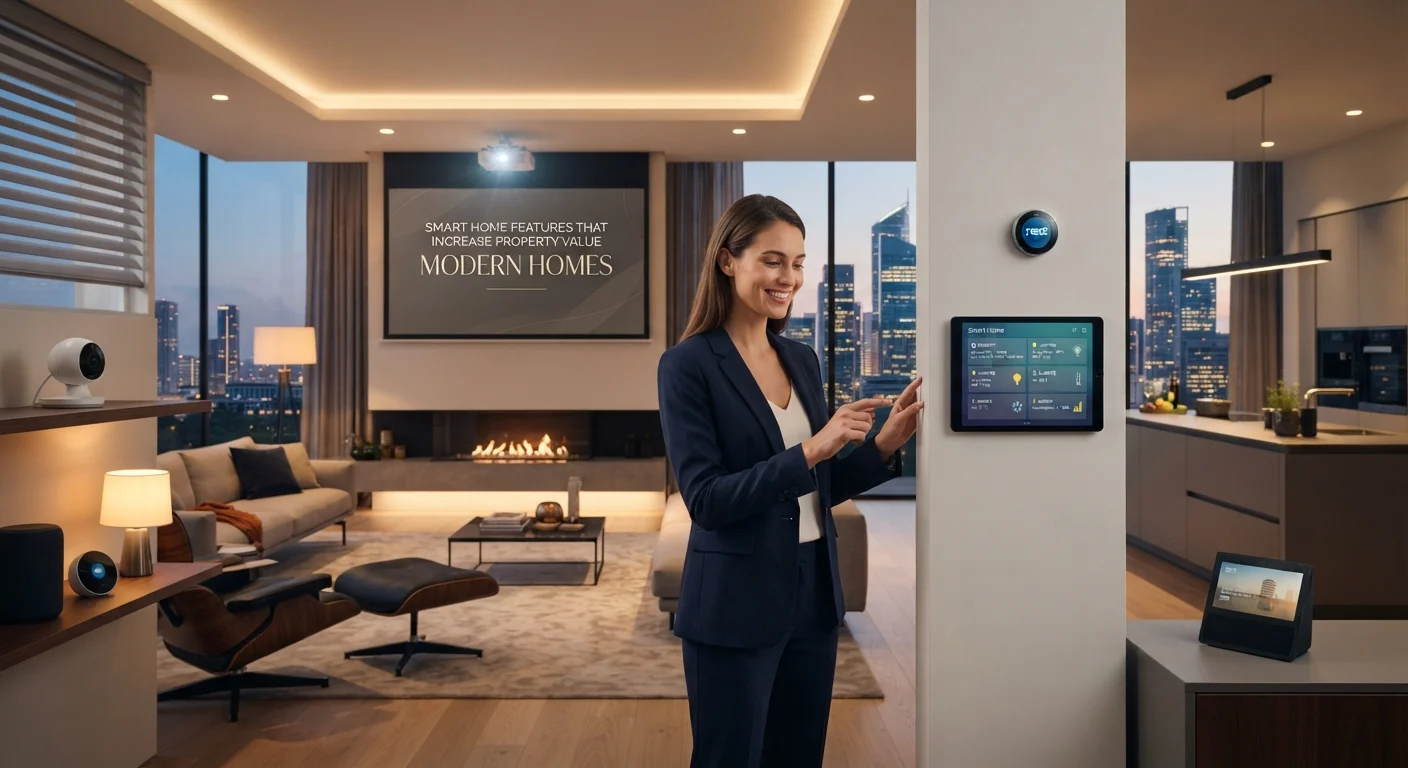
The modern home is no longer defined only by its location, size, number of bedrooms, or architectural design. Technology has become an increasingly important part of the way people live, work, protect their belongings, manage energy, and interact with their homes.
This shift has made smart home features more than convenient gadgets. When selected and installed thoughtfully, smart technology can improve daily life while potentially making a property more attractive to future buyers.
From smart security systems and automated lighting to intelligent thermostats, energy monitoring, connected appliances, and automated access control, today’s homeowners have more options than ever before.
The important question, however, is not simply:
“How many smart devices does the home have?”
A property filled with disconnected gadgets does not necessarily become more valuable.
Instead, value comes from useful technology that solves real problems, works reliably, is easy to operate, integrates well with the property, and provides benefits that future buyers can understand.
This is where smart home technology becomes particularly relevant to real estate.
A smart security system can provide convenience and peace of mind. Automated lighting can improve comfort and potentially reduce unnecessary electricity consumption. Smart climate control can make temperature management more efficient. Energy monitoring can help homeowners understand where electricity is being used. Smart locks can simplify access control.
Together, these systems can contribute to a home that feels safer, more efficient, more convenient, and more modern.
For homeowners considering upgrades, understanding which technologies offer genuine value is important. Not every expensive device will provide a meaningful return, and some technologies can become outdated quickly.
The strongest approach is to prioritize practical features that improve the property itself rather than simply adding technology for its own sake.
read more about new home checklist
What Are Smart Home Features?
Understanding the Smart Home Concept
A smart home is a property where connected devices and systems can communicate with one another and be monitored or controlled through digital interfaces.
Depending on the installation, homeowners may control systems through:
- Smartphone applications
- Touchscreen panels
- Voice assistants
- Automated schedules
- Motion sensors
- Environmental sensors
- Remote controls
- Centralized home automation platforms
The level of automation can range from simple remote control to sophisticated systems that respond automatically to conditions inside and outside the property.
For example, a homeowner might create an automation that turns off selected lights when everyone leaves the house, adjusts the thermostat before the family returns, and activates security features automatically.
The objective is not technology for technology’s sake.
The objective is a home that responds intelligently to the occupants’ needs.
Smart Technology vs. Traditional Devices
A traditional light switch requires someone to operate it manually.
A smart lighting system can potentially allow homeowners to:
- Schedule lights
- Dim them remotely
- Control multiple rooms together
- Create scenes
- Use motion sensors
- Turn lights off remotely
- Integrate lighting with security
The same concept applies to thermostats, locks, cameras, blinds, appliances, and other household systems.
This added flexibility is one reason home automation has become increasingly attractive in modern homes.
How Smart Home Technology Can Affect Property Value
Convenience as a Selling Point
One of the most obvious advantages of smart technology is convenience.
Modern buyers may appreciate being able to control household functions without physically interacting with each device.
Imagine arriving home after work and having:
- Exterior lights already activated
- The temperature adjusted
- The front door controlled through a smart lock
- Security notifications available through a smartphone
These features can make a property feel more advanced and comfortable.
Perceived Modernity
A property equipped with thoughtfully integrated technology can create a stronger impression during a viewing.
Buyers often evaluate not only the physical condition of a home but also how well it fits their lifestyle.
A modern smart-home system can communicate that the property has been updated for contemporary living.
Energy Awareness
Energy efficiency can be an important consideration for buyers.
Smart thermostats, energy monitors, automated lighting, and connected appliances can help homeowners understand and manage consumption.
Even when a smart device does not directly reduce energy use on its own, providing better information and control can help occupants make more efficient decisions.
Security and Peace of Mind
Security is one of the most practical areas of smart-home investment.
Smart cameras, doorbells, locks, alarms, sensors, and lighting can provide homeowners with greater visibility and control.
A buyer may perceive these systems as valuable because security affects everyday quality of life.
read more about increase property value
Smart Security Features That Can Add Appeal
Smart Video Doorbells
A smart video doorbell can combine several useful functions.
Depending on the model and system, it may allow homeowners to:
- See visitors
- Receive movement alerts
- Communicate with people at the door
- Review recorded events
- Monitor deliveries remotely
For modern buyers, this can be a practical upgrade rather than simply a novelty.
Smart Security Cameras
Security cameras can provide visibility around key areas of a property.
Potential locations include:
- Front entrances
- Back doors
- Driveways
- Garages
- Side entrances
- Large outdoor areas
Privacy should always be considered when installing cameras.
The purpose should be to improve property security without creating unnecessary surveillance concerns for residents or neighbors.
Smart Door Locks
Smart locks can provide alternatives to traditional keys.
Depending on the system, homeowners may use:
- PIN codes
- Smartphones
- Fingerprints
- Temporary access codes
- Traditional keys as backup
Temporary codes can be especially useful for guests, cleaners, maintenance professionals, or short-term access.
Smart Motion Sensors
Motion sensors can be used for security and automation.
For example, a motion sensor may trigger:
- Security alerts
- Exterior lighting
- Hallway lighting
- Camera recording
- Automation routines
This creates a more responsive security environment.
Smart Window and Door Sensors
Contact sensors can notify homeowners when a door or window opens.
They can also be integrated into broader automation systems.
For example, an open window could potentially trigger a notification or prevent an automated climate-control routine from operating unnecessarily.
Smart Smoke and Carbon Monoxide Detection
Connected safety devices can provide alerts beyond the traditional local alarm.
Depending on the product, notifications may be sent to a smartphone when an issue is detected.
Safety-oriented technology can be particularly meaningful because it addresses a genuine household need.
Why Security Technology Can Influence Buyer Perception
Security Is Easy to Understand
Some smart-home features require explanation before buyers understand their benefits.
Security is different.
Most people immediately understand the value of being able to monitor a front door, receive an alert about unusual activity, or control access remotely.
This makes security upgrades potentially attractive when preparing a property for sale.
Avoid Overcomplicating the Security System
A complicated security system can have the opposite effect.
If buyers see dozens of devices, multiple applications, and confusing controls, they may worry about maintenance.
A simple integrated system can be more appealing than a collection of unrelated devices.
Smart Lighting and Property Appeal
Why Lighting Matters
Lighting affects how a home looks and feels.
Traditional lighting can already transform a room, but smart lighting adds flexibility.
Homeowners can potentially adjust:
- Brightness
- Color temperature
- Timing
- Individual rooms
- Groups of lights
- Lighting scenes
Automated Lighting Scenes
A lighting scene allows several lights to behave in a coordinated way.
For example, an evening scene might:
- Dim living-room lights
- Turn on accent lighting
- Reduce bedroom brightness
- Activate exterior lights
This can make the home feel more sophisticated.
Motion-Activated Lighting
Motion sensors can automatically activate lights when someone enters an area.
This can be useful in:
- Hallways
- Bathrooms
- Closets
- Stairways
- Garages
- Outdoor paths
It also reduces the need to search for switches in dark spaces.
Smart Outdoor Lighting
Outdoor lighting can improve both appearance and security.
Smart exterior lights can be scheduled around sunset or controlled remotely.
This can help a property look occupied even when residents are away.
Energy Efficiency Through Lighting Automation
Smart lighting can contribute to more efficient electricity use by making it easier to turn lights off or automate them based on occupancy and schedules.
However, the actual energy savings depend on how the system is configured and used.
Simply replacing a traditional bulb with a connected bulb does not guarantee significant savings.
Smart Climate Control
Why Temperature Control Matters
Heating and cooling can represent a significant part of household energy use.
This makes climate control one of the most important areas where smart technology can potentially provide practical benefits.
Smart thermostats and climate-control systems may allow homeowners to:
- Create schedules
- Adjust temperature remotely
- Monitor indoor conditions
- Respond to occupancy
- Learn usage patterns
- Manage different zones
- Receive alerts
Smart Thermostats
A smart thermostat can provide greater control than a basic programmable thermostat.
For example, homeowners can adjust temperature while away from home rather than leaving the system running at the same setting all day.
Some systems can also use sensors to understand occupancy or room conditions.
Zoned Climate Control
Larger homes may benefit from zoning.
Instead of maintaining the same temperature throughout the entire property, different areas can potentially be controlled independently.
This can improve comfort and may reduce unnecessary heating or cooling.
Smart Air Conditioning
In warm climates, intelligent air-conditioning controls can be particularly useful.
Features may include:
- Remote control
- Scheduling
- Temperature monitoring
- Energy tracking
- Occupancy-based adjustments
- Filter reminders
For buyers, these features can make a property feel more comfortable and technologically advanced.
Energy Efficiency and Smart Homes
Smart Energy Monitoring
Energy monitoring systems can show homeowners how electricity is being consumed.
Instead of receiving only a monthly utility bill, homeowners may be able to see patterns throughout the day.
This information can reveal:
- High-consumption appliances
- Peak usage periods
- Unusual electricity consumption
- Potential opportunities for savings
Smart Plugs
Smart plugs can provide basic monitoring and control for compatible devices.
They may be useful for:
- Lamps
- Entertainment equipment
- Small appliances
- Chargers
- Other suitable electronics
Automation can turn selected devices off according to schedules.
Smart Appliances
Connected appliances may provide remote monitoring, alerts, scheduling, and energy-related information.
Examples include:
- Washing machines
- Dryers
- Refrigerators
- Ovens
- Dishwashers
However, homeowners should consider whether these appliances genuinely improve the property or simply add complexity.
Solar and Smart Energy Management
Homes equipped with solar energy systems may benefit from intelligent energy monitoring and management.
A smart system can potentially help homeowners understand:
- Solar production
- Household consumption
- Battery status
- Grid usage
- Energy patterns
This can make renewable-energy systems easier to manage and understand.
Smart Blinds and Shades
Why Automated Window Coverings Matter
Smart blinds can automatically adjust according to schedules, sunlight, temperature, or user commands.
They can provide:
- Privacy
- Light control
- Convenience
- Potential temperature management
- Integration with other smart-home systems
Smart Blinds and Energy Efficiency
Automated shades may help manage solar heat entering a room.
For example, shades could close during periods of strong sunlight and open later when natural light is more useful.
Actual energy savings depend on the home’s orientation, climate, windows, insulation, and automation strategy.
Smart Appliances and the Modern Kitchen
Connected Kitchen Technology
The kitchen is an important area of the home, and smart appliances can add convenience.
Potential features include:
- Remote monitoring
- Cooking notifications
- Scheduling
- Appliance diagnostics
- Inventory management
- Energy monitoring
Avoid Technology Overload
A kitchen does not become more valuable simply because every appliance has Wi-Fi.
Buyers may prefer a kitchen where smart features solve real problems.
For example, remote monitoring or useful automation can be valuable.
A device requiring a separate application for a function that takes two seconds manually may provide little meaningful benefit.
read more about home buying mistakes
Smart Home Automation
What Is Home Automation?
Home automation means creating rules that allow devices to operate automatically.
Instead of manually controlling every device, the system can respond to:
- Time
- Motion
- Occupancy
- Temperature
- Light levels
- Door activity
- Security conditions
This is where separate smart devices can become a coherent smart home.
Example: Leaving Home Automation
A homeowner might create a “Leaving Home” routine that:
- Turns off selected lights
- Adjusts the thermostat
- Locks smart doors
- Activates security
- Turns off compatible devices
The exact functions depend on the system.
Example: Coming Home Automation
A “Welcome Home” routine could:
- Unlock or prepare the entry
- Turn on selected lights
- Adjust temperature
- Disable selected security settings
Automation should always provide an easy manual override.
Example: Good Night Automation
A nighttime routine could:
- Turn off downstairs lights
- Lock doors
- Activate exterior security
- Adjust bedroom temperature
- Close selected blinds
These simple routines can make technology feel genuinely useful.
Why Integration Matters More Than the Number of Devices
A Connected Home Should Feel Like One System
One of the biggest mistakes homeowners make is buying smart devices independently without considering compatibility.
The result can be:
- Multiple applications
- Different control methods
- Incompatible devices
- Duplicate sensors
- Confusing automations
A well-designed system should feel relatively unified.
Compatibility Is Important for Resale
When selling a home, future owners may not want to inherit a complicated technology ecosystem.
A system that is relatively easy to understand and transfer can be more attractive.
Documenting:
- Device names
- Locations
- Accounts
- Reset procedures
- Automation routines
- Maintenance requirements
can make the smart-home system easier for the next owner to use.
Smart Home Technology and Resale Value
Does Smart Technology Automatically Increase Home Value?
Not necessarily.
This is an important distinction.
Adding smart devices does not guarantee that a property will sell for a higher price.
The impact depends on:
- Local buyer demand
- Quality of installation
- Type of technology
- Property price range
- Age and condition of the home
- Integration
- Reliability
- Ease of use
- Overall market conditions
Some smart features may improve buyer appeal without producing a directly measurable increase in the sale price.
Value Can Come Through Buyer Preference
Even when technology does not add a specific monetary premium, it can potentially make a home more competitive.
A buyer comparing two similar properties may prefer the one with:
- Better security
- Efficient climate control
- Modern lighting
- Smart access
- Energy monitoring
This can contribute to perceived value.
Which Smart Home Features Are Most Attractive to Buyers?
Security
Security is one of the strongest practical categories.
Smart locks, cameras, video doorbells, alarms, and sensors can address real concerns.
Climate Control
Smart thermostats and intelligent air-conditioning controls can provide both comfort and potential efficiency benefits.
Lighting
Automated and adjustable lighting can improve usability and atmosphere.
Energy Monitoring
Energy management can be attractive to buyers concerned about utility costs.
Smart Access
Keyless entry and controlled access can make daily life easier.
Whole-Home Integration
A coherent system can be more valuable than isolated devices.
Features That May Not Add Much Value
Too Many Smart Bulbs
A home does not necessarily become more valuable because every bulb is connected.
Cheap Standalone Gadgets
Low-quality devices can create a negative impression.
Technology That Requires Complicated Maintenance
If buyers feel that the smart-home system will become a burden, the feature can lose its appeal.
Obsolete Platforms
Technology changes quickly.
A smart device that depends on an outdated platform or discontinued service can become a liability.
Excessive Automation
Not everyone wants the home to make every decision automatically.
Good systems provide automation while preserving user control.
Smart Home Features and Energy Efficiency
The Difference Between Monitoring and Saving
This distinction is important.
A smart energy monitor can show electricity use.
It does not automatically reduce consumption.
Energy savings usually come from how the information is used.
For example, monitoring might reveal that an appliance consumes significant electricity during certain periods. The homeowner can then change its usage.
Automated Energy Management
Automation can make efficiency easier.
Examples include:
- Turning off lights when rooms are empty
- Adjusting temperature according to schedules
- Managing blinds according to sunlight
- Reducing standby consumption where appropriate
- Monitoring unusual energy usage
Energy Efficiency as a Selling Point
Buyers may increasingly consider operating costs when evaluating a property.
A smart system that helps control energy consumption can therefore complement other efficiency improvements such as:
- Insulation
- Efficient windows
- Efficient HVAC systems
- LED lighting
- Solar panels
- Efficient appliances
Technology should be part of a broader efficiency strategy.
Smart Security and Privacy Considerations
Connected Devices Collect Data
Smart-home devices can process information about household activity.
Depending on the product, data may include:
- Motion events
- Video
- Audio
- Access activity
- Temperature
- Device usage
Homeowners should understand how their systems handle this information.
Secure Your Smart Home
Basic security practices include:
- Use strong passwords
- Enable multi-factor authentication when available
- Keep firmware updated
- Remove unused user accounts
- Replace default credentials
- Review device permissions
- Use secure home networking
A smart home should not trade physical convenience for poor digital security.
How Smart Technology Can Improve Everyday Life
Convenience
Automation reduces repetitive tasks.
Comfort
Climate and lighting controls can personalize the home.
Security
Connected monitoring provides greater visibility.
Efficiency
Automation and monitoring can support more informed energy use.
Accessibility
Smart controls can be particularly helpful for people who have difficulty physically operating traditional switches, thermostats, locks, or other controls.
This demonstrates an important principle:
Smart technology should improve the home for the people living in it, not merely make the property look technologically advanced.
read more about family home buying guide
Planning a Smart Home Upgrade
Start With Problems, Not Products
Instead of asking:
“Which smart devices should I buy?”
start with:
“What problem do I want to solve?”
If security is the problem, start with security.
If energy use is the concern, begin with monitoring and climate control.
If convenience is the priority, focus on automation and access.
This approach reduces unnecessary spending.
Build a Foundation
A smart-home network should be reliable.
Consider:
- Wi-Fi coverage
- Network security
- Device compatibility
- Power availability
- Hub or platform requirements
A smart device is only useful if it can communicate reliably.
Upgrade Gradually
You do not need to automate the entire house at once.
Start with high-value areas.
For example:
- Smart security
- Smart climate control
- Smart lighting
- Energy monitoring
- Automation
- Additional smart appliances
This approach allows you to learn what actually works for your household.
Smart Home Features for Different Property Types
Apartments
Apartments may benefit from:
- Smart locks
- Video doorbells where permitted
- Smart lighting
- Smart thermostats
- Energy monitoring
- Smart blinds
Building rules should be considered before modifying shared entrances or exterior areas.
Family Homes
Larger family homes can benefit from:
- Multi-zone climate control
- Security sensors
- Exterior cameras
- Automated lighting
- Smart garage access
- Irrigation controls
- Whole-home automation
Luxury Properties
High-end homes may justify more integrated systems.
Potential features include:
- Whole-home control
- Automated shades
- Advanced security
- Multi-room entertainment
- Climate zoning
- Lighting scenes
- Energy management
At this level, professional design and installation can be particularly important.
Smart Outdoor Features
Smart Irrigation
Smart irrigation systems can adjust watering based on schedules and environmental information.
They may help prevent unnecessary watering.
Smart Garden Lighting
Outdoor lighting can be scheduled automatically.
This can improve the appearance of gardens and pathways while contributing to security.
Smart Garage Doors
Connected garage systems can provide remote status monitoring and control.
This can help homeowners determine whether the garage door was left open.
Smart Home Technology for Families
Smart Entry
Parents can potentially provide temporary access codes to trusted individuals.
Child-Safe Automation
Automation can turn off certain lights or devices according to schedules.
However, safety should always take priority over convenience.
Monitoring
Sensors can help homeowners understand whether doors, windows, or other monitored areas are open.
The technology should complement normal supervision rather than replace it.
Smart Homes and Remote Living
Vacation Mode
One useful automation concept is a vacation mode.
It can potentially:
- Simulate occupancy through lighting
- Adjust climate settings
- Monitor security
- Provide alerts
- Control selected devices
This can make a home easier to manage while the owner is away.
Remote Maintenance
Some smart systems can notify homeowners about unusual conditions.
For example:
- Water leaks
- Temperature changes
- Door activity
- Power interruptions
Early notifications can potentially reduce the consequences of certain household problems.
Smart Water Management
Leak Detection
Water leaks can cause significant property damage.
Smart water sensors can notify homeowners when moisture is detected.
More advanced systems may monitor water flow and identify unusual patterns.
Smart Shut-Off Valves
Some systems can automatically stop water flow when a major leak is detected.
For property owners, this can be a meaningful protection feature.
It is another example of smart technology adding value by addressing a real risk rather than simply adding entertainment.
Smart Home Technology and Home Insurance
Security and Risk Management
Some insurers may consider security-related measures when assessing risk, although policies and discounts vary by location and insurer.
Homeowners should not assume that installing a particular smart device automatically qualifies them for a discount.
Instead, check the specific requirements of the insurance provider.
Professional Installation vs. DIY
When DIY Makes Sense
Simple smart bulbs, plugs, sensors, and certain cameras may be relatively easy for homeowners to install.
When Professional Installation Makes Sense
Professional help may be worthwhile for:
- Whole-home automation
- Complex security systems
- Electrical modifications
- HVAC integration
- Motorized blinds
- Structured networking
- Multi-zone systems
Professional installation can improve reliability and reduce compatibility problems.
How to Make Smart Features More Valuable Before Selling
Keep Documentation
Create a simple smart-home guide.
Include:
- Device list
- Brand and model
- Location
- Main functions
- App information
- Reset instructions
- Maintenance information
Do not share personal passwords with buyers. Instead, transfer ownership through proper account procedures and reset devices appropriately.
Make the System Easy to Demonstrate
When potential buyers view the home, demonstrate useful functions.
For example:
- Lock the door remotely
- Adjust the temperature
- Activate a lighting scene
- Show security notifications
- Demonstrate energy monitoring
The objective is to show practical benefits rather than overwhelm the buyer with technical specifications.
Remove Unnecessary Complexity
If the house has several obsolete devices, consider removing or replacing them before selling.
A smaller, reliable system can be more attractive than a large collection of outdated technology.
How Smart Features Complement Traditional Home Improvements
Technology Cannot Replace Structural Quality
Smart technology should not be used to hide problems such as:
- Poor insulation
- Old plumbing
- Damaged roofing
- Outdated electrical systems
- Inefficient windows
- Poor HVAC performance
A smart thermostat cannot compensate for a fundamentally inefficient HVAC system.
The Best Strategy Is Layered Improvement
A strong property combines:
Good construction + efficient systems + security + comfort + smart control.
Smart technology becomes more valuable when it sits on top of a solid physical foundation.
read more about ready property vs off plan
Choosing Smart Home Features That Create Real Value
The best smart home features are not necessarily the newest or most expensive.
They are the ones that improve the way people actually use a property.
Smart security can make homeowners feel safer.
Smart lighting can improve convenience and atmosphere.
Smart climate control can provide better comfort and potentially support more efficient energy use.
Energy monitoring can provide information that helps homeowners make better decisions.
Smart locks can simplify access.
Leak detection can help protect the property from water damage.
Home automation can bring these systems together so that the house responds to everyday routines with less manual effort.
When these technologies are thoughtfully selected, properly installed, securely configured, and easy to operate, they can contribute to a home’s overall appeal.
For homeowners thinking about resale, the most important principle is simple:
Build a smart home that people would actually want to live in.
Do not fill the property with gadgets simply to create a long feature list.
Instead, focus on technologies that solve meaningful problems, improve comfort, increase security, support efficiency, and remain useful over time.
A smart home should feel less like a collection of devices and more like a well-designed living environment.
And that is ultimately where the greatest potential value lies.