Buying a home is one of the biggest financial and personal decisions most people make. It can represent stability, independence, long-term wealth, and a place where important memories are created. At the same time, purchasing property involves a significant amount of money, paperwork, negotiation, research, and risk.
For first-time buyers especially, the process can feel overwhelming. There are listings to compare, mortgage options to evaluate, deposits to prepare, inspections to arrange, legal documents to review, and countless decisions to make before the keys finally arrive.
The problem is that many buyers focus almost entirely on finding a house they love. They fall in love with the kitchen, imagine their furniture in the living room, picture their children playing in the garden, or become excited because the property looks like the perfect opportunity. Those emotions are understandable, but they can make it easier to overlook important financial, technical, legal, and location-related issues.
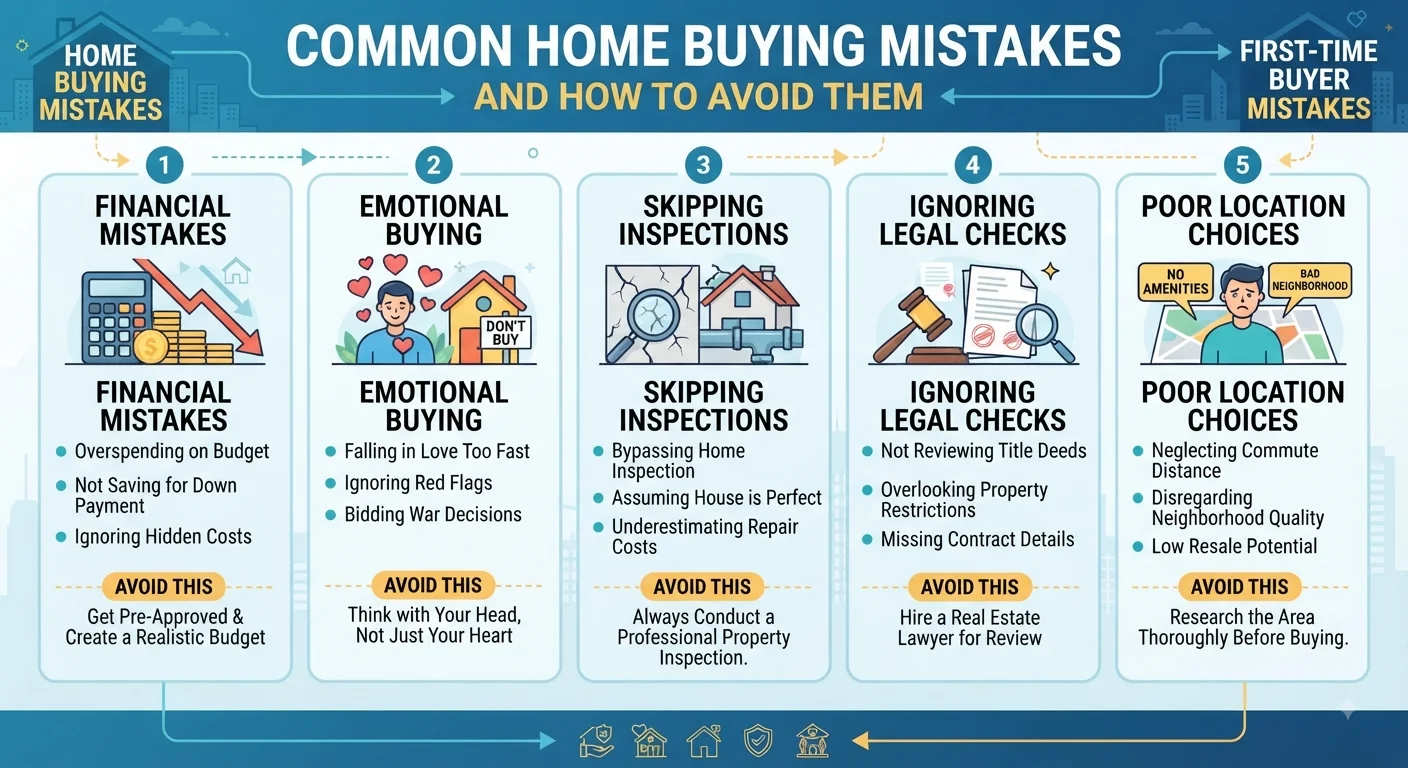
Understanding common home buying mistakes before starting the process can help buyers make better decisions. Some mistakes can cost thousands of dollars. Others can create years of financial pressure, unexpected repairs, difficult commutes, legal complications, or disappointment with a property that initially looked perfect.
This guide examines the most common property buying mistakes, with particular attention to financial planning, emotional decisions, inspections, legal checks, financing, negotiations, location research, and long-term affordability. It is especially useful for people making their first purchase, but experienced buyers can also benefit from reviewing the fundamentals.
read more about apartment vs house
Why Home Buying Mistakes Can Be So Expensive
A Home Is More Than a Purchase Price
One of the biggest mistakes buyers make is treating the advertised property price as the total cost of homeownership.
The purchase price is only one part of the financial picture.
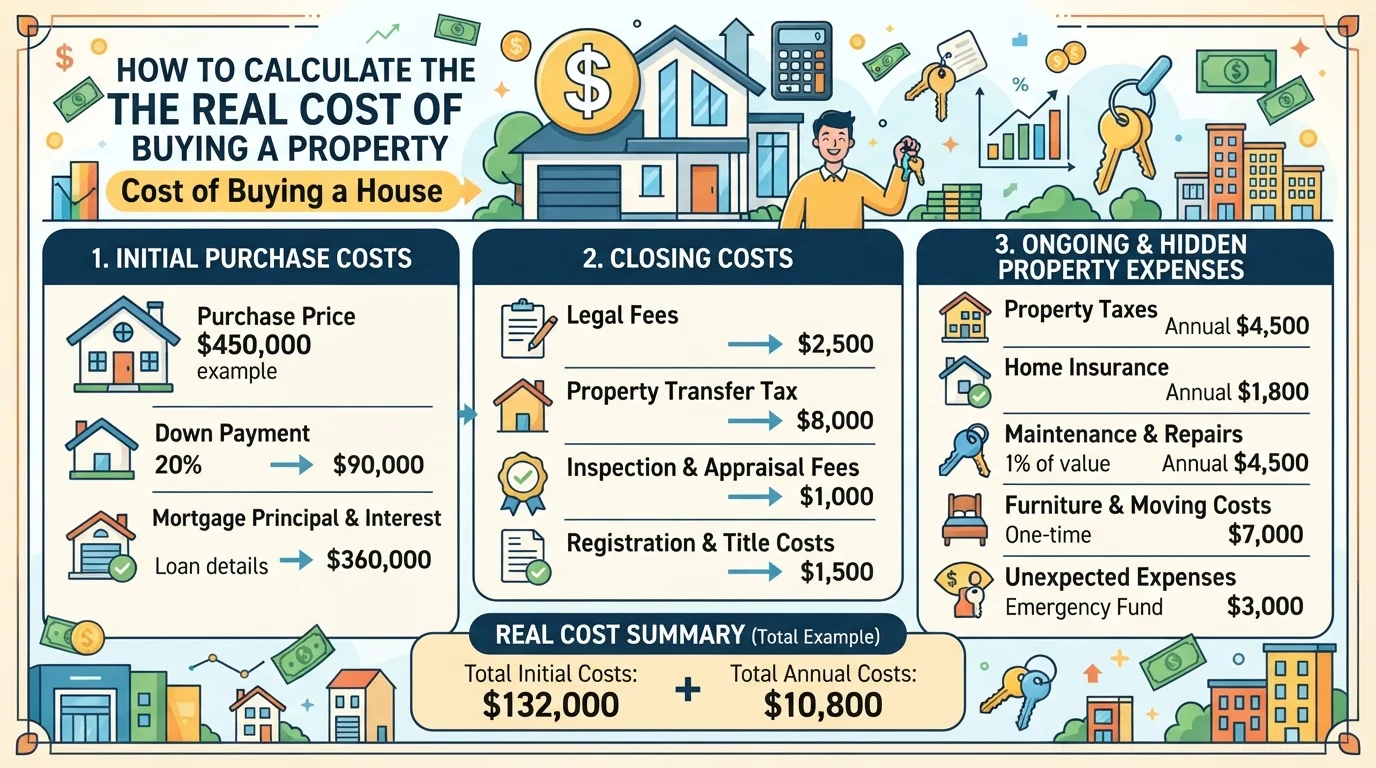
Depending on the country and transaction, buyers may also face:
- Mortgage interest
- Property taxes
- Insurance
- Legal fees
- Registration costs
- Inspection fees
- Appraisal fees
- Loan-related charges
- Maintenance
- Repairs
- Utilities
- Homeowners’ association fees
- Moving expenses
- Renovation costs
- Furniture and appliances
A property that appears affordable based on its listing price may become much more expensive once these additional costs are included.
Small Errors Can Have Long-Term Consequences
A buyer might underestimate monthly expenses by a relatively small amount and still end up spending substantially more than expected over many years.
This is why purchasing a home should be approached as a long-term financial decision rather than an emotional shopping experience.
Mistake #1: Buying a Home Before Establishing a Realistic Budget
Why Budgeting Matters
One of the most serious first-time buyer mistakes is beginning the property search before determining how much can realistically be spent.
Many buyers start by looking at listings online. They see attractive homes at different price points and gradually become interested in properties above their original budget.
This can create a dangerous psychological effect.
Instead of asking, “What can I comfortably afford?” the buyer starts asking, “How can I stretch my budget enough to buy this property?”
Those are very different questions.
Calculate Your Full Housing Cost
A realistic budget should consider more than the monthly mortgage payment.
Think about the complete cost of owning the property.
A useful framework includes:
Monthly housing cost = mortgage + taxes + insurance + maintenance + association fees + expected utilities
The exact categories vary by location, but the principle is universal.
Leave Room for Unexpected Expenses
A home can produce unexpected costs.
A water heater can fail. Air conditioning may need repair. Plumbing problems can appear. Appliances may need replacement. Roof maintenance may become necessary.
If your budget leaves no room for unexpected expenses, homeownership can become financially stressful.
Mistake #2: Spending the Maximum Amount the Bank Approves
Approval Is Not the Same as Affordability
Mortgage lenders evaluate borrowers using their own criteria.
A lender may determine that you qualify for a certain loan amount.
That does not automatically mean the payment is comfortable for your lifestyle.
Banks generally evaluate whether the borrower can meet lending requirements. They do not know every detail of your personal financial goals.
For example, you may also be saving for:
- Retirement
- Education
- Travel
- Children
- Medical expenses
- Business plans
- Emergency savings
A mortgage that technically fits lender calculations may still restrict your life significantly.
Create Your Own Maximum
Before house hunting, establish a personal spending limit.
Consider not only income but also lifestyle priorities and financial security.
The goal should be to own the home without feeling that the home owns your entire budget.
read more about property inspection checklist
Mistake #3: Forgetting the Upfront Costs
The Down Payment Is Not the Only Initial Expense
Many buyers spend months saving for a down payment and forget about the other costs that arrive before or around closing.
Depending on the market, these can include:
- Inspection
- Appraisal
- Legal services
- Loan fees
- Registration
- Taxes
- Insurance
- Moving
- Immediate repairs
- Furniture
- Appliances
Build a Separate Purchase Fund
Instead of saving only for the down payment, create a broader home-purchase fund.
This gives you flexibility when unexpected expenses appear.
Mistake #4: Using Every Last Dollar for the Purchase
Why Cash Reserves Matter
Buying a home can create a false sense of financial accomplishment.
You finally have enough money for the down payment, closing costs, and transaction expenses, so you use almost everything.
Then you move in and discover that the property needs repairs.
Without cash reserves, you may have to rely on expensive credit or delay essential work.
Keep an Emergency Fund
The appropriate emergency fund depends on your circumstances, but the underlying principle is simple:
Do not make yourself financially fragile just to complete the purchase.
Mistake #5: Ignoring Mortgage Terms
The Interest Rate Is Not the Whole Story
Buyers often compare mortgages based primarily on the advertised interest rate.
But the overall cost can depend on:
- Loan duration
- Fixed or variable rate
- Fees
- Early repayment terms
- Insurance requirements
- Loan structure
- Closing costs
Read the Complete Offer
Do not assume that the lowest advertised rate automatically represents the cheapest mortgage.
Compare the total financial commitment.
Consider Future Rate Changes
If a mortgage has a variable interest rate, understand what could happen if rates rise.
A payment that is comfortable today may become difficult later.
Mistake #6: Failing to Get Pre-Approved When Appropriate
Why Pre-Approval Can Help
In markets where mortgage pre-approval is available, getting pre-approved can help buyers understand their realistic borrowing range.
It can also make the purchasing process more organized.
Do Not Treat Pre-Approval as a Shopping Target
Pre-approval should help establish a ceiling, not encourage you to spend the maximum amount.
A disciplined buyer may choose a property significantly below the approved limit.
Mistake #7: Falling in Love With a Property Too Quickly
Emotional Buying Is Common
One of the most powerful home buying mistakes is becoming emotionally attached before completing due diligence.
You walk into the house and immediately imagine your future there.
You picture holidays, family dinners, children growing up, or relaxing in the backyard.
The property starts feeling like “your home” before you have actually purchased it.
Why Emotional Attachment Is Dangerous
Once emotionally attached, buyers may:
- Ignore flaws
- Overpay
- Rush negotiations
- Skip inspections
- Dismiss legal concerns
- Accept unfavorable terms
- Compete beyond their budget
Stay Objective
Try to separate the emotional experience from the investment decision.
You can love a home while still asking difficult questions.
Mistake #8: Buying Because the House Looks Beautiful
Presentation Can Hide Problems
Modern staging can make almost any home look attractive.
Fresh paint, carefully selected furniture, decorative lighting, pleasant scents, and professional photography can influence perception.
But these things tell you very little about the property’s structural condition.
Look Beyond Decoration
Pay attention to:
- Walls
- Ceilings
- Floors
- Windows
- Plumbing
- Electrical systems
- Roof
- Drainage
- Heating and cooling
- Moisture
- Structural condition
A beautiful kitchen can be renovated.
A major structural problem can be much more complicated.
Mistake #9: Skipping the Home Inspection
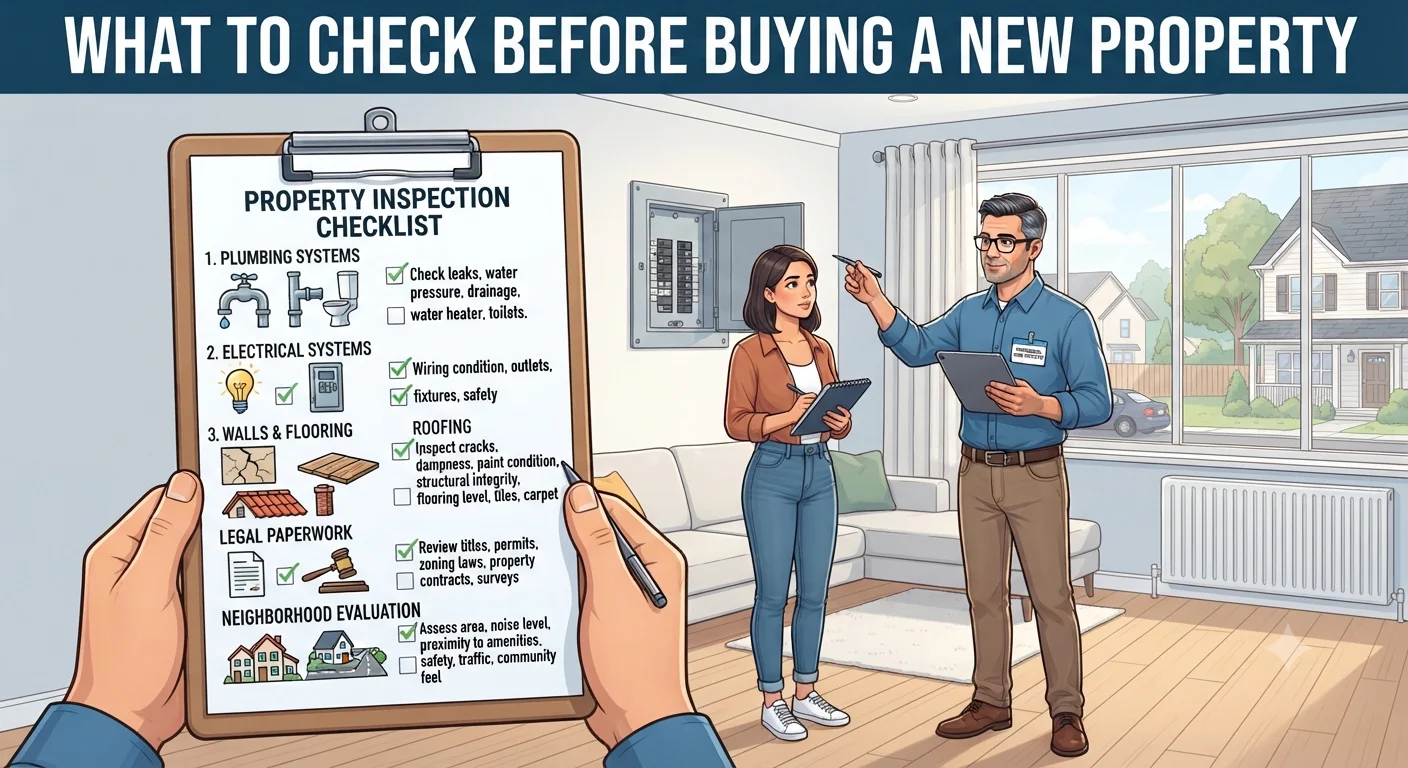
Why Inspections Matter
Skipping an inspection is among the riskiest property buying mistakes.
A professional inspection can identify problems that an ordinary buyer may not notice.
These may include:
- Water damage
- Roof issues
- Electrical defects
- Plumbing problems
- Foundation concerns
- Poor drainage
- Mold or moisture
- HVAC problems
- Structural deterioration
An Inspection Is Not a Guarantee
An inspection does not guarantee that a property is perfect.
It is a professional assessment based on what can reasonably be observed at the time.
Nevertheless, it can provide valuable information before you commit to the purchase.
Mistake #10: Choosing the Cheapest Inspector Without Research
Experience Matters
The cheapest inspection service is not necessarily the best choice.
Look for an appropriately qualified professional with relevant experience.
Ask about:
- Credentials
- Scope of inspection
- Written reporting
- Experience
- Areas covered
- Additional specialist inspections
Consider Specialist Inspections
Depending on the property, you may need additional evaluation for specific issues.
For example:
- Structural assessment
- Pest inspection
- Sewer inspection
- Roof inspection
- Electrical evaluation
- HVAC inspection
- Environmental assessment
The right specialists depend on the property’s characteristics and local requirements.
Mistake #11: Assuming a New Home Has No Problems
New Construction Can Have Defects
New construction is not automatically flawless.
Construction projects involve many workers, materials, systems, and stages.
Potential problems can include:
- Poor finishing
- Plumbing defects
- Electrical issues
- Drainage problems
- Incorrect installation
- Water intrusion
- Incomplete work
Inspect New Construction Too
A professional inspection can still be valuable for a newly constructed property.
Mistake #12: Ignoring Water Damage
Moisture Can Become a Major Problem
Water-related issues can be expensive and difficult to solve.
Look for signs such as:
- Stains
- Peeling paint
- Musty odors
- Swollen wood
- Cracked surfaces
- Visible mold
- Damp areas
Ask About the History
If you notice signs of previous water damage, ask what caused it and whether the problem was properly repaired.
Cosmetic repairs may hide rather than solve underlying moisture problems.
read more about best neighborhood to live
Mistake #13: Ignoring the Roof
Roof Condition Matters
A roof protects the entire property.
Roof repairs or replacement can be expensive.
Buyers should understand:
- Approximate age
- Material
- Visible condition
- Previous repairs
- Known leaks
- Maintenance history
A professional roof assessment may be worthwhile when concerns exist.
Mistake #14: Ignoring Plumbing and Electrical Systems
Plumbing
Do not focus only on whether faucets work during a quick viewing.
A more thorough assessment can consider:
- Water pressure
- Drainage
- Leaks
- Pipe condition
- Water heater
- Signs of previous repairs
Electrical
Older electrical systems may require updates.
Potential concerns include:
- Outdated wiring
- Insufficient electrical capacity
- Damaged outlets
- Unsafe modifications
- Poorly installed fixtures
Qualified professionals should evaluate serious concerns.
Mistake #15: Failing to Investigate the Neighborhood
The House Is Not the Entire Property Decision
A home exists within a neighborhood.
You may love the house but dislike the surrounding area.
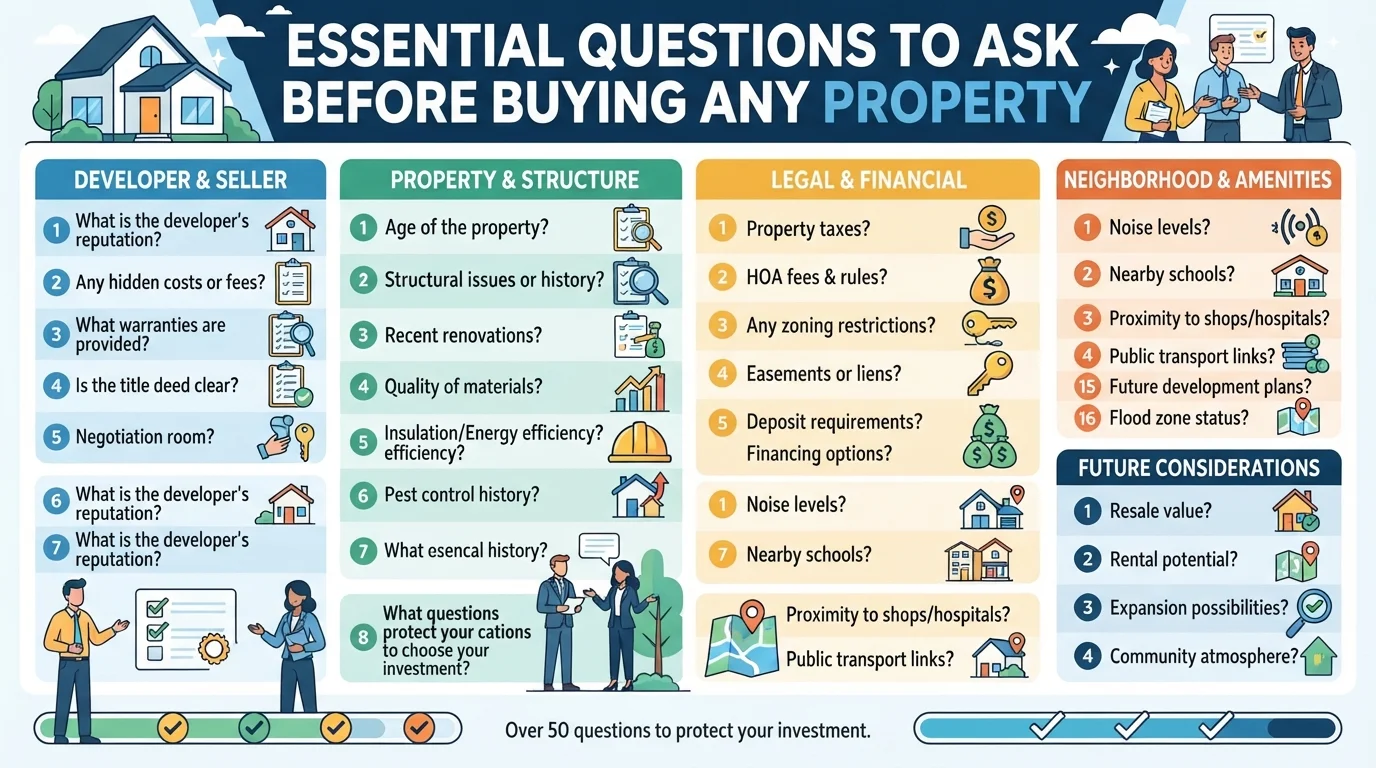
Before purchasing, investigate:
- Traffic
- Noise
- Safety
- Schools
- Public transportation
- Shops
- Healthcare
- Parks
- Restaurants
- Future development
- Parking
- Commute time
Visit at Different Times
A neighborhood can feel completely different in the morning, afternoon, evening, and weekend.
Visit more than once if possible.
Mistake #16: Choosing a Poor Location Because the House Is Cheap
Cheap Can Become Expensive
A lower purchase price may be attractive, but location affects long-term convenience and potentially resale demand.
A cheap property far from work may create significant transportation expenses.
A property in an inconvenient area may also be harder to sell later.
Think About Daily Life
Ask yourself:
“How will I live here every day?”
Not:
“How good does this house look for its price?”
Mistake #17: Ignoring the Commute
Calculate the Real Cost of Distance
A longer commute can cost:
- Fuel
- Transportation fares
- Vehicle maintenance
- Time
- Energy
- Quality of life
If you spend two extra hours commuting every day, the impact can be significant over a year.
Test the Route
If possible, travel from the property to work or other important destinations during actual peak hours.
Mistake #18: Ignoring Future Development
The Neighborhood Can Change
A quiet area today may look very different in several years.
Research planned or approved developments where possible.
Potential changes might include:
- New roads
- Commercial developments
- Construction projects
- Schools
- Industrial facilities
- Residential expansion
Some developments improve an area, while others may create traffic or noise.
Mistake #19: Ignoring Schools and Family Needs
Think Beyond Today
If you plan to have children or already have them, investigate education options and accessibility.
Even buyers without children should consider whether neighborhood characteristics affect future resale demand.
Mistake #20: Skipping Legal Checks
Legal Due Diligence Is Essential
A property can look physically perfect and still have serious legal problems.
Legal checks may help establish:
- Who legally owns the property
- Whether the seller has authority to sell
- Whether there are liens
- Whether there are disputes
- Whether required approvals exist
- Whether the property boundaries are correct
- Whether construction complies with applicable rules
Use Qualified Legal Advice
Property law varies significantly between countries and jurisdictions.
A qualified local property lawyer or appropriate legal professional can explain the checks required in your specific market.
Mistake #21: Assuming the Seller’s Documents Are Enough
Verify Important Information Independently
Do not assume that every document presented by a seller automatically proves everything you need to know.
Documents may need to be checked against official records and applicable legal requirements.
Never Rush Legal Review
If someone pressures you to sign immediately without allowing reasonable time for review, treat that as a warning sign.
Mistake #22: Signing Contracts Without Understanding Them
Read Before Signing
Property contracts can contain important provisions concerning:
- Payment schedules
- Deadlines
- Conditions
- Penalties
- Inspections
- Financing
- Repairs
- Closing
- Default
- Cancellation
Do not sign a document simply because someone tells you that it is standard.
Ask Questions
If you do not understand a clause, ask a qualified professional to explain it.
Mistake #23: Assuming Verbal Promises Will Be Enough
Put Important Agreements in Writing
A seller may promise to:
- Repair something
- Leave an appliance
- Complete work
- Fix damage
- Resolve a defect
Do not rely solely on verbal assurances.
Important agreements should be documented appropriately in the transaction.
Mistake #24: Failing to Research Property Taxes and Fees
Monthly Costs Can Vary
Property taxes and local fees can significantly affect affordability.
Buyers should understand the applicable obligations before purchasing.
Association Fees
If the property is part of a managed development or homeowners’ association, investigate:
- Current fees
- What they cover
- Planned increases
- Special assessments
- Rules
- Restrictions
A low purchase price may be less attractive if recurring fees are unusually high.
Mistake #25: Ignoring Insurance Costs
Insurance Can Affect Affordability
Insurance premiums vary according to:
- Location
- Property type
- Construction
- Risk exposure
- Coverage
- Claims history
- Local conditions
Obtain realistic insurance information before finalizing your budget.
Mistake #26: Forgetting Maintenance Costs
Every Home Requires Maintenance
Even a well-maintained home will need attention.
Regular costs can include:
- Air conditioning service
- Plumbing maintenance
- Painting
- Landscaping
- Appliance repairs
- Roof maintenance
- Pest control
- Electrical work
Think Long Term
A property that requires constant maintenance may be less attractive than one that costs slightly more but is in better condition.
Mistake #27: Underestimating Renovation Costs
Renovation Budgets Often Grow
Buyers may see a property and think:
“The kitchen only needs a little work.”
But renovation can involve:
- Materials
- Labor
- Permits
- Design
- Demolition
- Waste removal
- Unexpected repairs
Prioritize Essential Work
Separate renovations into:
- Safety issues
- Structural issues
- Functional repairs
- Energy improvements
- Cosmetic upgrades
This helps prevent overspending immediately after purchase.
Mistake #28: Buying a Fixer-Upper Without Experience
Renovation Can Be More Difficult Than It Looks
Television programs and social media can make renovations appear easy.
Real projects can involve delays, contractor problems, price increases, and unexpected discoveries.
Know Your Limits
A fixer-upper can be a good investment for someone with the skills, budget, and time to manage it.
It can be a financial trap for someone who underestimated the work.
read more about new home checklist
Mistake #29: Buying More Space Than You Need
Bigger Is Not Always Better
A larger property may have:
- Higher purchase cost
- Higher taxes
- Higher utility bills
- More maintenance
- More furniture requirements
Think about how much space you actually use.
Plan for the Future, Not Fantasy
Buy enough space for realistic needs rather than imagined scenarios.
Mistake #30: Buying Too Little Space
The Opposite Can Also Be a Problem
Choosing a property that is barely adequate today may become inconvenient as circumstances change.
Think about:
- Family plans
- Work-from-home needs
- Storage
- Guests
- Hobbies
The right property balances present needs with reasonable future flexibility.
Mistake #31: Ignoring Resale Value
You May Not Live There Forever
Even if you plan to stay for decades, circumstances can change.
You may eventually move because of:
- Career changes
- Marriage
- Children
- Financial changes
- Relocation
A property with broad appeal may be easier to sell.
Consider What Future Buyers Want
Location, accessibility, layout, natural light, parking, condition, and neighborhood quality can all influence future appeal.
Mistake #32: Making Decisions Based on Social Media
Online Images Are Not Enough
Property listings and social media can create unrealistic impressions.
Professional photographs can emphasize strengths and minimize flaws.
Visit in Person
Whenever practical, physically inspect the property and neighborhood.
Mistake #33: Trusting Online Estimates Blindly
Automated Valuations Have Limitations
Online property estimates can be useful as starting points, but they may not account for:
- Interior condition
- Renovations
- Unique features
- Local micro-markets
- Recent changes
- Legal complications
Use multiple sources when evaluating value.
Mistake #34: Failing to Compare Similar Properties
Comparable Properties Matter
Before making an offer, compare similar homes.
Look at properties with comparable:
- Location
- Size
- Age
- Condition
- Features
- Land area
- Building quality
This helps establish whether the asking price is reasonable.
Mistake #35: Making an Offer Based on Emotion
Negotiation Requires Objectivity
If you become emotionally attached, you may stop negotiating effectively.
Instead of thinking:
“I must have this house.”
Think:
“What is this property reasonably worth given its condition and market?”
That mindset provides stronger negotiating discipline.
Mistake #36: Being Afraid to Walk Away
Walking Away Can Be a Success
Some buyers become so invested in a property that they cannot accept when the deal no longer makes sense.
Walking away may be the correct financial decision.
Reasons can include:
- Serious inspection findings
- Legal concerns
- Unaffordable financing
- Unrealistic price
- Major neighborhood problems
- Contract risks
There will always be another property.
Mistake #37: Rushing Because of Competition
Competition Creates Pressure
In competitive markets, buyers may fear losing the property.
That fear can lead to overbidding or skipping due diligence.
Set Your Limits Beforehand
Know your maximum acceptable price and conditions before emotions take over.
Mistake #38: Not Asking Enough Questions
Good Buyers Investigate
Ask about:
- Why the owner is selling
- How long the property has been on the market
- Previous repairs
- Age of major systems
- Utility costs
- Property history
- Known defects
- Neighborhood changes
Not every answer will be perfect, but questions can reveal useful information.
Mistake #39: Ignoring Utility Costs
Energy Efficiency Matters
A beautiful home with poor insulation or inefficient equipment can generate high monthly bills.
Consider:
- Air conditioning efficiency
- Insulation
- Windows
- Lighting
- Appliances
- Solar options where applicable
- Water efficiency
Mistake #40: Forgetting Internet and Mobile Connectivity
Connectivity Is Part of Modern Homeownership
For people working remotely or relying heavily on online services, internet availability matters.
Before purchasing, investigate:
- Available providers
- Connection types
- Typical speeds
- Reliability
- Mobile coverage
A property can be excellent in every other respect but inconvenient if connectivity is poor.
A Practical Home Buying Mistakes Checklist
Financial Checks
Before making an offer, ask:
- Can I comfortably afford the monthly payment?
- Have I calculated all ownership costs?
- Do I have emergency savings?
- Have I compared financing options?
- Have I considered future interest-rate changes?
- Can I afford maintenance?
- Have I estimated insurance and taxes?
- Am I spending less than my absolute maximum borrowing capacity?
Property Checks
Confirm:
- The property’s physical condition
- Roof condition
- Plumbing
- Electrical systems
- HVAC
- Water damage
- Structural concerns
- Windows and doors
- Drainage
- Appliances
Legal Checks
Verify:
- Ownership
- Title or equivalent legal documentation
- Liens
- Restrictions
- Building approvals
- Property boundaries
- Required registrations
- Contract terms
Location Checks
Investigate:
- Commute
- Noise
- Traffic
- Safety
- Schools
- Shops
- Healthcare
- Transportation
- Future development
- Resale demand
How First-Time Buyers Can Make Better Decisions
Slow Down
The most effective way to avoid many first-time buyer mistakes is simply to give yourself enough time.
Do not let excitement or pressure eliminate your opportunity to investigate.
Build a Professional Team
Depending on your market, your team may include:
- Mortgage professional
- Real estate agent
- Property inspector
- Lawyer
- Surveyor
- Insurance professional
- Contractor
The exact professionals required depend on the property and local regulations.
Keep Documentation Organized
Maintain copies of:
- Offers
- Contracts
- Inspection reports
- Legal documents
- Financing documents
- Repair estimates
- Insurance information
Good organization can prevent confusion later.
read more about increase property value
Avoiding Home Buying Mistakes
Buying a home should be exciting, but it should also be methodical.
The most expensive home buying mistakes often happen when buyers allow emotion, urgency, or incomplete information to replace careful analysis. A beautiful property can still be financially unsuitable. A cheap property can become expensive after repairs. A seemingly perfect house can have legal complications. A dream neighborhood can become inconvenient if the commute is unbearable.
The best protection is a structured process.
Start with your finances. Establish a realistic budget based on what you can comfortably afford rather than the maximum amount a lender is willing to approve. Keep emergency reserves instead of putting every available dollar into the purchase.
Then evaluate the property objectively. Look beyond decoration and staging. Arrange an appropriate inspection and investigate major systems, moisture, structural condition, plumbing, electrical work, roofing, and other relevant issues.
Next, investigate the legal side. Ownership, title, liens, permissions, restrictions, contracts, and other legal matters should be properly reviewed according to the rules of the jurisdiction where the property is located. Never assume that a property is legally safe simply because it looks attractive or because the seller provides documents.
Then evaluate the location. A house is part of a neighborhood, community, transportation network, and local infrastructure. Visit at different times, calculate the commute, investigate services, and consider future development.
Finally, control the emotional side of the process. It is perfectly normal to fall in love with a home. The important thing is not allowing that emotional attachment to prevent you from asking difficult questions or walking away when the numbers, inspection, location, or legal situation do not make sense.
A successful home purchase is not necessarily the home with the most impressive kitchen, the largest living room, or the most beautiful photographs. It is the property that fits your finances, needs, lifestyle, and long-term plans while presenting risks you understand and can reasonably manage.
The more carefully you investigate before signing, the fewer unpleasant surprises you are likely to face after receiving the keys.
And perhaps the most important rule for any buyer is simple: do not rush a decision simply because you are afraid of losing a property. Losing the wrong property can be one of the best financial decisions you ever make.