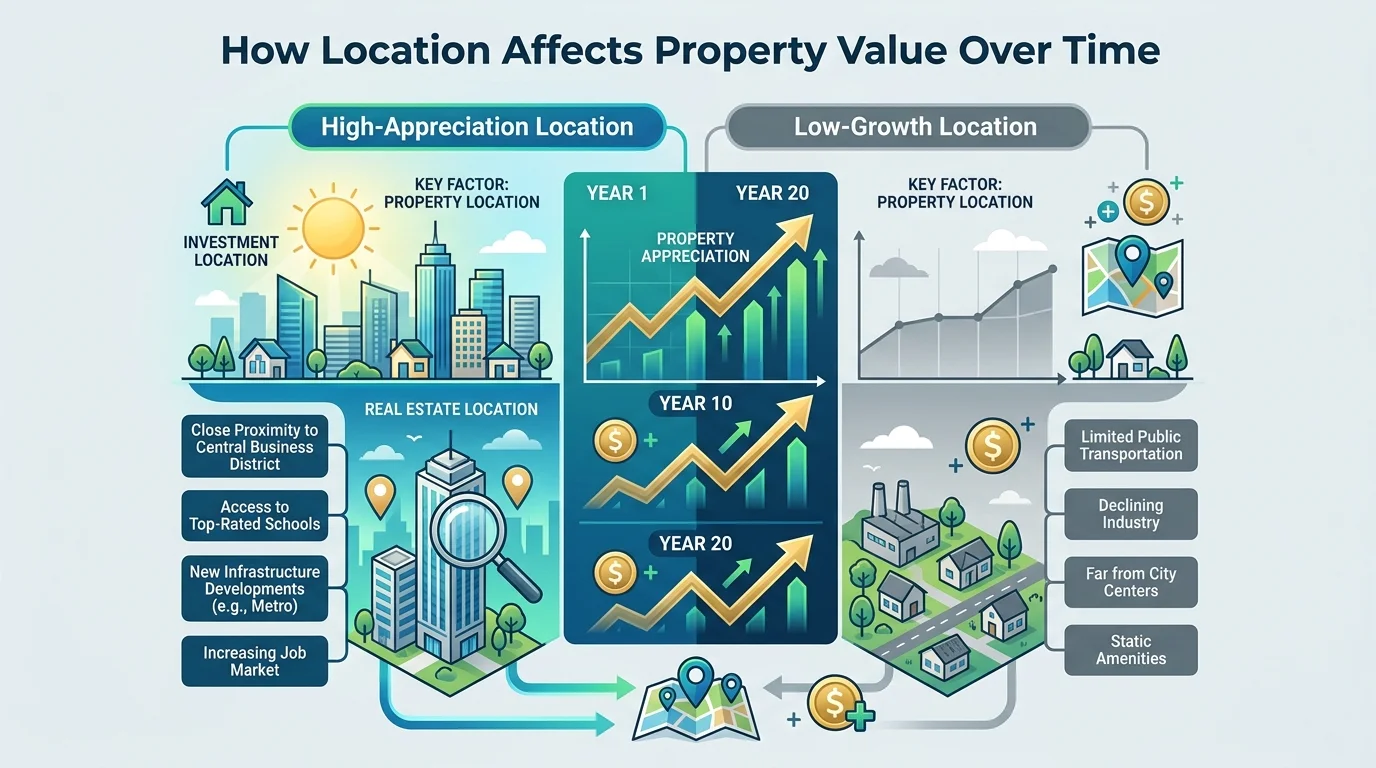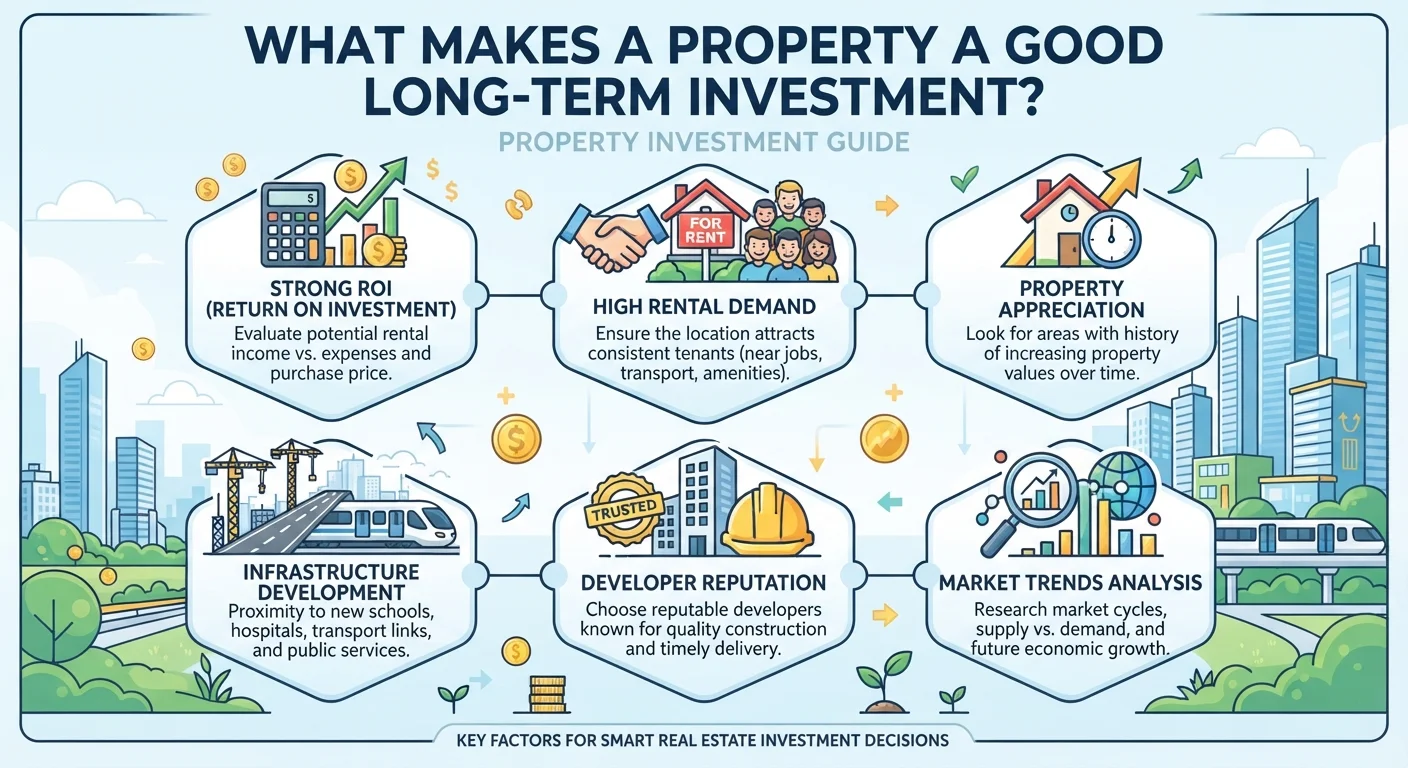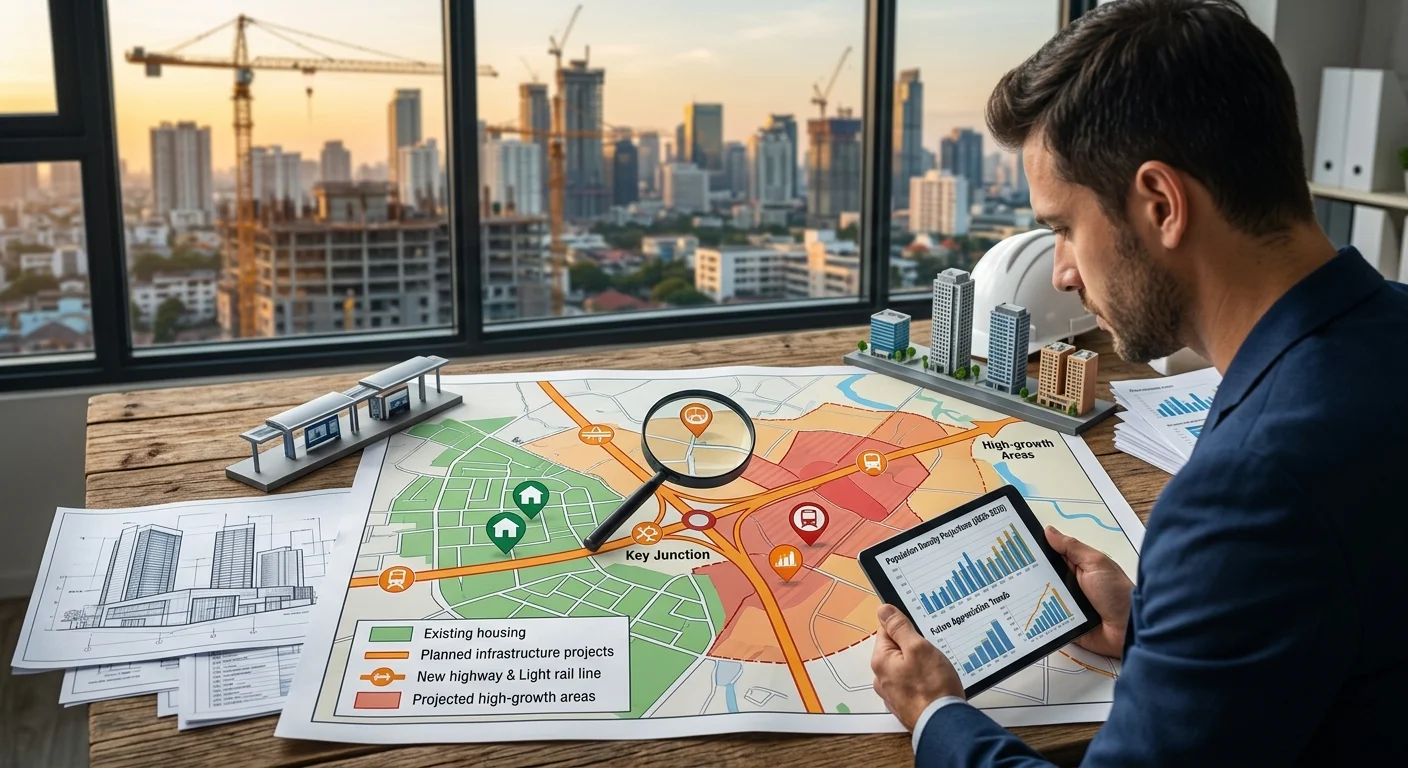
Buying property is often viewed as a long-term investment, but purchasing a property does not automatically mean its value will increase. The potential for property appreciation depends on a combination of economic, demographic, infrastructure, environmental, and real estate market factors.
A property that looks affordable today may become significantly more valuable if the surrounding area develops, attracts new residents, gains better transportation connections, or benefits from major government projects. On the other hand, a property in an expensive location may experience limited property value growth if demand stagnates, infrastructure deteriorates, or new supply exceeds buyer demand.
For investors, homeowners, and anyone considering an investment property, estimating future appreciation before buying can help create a more realistic picture of the potential return. While no method can predict future prices with certainty, buyers can analyze measurable indicators to determine whether an area has conditions that may support long-term real estate appreciation.
This guide explains how to evaluate future property appreciation by examining infrastructure, population growth, employment, government projects, supply and demand, neighborhood development, rental performance, property characteristics, and broader economic conditions.
What Is Property Appreciation?
Understanding Real Estate Appreciation
Property appreciation refers to an increase in the market value of a property over time. If a property is purchased for $200,000 and later has a market value of $240,000, its nominal appreciation is $40,000, or 20%.
Property appreciation can occur because the property itself improves, because the surrounding area becomes more desirable, or because broader market conditions push real estate prices upward.
The main distinction is between natural appreciation and forced appreciation.
Natural appreciation generally occurs because market conditions improve. For example, an area may gain better infrastructure, more businesses, higher employment, or stronger demand.
Forced appreciation occurs when the owner actively increases the property’s value through renovations, improvements, better management, redevelopment, or changes in use.
When estimating future property value, buyers are usually most interested in natural appreciation because it depends heavily on what happens in the surrounding market.
read more about compare properties
Why Appreciation Matters to Property Investors
For an investment property, appreciation can represent an important part of the long-term financial return.
An investor may benefit from several sources of return:
Property appreciation
Rental income
Cash flow
Loan principal repayment
Tax advantages where applicable
Improvements that increase property value
However, appreciation should not be treated as guaranteed income. Real estate markets can experience periods of stagnation or declining prices. A careful investor therefore evaluates appreciation as a potential outcome rather than assuming that property prices will always rise.
Why Future Property Appreciation Is Difficult to Predict
Real Estate Markets Are Local
One of the most important principles in real estate is that property markets are highly localized.
Two neighborhoods within the same city can experience very different levels of property value growth. One may benefit from a new transportation project, commercial development, and population growth, while another may remain relatively unchanged.
Even properties on the same street can have different appreciation potential because of differences in:
Building quality
Land size
Floor location
Views
Parking
Accessibility
Property condition
Legal status
Layout
Developer reputation
Therefore, national or citywide property price trends should be treated as background information rather than a complete investment analysis.
Future Events Are Not Certain
Infrastructure projects can be delayed. Government plans can change. A proposed shopping center may never be completed. Population projections may prove inaccurate, and economic conditions can change.
This means buyers should distinguish between confirmed developments and speculative expectations.
A completed highway extension has a different evidentiary value from a rumor that a highway may eventually be built.
The more important the expected appreciation factor is to your investment decision, the more carefully it should be verified.
Start With Historical Property Value Growth
Analyze the Area’s Price History
One useful starting point is to examine how property prices have changed in the area over several years.
Instead of asking only, “How much have prices increased recently?” consider:
What was the average price five years ago?
What is the approximate price today?
Was appreciation consistent or concentrated in one period?
Did prices fall during economic downturns?
How did the area perform compared with nearby neighborhoods?
Are recent prices supported by actual transactions?
A long-term record can provide more useful context than a short period of rapidly rising prices.
Calculate the Historical Appreciation Rate
A basic way to estimate annualized historical appreciation is to compare the beginning and ending property values over a specific period.
The calculation can be expressed as:
Annualized appreciation rate = (Ending value ÷ Beginning value)^(1 ÷ Number of years) − 1
For example, suppose comparable properties in an area increased from $150,000 to $200,000 over five years.
The total increase is approximately 33.3%, but the annualized rate is lower because the growth occurred over multiple years.
Historical appreciation does not guarantee future appreciation. However, it helps establish a baseline for analyzing whether current expectations are reasonable.
Look Beyond Asking Prices
Listed prices are not always the same as actual transaction prices.
A seller may advertise a property at a price that is significantly above what buyers are willing to pay. If your analysis relies entirely on listing prices, you may overestimate historical property value growth.
Whenever possible, examine completed sales, comparable transactions, valuation reports, and other evidence of actual market activity.
Examine Population Growth
Why Population Matters
Population growth can create additional demand for housing.
When more people move into an area, they need places to live. This can increase demand for apartments, houses, rental properties, and commercial services.
Population growth can be especially relevant when it is connected to economic expansion. People may move into an area because of new jobs, universities, industrial zones, business districts, or improved transportation.
However, population growth alone does not guarantee property appreciation. The amount and type of new housing supply must also be considered.
Identify Where New Residents Are Coming From
Not all population growth has the same effect on real estate.
Consider whether new residents are:
Permanent residents
Students
Professionals
Families
Temporary workers
Retirees
Tourists or seasonal residents
Different groups create different housing demand.
For example, a university expansion may increase demand for smaller apartments and rental units, while the arrival of major employers may increase demand for family housing.
Understanding the demographic composition of future population growth can therefore help identify which property types may benefit.
Evaluate Infrastructure Development
Transportation Projects
Transportation is one of the most important factors to investigate when estimating future property appreciation.
New roads, highways, bridges, rail stations, metro extensions, bus routes, airports, and other transportation improvements can change how accessible an area is.
Improved accessibility may make a previously inconvenient neighborhood more attractive to residents and businesses.
For example, an area located far from major employment centers may become more appealing if a new transportation connection significantly reduces commuting time.
Infrastructure Quality Beyond Transportation
Infrastructure is not limited to roads.
Investors should also consider:
Electricity networks
Water supply
Sewage systems
Internet connectivity
Telecommunications
Waste management
Street lighting
Public transportation
Drainage systems
An area experiencing broad infrastructure improvement may become more attractive over time than an area where development is limited to new buildings without corresponding infrastructure.
read more about residential community
Accessibility Should Be Measured, Not Assumed
A project being “nearby” does not automatically mean it will increase property values.
Ask practical questions:
How far is the property from the project?
Will the project actually reduce travel time?
Will there be direct access?
Will traffic congestion improve or worsen?
Will construction create temporary disruption?
Is the project funded and under development?
What is the expected completion timeline?
These questions help separate meaningful infrastructure improvements from speculative marketing claims.
Study Government Projects and Urban Development
Major Government Projects Can Change Local Markets
Government investment can have a significant influence on future real estate markets.
Large-scale projects may include:
New roads
Public transportation
New administrative districts
Universities
Hospitals
Industrial zones
Government offices
Public parks
Tourism projects
New cities
Utility infrastructure
Such projects can create new economic activity and change where people live and work.
Verify the Status of Government Projects
Not every announced project should be included in an appreciation forecast.
A useful framework is to classify projects into different stages:
Announced: The project has been publicly proposed.
Planned: There is a defined development plan, but implementation may not have begun.
Funded: Financial resources have been allocated or financing has been established.
Under construction: Physical development has started.
Operational: The project is already functioning.
The closer a project is to completion, the easier it generally is to evaluate its potential impact using observable evidence.
Avoid Pricing the Future Too Early
One common mistake is buying property at a premium because of a development that is expected several years in the future.
If sellers have already incorporated the expected benefit into current prices, future appreciation may be lower than expected.
The key question is not simply whether a government project is beneficial. It is whether the expected benefit is already reflected in the property’s current price.
Analyze Employment and Economic Activity
Jobs Create Housing Demand
Employment growth is closely connected to housing demand.
When companies establish offices, factories, technology centers, hospitals, universities, or commercial facilities in an area, they may attract employees.
Those employees need housing, transportation, retail services, restaurants, schools, and other amenities.
This can create a broader economic ecosystem that supports real estate demand.
Look for Diverse Employment
An area dependent on one employer or one industry may face greater risk if that employer reduces operations or the industry experiences a downturn.
A more diversified local economy may provide a broader foundation for long-term housing demand.
When researching an investment property, consider:
Major employers
Industrial developments
Business parks
Universities
Hospitals
Tourism activity
Retail centers
Office development
Startup and technology activity
The objective is not simply to count jobs but to understand whether the area is developing an economic base that can support sustained demand.
Evaluate Supply and Demand
Why New Construction Matters
Strong population growth can support appreciation, but excessive new construction can reduce the effect.
Suppose an area gains 20,000 new residents but developers simultaneously add a very large number of housing units. Prices may not rise as quickly because supply is keeping pace with demand.
Therefore, appreciation analysis should always examine both sides of the market.
Measure Existing and Planned Supply
Investigate:
Current vacant units
New projects under construction
Approved developments
Planned residential communities
Unsold inventory
Rental vacancies
Available land
Expected future construction
An area with strong demand and limited developable land may have different appreciation dynamics from an area with large amounts of available land and extensive new construction.
read more about home maintenance checklist
Consider Oversupply Risk
Oversupply can put pressure on both property prices and rents.
Warning signs can include:
Large numbers of unsold units
High vacancy rates
Numerous competing developments
Heavy investor speculation
Similar properties competing for the same tenants
Developers offering significant incentives to attract buyers
These factors do not automatically mean prices will decline, but they deserve careful consideration.
Examine Rental Market Performance
Rental Demand Can Support Property Value
Rental performance provides another way to evaluate an investment property.
If an area has strong and sustainable rental demand, investors may be more willing to purchase properties there. This can contribute to buyer demand and potentially support property values.
Rental demand may be driven by:
Employment centers
Universities
Hospitals
Tourism
Transportation
Family formation
Population growth
Compare Rent Growth With Purchase Prices
Rapidly increasing property prices are not necessarily supported by equally strong rental demand.
If purchase prices rise much faster than rents, rental yields may decline.
This does not automatically mean appreciation will stop, but it can indicate that the property market is becoming more dependent on future price growth rather than current rental fundamentals.
For an investment property, compare:
Purchase price
Expected monthly rent
Annual rental income
Vacancy assumptions
Maintenance costs
Taxes and fees
Financing costs
Net rental yield
This creates a more complete picture of the investment.
Analyze Neighborhood Development
Amenities Influence Desirability
People generally want convenient access to everyday services and activities.
New or improved amenities can make an area more attractive, including:
Schools
Hospitals
Shopping centers
Restaurants
Gyms
Parks
Entertainment
Banks
Retail stores
Community facilities
The important consideration is whether these amenities are actually improving the quality and convenience of the neighborhood.
Look for Development Momentum
A single new building may have limited impact. A broader pattern of development can be more meaningful.
Look for signs such as:
New businesses opening
Renovated streets
Increasing occupancy
New residential projects
Improved public spaces
New schools or medical facilities
Increasing commercial activity
Better transportation connections
Development momentum can provide evidence that an area is moving into a new phase of growth.
Evaluate the Property Itself
Location Within the Neighborhood
Even in a high-growth area, individual properties can perform differently.
A property located close to major roads may benefit from accessibility but suffer from traffic and noise. A property slightly farther away may offer better residential conditions.
Consider:
Street quality
Accessibility
Noise
Views
Parking
Walkability
Building density
Nearby services
Flooding or drainage risks
Future construction around the property
Micro-location can sometimes matter as much as the broader neighborhood.
Property Quality and Design
Properties with functional layouts, good construction, desirable amenities, and strong maintenance may remain more competitive over time.
Consider whether the property is likely to remain attractive to future buyers.
Features that may influence resale demand include:
Efficient layouts
Natural light
Adequate storage
Parking
Elevators
Security
Energy efficiency
Good building maintenance
Modern kitchens and bathrooms
Flexible room configurations
The goal is to think about the future buyer, not only your current preferences.
read more about floor plan guide
Consider Land Scarcity
Limited Land Can Support Long-Term Demand
Areas with limited developable land can have different appreciation dynamics from areas where new construction can expand indefinitely.
Land constraints may result from:
Geographic boundaries
Protected areas
Existing urban density
Planning restrictions
Infrastructure limitations
Natural barriers
When demand grows while supply remains difficult to expand, competition for existing properties can increase.
Scarcity Must Be Genuine
Not every property marketed as “rare” is actually scarce.
A property may appear limited only because the current development is small, while many similar projects could be built nearby.
Research zoning, land availability, planned developments, and local construction patterns before treating scarcity as a major appreciation factor.
Study Government Regulations and Zoning
Planning Rules Affect Future Supply
Zoning and planning regulations can influence how an area develops.
Rules may determine:
Building heights
Density
Permitted uses
Commercial activity
Residential development
Parking requirements
Land-use changes
Changes in these regulations can either increase or restrict future supply.
Check for Potential Negative Changes
Investors should not only look for positive developments.
A future road expansion, industrial facility, waste facility, high-density development, or other land-use change could affect a property’s desirability.
A complete appreciation analysis therefore asks both:
What could make this property more valuable?
and
What could make this property less desirable?
read more about freehold vs leasehold
Estimating future property appreciation requires more than looking at historical price increases. The strongest analysis combines past market performance with evidence about what is likely to influence future demand and supply.
Infrastructure can improve accessibility. Population growth can create additional housing demand. Government projects can reshape entire districts. Employment growth can attract new residents, while improved amenities can make neighborhoods more desirable. At the same time, excessive construction, weak rental demand, unfavorable regulations, economic pressure, or delayed projects can limit future property value growth.
For anyone considering an investment property, the most useful approach is to evaluate these factors together rather than relying on a single forecast.
Start with the property’s current market value. Examine comparable sales and historical appreciation. Study population and employment trends. Investigate transportation and infrastructure projects. Verify government development plans and their implementation status. Analyze existing and future housing supply. Review rental demand and the property’s own characteristics.
Then create several future-value scenarios instead of assuming that one appreciation rate will continue indefinitely.
Most importantly, remember that appreciation is an uncertain component of a real estate investment. A property can have strong fundamentals and still experience periods of slow growth. The objective of research is therefore not to predict the future with certainty, but to understand the factors that could influence future value and determine whether the current purchase price makes sense under a range of reasonable outcomes.
A disciplined approach to estimating property appreciation helps buyers move beyond simple assumptions and evaluate real estate through measurable indicators such as infrastructure, population, employment, supply, demand, government investment, rental performance, and neighborhood development. This creates a more informed framework for deciding whether a particular property fits a long-term investment strategy.