Buying a property is one of the most significant financial decisions many people make. Whether you are choosing between two apartments, comparing houses in different neighborhoods, or evaluating several investment properties, the decision should not be based on appearance or asking price alone.
Learning how to compare properties professionally requires looking at the complete financial and practical picture. A property with a lower purchase price may have higher maintenance expenses, weaker resale potential, or a less desirable location. Another property may cost more initially but provide better long-term value, stronger rental demand, and greater potential for appreciation.
This is why comparing homes should be approached as a structured evaluation rather than an emotional choice.
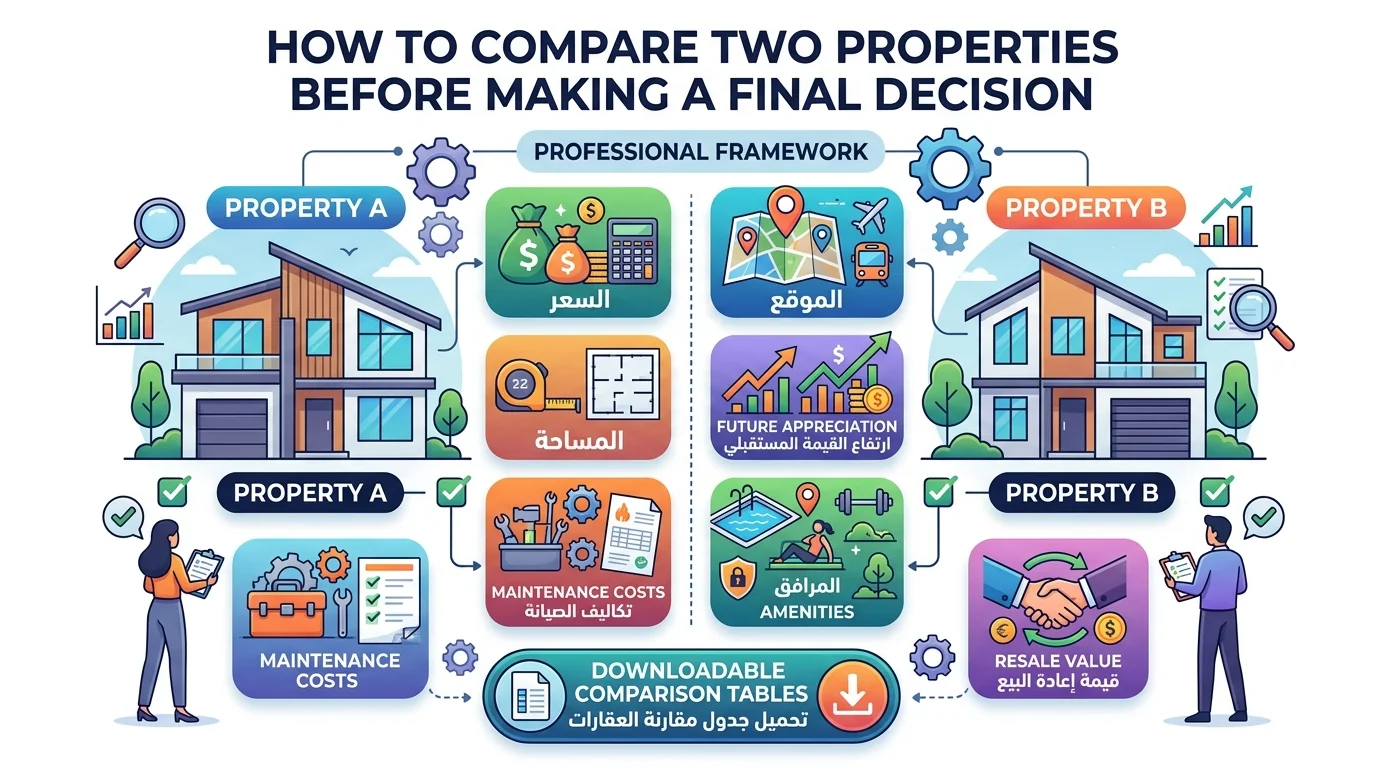
A professional property comparison considers purchase price, location, size, condition, maintenance costs, amenities, neighborhood quality, future appreciation, rental potential, financing considerations, and resale value. It also accounts for risks that may not be obvious during an initial viewing.
This guide provides a practical property comparison checklist and a step-by-step framework that can be used to compare two or more properties objectively.
read more about cost of buying a house
Start With a Clear Property Comparison Framework
Define Your Main Objective
Before comparing properties, determine why you are buying.
Your evaluation criteria will be different if you are purchasing a home for yourself compared with buying an investment property.
For an owner-occupier, factors such as commute time, layout, comfort, neighborhood, schools, privacy, and access to services may receive greater weight.
For an investor, rental yield, vacancy risk, appreciation potential, maintenance costs, tenant demand, and resale liquidity may be more important.
The first step in property evaluation is therefore to define the purpose of the purchase.
Establish Your Non-Negotiable Requirements
Create two lists before visiting properties.
The first should contain requirements that cannot be compromised. Examples include:
- Minimum number of bedrooms
- Maximum budget
- Preferred location
- Parking requirements
- Minimum property size
- Accessibility requirements
- Building or community preferences
- Maximum acceptable renovation requirements
The second list can contain desirable features that are negotiable.
This distinction prevents attractive but unsuitable properties from receiving an unfair advantage simply because they have impressive amenities or attractive interiors.
Compare the Total Cost, Not Just the Purchase Price
Look Beyond the Asking Price
The asking price is one of the easiest property characteristics to compare, but it is not necessarily the most important.
Two properties with similar prices can have dramatically different total ownership costs.
For example, Property A may cost less but require major renovation, while Property B costs more but is recently renovated and requires minimal immediate spending.
Your comparison should therefore include:
- Purchase price
- Down payment
- Financing costs
- Closing expenses
- Taxes and fees
- Renovation costs
- Maintenance costs
- Community or association fees
- Insurance
- Utilities where relevant
- Expected future repairs
The real question is not simply, “Which property is cheaper?”
It is:
Which property provides the best overall value for the money invested?
Calculate the Effective Purchase Cost
A useful approach is to calculate an estimated effective cost.
A simplified formula is:
Effective Cost = Purchase Price + Immediate Repairs + Renovation Costs + Transaction Costs
This number provides a more realistic basis for comparing properties.
A property that appears inexpensive may become significantly more expensive after necessary repairs and improvements are included.
Compare Properties by Location
Evaluate the Neighborhood
Location is one of the most important factors in property evaluation because the buyer can change many characteristics of a home but cannot easily change its location.
When comparing properties, examine:
- Neighborhood quality
- Safety and general environment
- Access to transportation
- Roads and connectivity
- Schools
- Hospitals and healthcare
- Shopping areas
- Restaurants and entertainment
- Parks and recreational facilities
- Employment centers
- Public services
- Future infrastructure
A beautiful home in a weak location may perform worse financially than an average home in a highly desirable neighborhood.
Consider Accessibility
Two properties can technically be in the same city but have very different levels of accessibility.
Compare how long it takes to reach important destinations from each property.
Consider commuting time during normal traffic conditions rather than relying only on estimated driving distance.
For an investment property, accessibility can also influence rental demand.
Properties close to transportation, business districts, universities, hospitals, commercial areas, or major employment centers may attract a broader pool of potential tenants.
Examine the Immediate Surroundings
Do not evaluate only the neighborhood name.
Walk around the immediate area.
Look at the streets, neighboring buildings, parking conditions, noise levels, pedestrian activity, cleanliness, and general maintenance.
A property can have a prestigious address while being located on a street that is significantly less desirable than nearby alternatives.
Compare Property Size and Layout
Evaluate Usable Space
Square footage is important, but total size alone does not tell you whether a property is efficiently designed.
Two homes with identical floor areas can provide completely different living experiences.
Compare:
- Number of bedrooms
- Number of bathrooms
- Living room size
- Kitchen layout
- Storage
- Balcony or outdoor space
- Hallway space
- Natural light
- Ceiling height
- Room proportions
The goal is to determine how much of the property is genuinely useful.
Compare the Floor Plan
A good floor plan can make a smaller property feel comfortable, while a poor layout can make a larger property feel inefficient.
Ask whether furniture can be placed comfortably and whether rooms provide practical privacy.
Consider how the property would function if your household changed in the future.
For investment properties, also consider whether the layout appeals to the target rental market.
read more about property investment guide
Compare Property Condition
Inspect the Structural Condition
A property should not be judged by decoration alone.
Paint, furniture, lighting, flooring, and attractive kitchens can make a property appear better than its underlying condition.
Look beyond cosmetic features.
Important areas to investigate include:
- Foundation or structural elements
- Roof
- Walls and ceilings
- Doors and windows
- Plumbing
- Electrical systems
- Heating and cooling systems
- Water pressure
- Drainage
- Moisture
- Signs of leaks
- Insulation
- Ventilation
A professional inspection may be appropriate before completing a purchase, particularly when the property is older or appears to require significant work.
Separate Cosmetic Problems From Major Problems
Not every defect has the same financial importance.
A damaged wall can be relatively inexpensive to repair, while serious plumbing, electrical, structural, or water-related problems can be much more costly.
When comparing properties, classify issues into three groups:
Minor: Cosmetic problems that can be repaired relatively easily.
Moderate: Repairs that require meaningful spending but are manageable.
Major: Problems that could significantly affect the property’s safety, value, or ownership cost.
This makes your comparison more realistic.
Compare Maintenance Costs
Understand Recurring Expenses
Maintenance costs can have a major impact on long-term property value.
Ask about recurring expenses such as:
- Building maintenance
- Community fees
- Elevator maintenance
- Landscaping
- Security
- Swimming pool maintenance
- Common-area repairs
- HVAC servicing
- Property management
- Pest control
- Waste services
For apartments and properties within managed communities, recurring fees should be investigated carefully.
Estimate Future Maintenance
Do not look only at current expenses.
Consider the age and condition of major systems.
An older air-conditioning system, roof, water heater, plumbing network, or electrical installation may require replacement in the future.
A newer property may have a higher purchase price but lower near-term maintenance requirements.
Compare Amenities Carefully
Identify Which Amenities Actually Matter
Amenities can make a property more attractive, but not every amenity adds equal value.
Common amenities include:
- Swimming pools
- Gyms
- Parking
- Security
- Elevators
- Gardens
- Children’s areas
- Clubhouses
- Shared lounges
- Sports facilities
- Smart-home features
- Private outdoor spaces
The important question is not how many amenities a property has.
It is whether the amenities provide meaningful value for you or potential future buyers and tenants.
Consider the Cost of Amenities
Amenities can sometimes increase monthly or annual maintenance charges.
A large complex with extensive facilities may require higher service fees than a simpler development.
Therefore, compare the benefit of the amenities with their associated costs.
Evaluate Future Appreciation Potential
What Is Property Appreciation?
Property appreciation refers to an increase in a property’s value over time.
Future appreciation cannot be guaranteed, but several factors can influence it.
These include:
- Location
- Infrastructure development
- Population growth
- Employment opportunities
- Supply and demand
- Neighborhood development
- Transportation improvements
- Quality of construction
- Property scarcity
- Reputation of the area
When comparing properties, consider which one appears better positioned for long-term demand.
Research the Development Potential of the Area
A neighborhood that is currently developing may experience significant changes over time.
Potential infrastructure improvements, commercial developments, transportation projects, and new employment centers may influence future demand.
However, planned projects should be treated carefully.
Do not assume that every announced development will be completed exactly as expected.
Evaluate credible information and consider the possibility of delays or changes.
Compare Historical Market Performance Carefully
Past price growth can provide useful context, but it should not be treated as a guarantee of future appreciation.
A property that increased significantly in value in the past may already be priced at a premium.
Instead of asking only, “Which property appreciated more?”
Ask:
Why did it appreciate, and are those conditions likely to continue?
Compare Rental Potential
Estimate Rental Demand
If you are purchasing an investment property, rental potential should be part of your property comparison.
Consider:
- Typical rental rates
- Tenant demand
- Vacancy periods
- Nearby employers
- Universities
- Transportation
- Local amenities
- Property type
- Unit size
- Furnishing requirements
A property with slightly lower potential rent may still be a better investment if it has lower maintenance costs and shorter vacancy periods.
Calculate Rental Yield
A basic gross rental yield can be estimated using:
Gross Rental Yield = Annual Rental Income ÷ Property Purchase Price × 100
For example, if a property costs $200,000 and generates $12,000 in annual rent:
$12,000 ÷ $200,000 × 100 = 6% gross rental yield
However, gross yield does not account for expenses.
A more useful investment analysis considers maintenance, taxes, management, insurance, vacancy, and other operating costs.
read more about home layout ideas
Compare Resale Value
Why Resale Value Matters
Even if you intend to live in the property for many years, circumstances can change.
You may eventually relocate, upgrade, sell to access capital, or transfer the property.
A property with strong resale demand can provide greater flexibility.
Evaluate Future Buyer Demand
When comparing homes, consider who would likely buy the property in the future.
Properties with broad appeal may have a larger potential buyer pool.
Factors such as practical layouts, desirable locations, reasonable sizes, parking, good condition, and access to services can support resale demand.
A highly specialized property may appeal to fewer buyers.
Consider Liquidity
Property liquidity refers to how easily a property can be sold at a reasonable market price.
A highly desirable property in a strong market may attract buyers more quickly than a property with limited demand.
This does not mean you should always choose the easiest property to sell, but resale liquidity should be included in your evaluation.
Use a Weighted Property Comparison System
Why Weighting Makes Comparisons More Professional
Not every factor should have the same importance.
For example, if location is extremely important to you, it should have a greater weight than an extra amenity.
A weighted system allows you to reflect your actual priorities.
Downloadable Property Comparison Table
For a ready-to-use comparison workbook, use the downloadable Excel template created for this guide:
Download the Property Comparison Tables
The workbook includes a weighted comparison sheet where you can enter scores for multiple properties and a separate due-diligence checklist for recording important questions and checks.
Create a Property Comparison Checklist
Financial Checklist
Before making a final decision, confirm:
- Purchase price
- Negotiated price
- Down payment
- Financing costs
- Closing costs
- Taxes
- Insurance
- Maintenance fees
- Renovation budget
- Expected annual maintenance
- Potential rental income
- Estimated resale value
Location Checklist
Evaluate:
- Neighborhood quality
- Accessibility
- Transportation
- Schools
- Healthcare
- Shopping
- Restaurants
- Employment centers
- Future infrastructure
- Noise
- Traffic
- Parking
- General surroundings
Property Checklist
Inspect:
- Size
- Floor plan
- Bedrooms
- Bathrooms
- Storage
- Natural light
- Ventilation
- Windows
- Plumbing
- Electrical systems
- Heating and cooling
- Roof or structural elements
- Signs of moisture
- Overall condition
Legal and Documentation Checklist
Depending on the location and transaction, verify appropriate documentation concerning:
- Ownership
- Title
- Property boundaries
- Building permits
- Renovations
- Liens or encumbrances
- Outstanding fees
- Taxes
- Building regulations
- Community restrictions
Professional legal or real estate advice may be appropriate when documentation is complex.
Compare the Properties at Different Times of Day
Visit During the Day
A daytime visit can reveal natural lighting, traffic, parking availability, neighborhood activity, and general noise.
Pay attention to how the property feels rather than focusing only on its interior appearance.
Visit During the Evening
An evening visit may reveal conditions that are impossible to observe during the day.
Consider:
- Street lighting
- Noise
- Parking
- Traffic
- Security concerns
- Neighbor activity
- Commercial activity
If possible, visit both properties at comparable times.
Talk to People Who Know the Area
Ask Current Residents
Current residents can provide information that may not appear in property advertisements.
They may know about:
- Noise problems
- Maintenance issues
- Parking
- Building management
- Water supply
- Utility problems
- Security
- Neighborhood changes
Their opinions should not replace professional due diligence, but they can provide useful context.
Speak With Relevant Professionals
Depending on the purchase, useful professionals may include:
- Real estate agents
- Property inspectors
- Surveyors
- Lawyers
- Mortgage professionals
- Property managers
- Contractors
Each professional can identify different aspects of the decision.
read more about questions to ask before buying a house
Compare Negotiation Potential
Determine How Flexible the Seller Is
The listed price is not necessarily the final price.
Consider how long the property has been on the market and whether the seller has already reduced the asking price.
A property with negotiation potential may become much more attractive after a reasonable price adjustment.
Compare Value After Negotiation
Do not compare the original asking prices if you have different negotiated offers.
Compare the actual expected acquisition costs.
This creates a more meaningful comparison between properties.
Use a Simple Scoring Method
Score Each Property From 1 to 10
A simple scoring system can make a complex comparison easier.
For every criterion, assign:
1–3: Poor
4–5: Below average
6–7: Acceptable to good
8–9: Very good
10: Exceptional
Do not give a property a high score simply because you like it.
Use evidence wherever possible.
Apply the Correct Weight
If the location is twice as important to you as amenities, location should receive a much higher weight.
For example:
Location: 20%
Amenities: 5%
This prevents a property from winning because of several minor features while losing on an issue that is actually critical.
Example of Comparing Two Properties
Property A
Imagine Property A costs $180,000.
It offers:
- Larger living space
- Good condition
- Lower maintenance costs
- Convenient parking
- Established neighborhood
- Moderate appreciation potential
Its main disadvantages are an older building and fewer community amenities.
Property B
Property B costs $195,000.
It offers:
- Newer construction
- Modern amenities
- Stronger projected rental demand
- Better access to new infrastructure
- Potentially stronger appreciation
Its disadvantages include higher maintenance fees, a smaller interior, and a higher purchase price.
Which Property Is Better?
There is no universal answer.
For an owner who values space, low recurring costs, and established surroundings, Property A may be the better choice.
For an investor who prioritizes rental demand, modern amenities, and long-term development potential, Property B may be more attractive.
The professional approach is not to declare one property universally better.
It is to determine which property better satisfies the buyer’s objectives at an acceptable level of risk.
Red Flags to Watch During Property Comparison
Unusually Low Prices
A price significantly below comparable properties deserves investigation.
Possible explanations may include:
- Urgent sale
- Structural problems
- Legal complications
- Poor location
- High maintenance costs
- Difficult resale conditions
A low price can be an opportunity, but it can also indicate hidden risk.
Major Unexplained Renovations
If a property appears extensively renovated, ask about the work.
Determine whether appropriate permits or approvals were required and whether qualified professionals completed major systems work.
Persistent Moisture or Water Damage
Signs of moisture should not be dismissed as simple cosmetic problems.
Look for stains, peeling paint, unusual odors, mold-like growth, damaged flooring, and other indicators of water intrusion.
The underlying cause should be investigated.
High Recurring Fees
A property can look affordable while having unusually high ongoing costs.
Always compare recurring expenses between properties.
How to Make the Final Decision
Eliminate Properties That Fail Your Non-Negotiables
Before comparing scores, remove properties that fail essential requirements.
If you cannot accept the location, budget, size, or legal status, a high score in another category should not save the property.
Compare the Remaining Properties
Once unsuitable options are removed, compare the finalists using your weighted framework.
Review:
- Total acquisition cost
- Location
- Size
- Condition
- Maintenance
- Amenities
- Appreciation
- Rental potential
- Resale value
- Risks
Review the Decision After a Short Break
Avoid making a major purchase decision immediately after an emotional viewing.
Take some time to review your notes and comparison table.
Ask yourself whether the property still looks attractive when you remove the emotional excitement of the viewing.
Determine the Biggest Difference
Ask:
What does Property A offer that Property B cannot easily match?
Then ask the same question in reverse.
The answer often reveals the most important trade-off.
read more about property location
How to Compare Properties
Knowing how to compare properties effectively is about looking beyond the most obvious features.
The cheapest property is not automatically the best value. The largest home is not automatically the best investment. The newest building is not necessarily the safest choice, and the property with the most amenities may not provide the strongest long-term return.
A professional property comparison considers the complete picture.
Start with your objective and budget. Establish your non-negotiable requirements, then compare purchase price, location, size, condition, maintenance costs, amenities, appreciation potential, rental demand, and resale value.
Use a structured property comparison checklist rather than relying on memory. Score each property according to clearly defined criteria, assign greater weight to the factors that matter most to you, and document both advantages and risks.
Most importantly, calculate the total cost of ownership rather than focusing only on the advertised purchase price.
The strongest property is ultimately the one that provides the best balance between price, quality, location, future potential, ongoing costs, and personal or investment objectives.
A disciplined comparison can turn an overwhelming choice between multiple properties into a clear, evidence-based decision.