Owning a home is a major investment, and protecting that investment requires more than paying the mortgage and keeping the rooms clean. Regular maintenance plays a critical role in preserving the property’s condition, preventing expensive repairs, improving safety, and maintaining its long-term value. A well-organized home maintenance checklist gives property owners a practical way to keep track of essential tasks throughout the year instead of waiting until something breaks.
Many home problems begin as small issues that are easy and relatively inexpensive to fix. A minor roof leak, clogged gutter, slow drain, cracked seal, loose electrical connection, or poorly maintained HVAC system can eventually become a much larger problem if ignored. Regular property maintenance helps homeowners identify these issues early and address them before they affect other parts of the house.
A good house maintenance schedule should include tasks that are completed monthly, quarterly, seasonally, and annually. Some tasks take only a few minutes, while others require professional inspection or servicing. The goal is not to make homeownership complicated, but to create a consistent routine that protects the structure, systems, appearance, and value of the property.
This comprehensive home maintenance checklist explains what homeowners should inspect and maintain throughout the year, including seasonal responsibilities, monthly tasks, quarterly checks, and annual maintenance.
read more about home layout ideas
Why a Home Maintenance Checklist Matters
Preventing Small Problems From Becoming Expensive Repairs
One of the biggest advantages of following a regular maintenance schedule is early problem detection. A small water leak may initially appear harmless, but prolonged moisture can damage walls, flooring, insulation, ceilings, and structural components.
Similarly, a small roof defect can allow water to enter the home during heavy rain. If the problem is discovered months later, the repair may involve much more than replacing a damaged roofing material.
A regular home maintenance checklist encourages homeowners to inspect vulnerable areas before problems become serious.
Protecting Property Value
A well-maintained property generally remains more attractive to potential buyers and can retain its value more effectively than a neglected property.
Maintenance affects both visible and hidden aspects of a home. Clean exterior surfaces, functioning systems, a well-maintained roof, good plumbing, reliable electrical systems, and properly maintained landscaping all contribute to the overall impression of the property.
For homeowners who may eventually sell or rent their property, consistent maintenance can also reduce the number of major repairs required before putting the property on the market.
Improving Home Safety
Maintenance is also a safety issue. Smoke detectors, carbon monoxide detectors, electrical systems, stairways, handrails, locks, and outdoor lighting should be inspected regularly.
A structured house maintenance schedule makes it easier to remember safety-related tasks that might otherwise be overlooked.
Increasing Energy Efficiency
Poorly maintained heating and cooling systems, dirty filters, air leaks, damaged weather stripping, and inefficient appliances can increase energy consumption.
Regular maintenance helps systems operate more efficiently and may reduce unnecessary energy costs. Even simple tasks such as replacing HVAC filters and checking door seals can contribute to better household efficiency.
Monthly Home Maintenance Checklist
Inspect Plumbing Fixtures
Every month, walk through the home and check sinks, toilets, showers, bathtubs, and exposed pipes for signs of leaks.
Look underneath sinks for moisture or water stains. Check around toilets for unusual dampness and pay attention to faucets that continue dripping after being turned off.
Small plumbing leaks can waste water and may eventually damage cabinets, flooring, walls, or other materials.
Check for Water Damage
Inspect ceilings, walls, floors, and areas around windows for discoloration, bubbling paint, damp spots, or unusual odors.
Water damage is not always obvious. A faint musty smell or small stain may indicate a hidden moisture problem.
Investigating these signs early is an important part of effective property maintenance.
Replace or Clean HVAC Filters
HVAC filters should be checked regularly because dust and debris can restrict airflow and reduce system efficiency.
The appropriate replacement frequency depends on the filter type, household conditions, pets, indoor air quality needs, and manufacturer recommendations.
A dirty filter can force the HVAC system to work harder, potentially increasing energy use and placing additional strain on the equipment.
Test Smoke and Carbon Monoxide Detectors
Test smoke alarms and carbon monoxide detectors regularly to make sure they are functioning properly.
Replace batteries when necessary and follow the manufacturer’s recommendations for replacing the detectors themselves.
Do not ignore an alarm that produces warning sounds or shows signs of malfunction.
Inspect Windows and Doors
Check windows and exterior doors for damaged seals, gaps, cracks, or difficulty opening and closing.
Damaged weather stripping can allow conditioned air to escape and outdoor air to enter the home.
Also inspect locks and handles to ensure doors and windows remain secure.
Clean High-Traffic Areas
Monthly home care should also include cleaning areas that are frequently overlooked, such as vents, ceiling fans, baseboards, air returns, and appliance surfaces.
Keeping these areas clean can improve indoor comfort while making it easier to identify developing problems.
read more about questions to ask before buying a house
Quarterly Home Maintenance Checklist
Inspect the Roof From a Safe Position
Every few months, inspect the roof visually from the ground or another safe location.
Look for missing or damaged roofing materials, visible sagging, damaged flashing, blocked drainage areas, or signs of water intrusion.
Homeowners should avoid climbing onto roofs when they do not have the appropriate equipment or experience. Professional inspection may be appropriate when roof damage is suspected.
Clean Gutters and Downspouts
Gutters and downspouts play an important role in directing rainwater away from the property.
Leaves, dirt, branches, and other debris can block water flow. When gutters overflow, water may collect near the foundation or run down exterior walls.
Cleaning gutters periodically is therefore an important part of home maintenance checklist planning.
Downspouts should also direct water sufficiently away from the foundation.
Inspect the Foundation and Exterior Walls
Walk around the exterior of the property and look for cracks, gaps, peeling paint, damaged siding, deteriorating masonry, or other visible changes.
Not every crack indicates a serious structural problem, but significant or rapidly changing cracks should be evaluated by an appropriate professional.
Check Drains
Slow drains can indicate developing blockages. Check sinks, showers, tubs, and floor drains for reduced drainage speed.
Addressing minor drainage issues early can help prevent complete blockages and potential water overflow.
Avoid using harsh chemical drain cleaners repeatedly, particularly when they are incompatible with the plumbing system.
Inspect Electrical Components
Check outlets, switches, extension cords, and visible electrical components for signs of overheating, discoloration, damage, or unusual odors.
If an electrical component sparks, feels unusually hot, repeatedly trips a breaker, or shows signs of damage, professional evaluation is recommended.
Homeowners should never attempt electrical repairs beyond their knowledge and skill level.
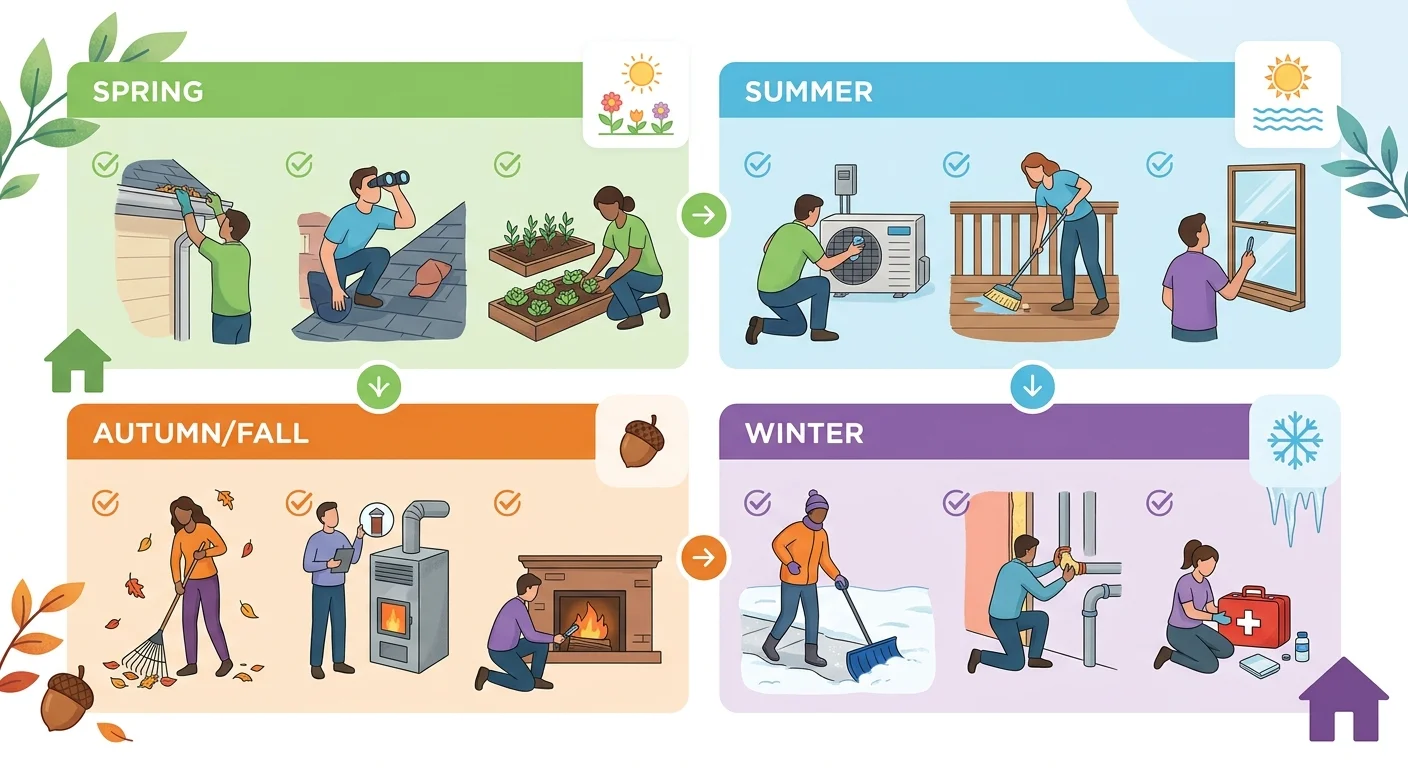
Seasonal Home Maintenance Guide
Spring Home Maintenance Checklist
Spring is an ideal time to inspect the property after the colder months and prepare it for warmer weather.
Inspect the Exterior
Walk around the property and inspect siding, paint, masonry, windows, doors, decks, patios, fences, and outdoor structures.
Winter weather can reveal cracks, loose materials, damaged finishes, and drainage problems.
Addressing exterior issues early helps prevent moisture penetration and deterioration.
Clean Gutters and Drainage Areas
Spring rain can place additional demands on drainage systems. Remove accumulated debris from gutters and check that downspouts are clear.
Make sure water flows away from the foundation rather than collecting beside the house.
Service the Cooling System
Before hot weather arrives, inspect and service the air-conditioning system according to the manufacturer’s recommendations.
A professional HVAC inspection may include checking system performance, electrical components, refrigerant-related issues, airflow, and other components.
Early servicing can reduce the risk of unexpected breakdowns during periods of high demand.
Inspect Outdoor Water Systems
Check outdoor faucets, hoses, irrigation systems, and visible pipes for leaks or damage.
If the property has an irrigation system, inspect sprinkler heads and verify that water is being distributed efficiently.
Check for Pests
Spring can bring increased pest activity. Inspect areas around doors, windows, foundations, rooflines, and utility openings for signs of insects or rodents.
Early detection is generally easier to manage than an established infestation.
Summer Home Maintenance Checklist
Monitor Air Conditioning Performance
During summer, cooling systems often operate for long periods.
Pay attention to unusual noises, weak airflow, inconsistent cooling, unpleasant odors, or unexpected increases in energy consumption.
These signs may indicate that maintenance or professional servicing is necessary.
Inspect Exterior Paint and Sealants
Summer is a good time to inspect exterior paint, caulking, and sealants.
Cracked or deteriorated sealant around windows and doors can allow moisture and outdoor air to enter.
Re-sealing vulnerable areas can help protect the structure and improve energy efficiency.
Maintain Landscaping
Trees, shrubs, grass, and other landscaping elements should be maintained so that they do not damage the property.
Branches should not make contact with the roof or interfere with electrical infrastructure.
Plants should also be managed around exterior walls and drainage areas.
Check Decks and Outdoor Structures
Inspect decks, balconies, patios, fences, and outdoor stairs for loose boards, damaged surfaces, corrosion, or weakened connections.
Pay particular attention to handrails and steps because structural weakness in these areas can create serious safety hazards.
Inspect Attic and Ventilation Areas
Check accessible attic spaces for excessive heat, moisture, pests, damaged insulation, or signs of roof leaks.
Proper ventilation is important for managing heat and moisture accumulation.
read more about property location
Fall Home Maintenance Checklist
Prepare the Heating System
Before temperatures drop, inspect and service the heating system according to the manufacturer’s recommendations.
Replace filters as appropriate and make sure vents and registers are not blocked by furniture or other objects.
Clean Gutters Again
Fall often brings leaves and other debris that can quickly clog gutters.
Cleaning gutters before heavy seasonal rainfall or winter conditions can help prevent drainage problems.
Inspect the Roof
Check the roof for damaged materials, worn flashing, blocked drainage points, and other visible issues.
If a professional roof inspection is appropriate, scheduling it before severe weather can be beneficial.
Check Doors and Windows for Air Leaks
Inspect weather stripping and caulking around doors and windows.
Sealing air leaks can improve indoor comfort and reduce unnecessary heating demand.
Inspect the Fireplace and Chimney
Homes with fireplaces or chimneys should have them inspected and cleaned as recommended by qualified professionals.
Creosote buildup, blockages, damaged components, or ventilation problems can increase fire and carbon monoxide risks.
Winter Home Maintenance Checklist
Protect Pipes From Freezing
In climates where freezing temperatures occur, exposed plumbing should be protected appropriately.
Insulate vulnerable pipes and make sure areas containing plumbing remain sufficiently protected from extreme cold.
Frozen pipes can expand and potentially burst, resulting in significant water damage.
Monitor the Roof During Severe Weather
After heavy rain, snow, or strong winds, inspect accessible areas for signs of damage or water intrusion.
Do not attempt dangerous roof inspections during severe weather.
Check Indoor Humidity
Winter heating can affect indoor humidity levels. Excessive moisture can contribute to condensation, while very dry conditions can affect comfort and certain materials.
Maintaining appropriate indoor conditions can support better home care.
Check Emergency Supplies
Winter is a good time to review emergency supplies, including flashlights, batteries, basic tools, first-aid supplies, and backup essentials.
A property maintenance plan should consider not only routine repairs but also preparedness for unexpected events.
Annual Home Maintenance Checklist
Schedule a Professional HVAC Inspection
Even when an HVAC system appears to be working normally, periodic professional servicing can help identify wear, performance problems, and maintenance needs.
Follow the equipment manufacturer’s recommendations for service intervals.
Inspect the Roof Professionally When Necessary
A professional roof inspection can identify problems that may not be visible from the ground.
This can be especially useful for older roofs or properties exposed to severe weather.
Service the Water Heater
Water heaters require periodic inspection and maintenance according to their type and manufacturer’s recommendations.
Check for leaks, corrosion, unusual noises, and changes in hot-water performance.
Inspect the Plumbing System
An annual plumbing review can help identify leaks, corrosion, pressure problems, drainage issues, and aging components.
Older properties may benefit from more frequent inspections depending on the condition of their plumbing infrastructure.
Review the Electrical System
Consider having a qualified electrician inspect the home’s electrical system when appropriate, particularly in older properties or when electrical problems occur.
Signs such as frequent breaker trips, flickering lights, burning odors, or warm outlets should not be ignored.
Check the Foundation
Inspect the foundation and surrounding areas for changes in cracks, moisture, drainage, or settlement.
Water management around the foundation is particularly important because poor drainage can contribute to long-term structural and moisture problems.
Home Maintenance Checklist by Frequency
Monthly Tasks
Monthly home care should focus on simple inspections and routine tasks.
Key monthly tasks include:
- Checking for plumbing leaks
- Inspecting ceilings and walls for moisture
- Checking HVAC filters
- Testing smoke and carbon monoxide alarms
- Inspecting doors and windows
- Checking visible electrical components
- Cleaning vents and high-dust areas
- Monitoring unusual odors or noises
- Checking appliances for abnormal performance
Quarterly Tasks
Quarterly property maintenance should involve more detailed inspections.
These tasks can include:
- Cleaning gutters
- Checking drainage
- Inspecting the roof visually
- Examining exterior walls
- Checking foundations
- Inspecting outdoor structures
- Reviewing plumbing fixtures
- Checking electrical components
- Inspecting landscaping around the property
Annual Tasks
Annual maintenance generally involves deeper inspections and professional services when necessary.
Important annual tasks can include:
- HVAC servicing
- Roof inspection
- Water heater maintenance
- Plumbing inspection
- Electrical review
- Chimney inspection where applicable
- Exterior inspection
- Foundation assessment
- Appliance maintenance
- Review of home insurance and important property records
read more about compare properties
Home Maintenance Checklist for Protecting Property Value
Focus on the Building Envelope
The roof, exterior walls, windows, doors, foundation, and drainage system form the primary protective envelope of the property.
Keeping these components in good condition should be a major priority because damage in one area can affect other parts of the building.
Keep Maintenance Records
Homeowners should maintain a simple record of completed maintenance tasks.
The record can include the date of the service, what was inspected, what was repaired, the professional or company involved, and any recommended future work.
Maintenance records can be useful when selling the property because they demonstrate that the home has been responsibly maintained.
Prioritize Preventive Repairs
Not every maintenance issue needs to be addressed immediately, but homeowners should learn to distinguish cosmetic concerns from problems that can cause significant damage.
Water leaks, electrical hazards, structural concerns, major roof damage, and heating or cooling failures generally deserve higher priority than minor cosmetic imperfections.
How to Create an Effective House Maintenance Schedule
Use a Calendar
A digital or physical calendar can make a maintenance plan much easier to follow.
Assign recurring tasks to specific months instead of relying on memory.
For example, HVAC servicing can be scheduled before the primary heating or cooling season, while gutter cleaning can be planned around periods of heavy debris or rainfall.
Group Similar Tasks Together
Instead of handling maintenance randomly, group related tasks.
For example, an exterior maintenance day could include checking windows, doors, paint, gutters, drainage, landscaping, and outdoor structures.
This approach can save time and make inspections more organized.
Separate DIY Tasks From Professional Work
Homeowners can safely handle many basic tasks, such as changing filters, cleaning accessible areas, testing alarms, and visually inspecting the property.
However, specialized systems such as electrical, HVAC, roofing, gas, or structural components may require qualified professionals.
A good maintenance schedule clearly identifies which tasks can be performed safely by the homeowner and which require expert assistance.
Common Home Maintenance Mistakes to Avoid
Waiting Until Something Breaks
One of the most expensive approaches to home care is waiting for a system to fail before maintaining it.
Preventive maintenance is generally more predictable than emergency repairs.
Ignoring Small Leaks
A dripping faucet or small pipe leak may seem insignificant, but persistent moisture can cause damage and encourage mold growth in suitable conditions.
Leaks should be investigated rather than ignored.
Neglecting Gutters and Drainage
Blocked gutters can contribute to water accumulation around the home.
Regular gutter and drainage maintenance is a relatively simple way to reduce avoidable moisture problems.
Forgetting Exterior Maintenance
Homeowners often focus on interiors while overlooking the roof, siding, foundation, gutters, fences, and landscaping.
Exterior maintenance is equally important because these components protect the interior of the property.
Skipping Professional Inspections
DIY maintenance is useful, but it cannot replace professional expertise for specialized systems.
Professional inspections can identify problems that are difficult for an untrained homeowner to recognize.
How Home Maintenance Saves Money Over Time
Reducing Emergency Repairs
Routine inspections can identify developing issues before they become emergencies.
Replacing a worn component or repairing a small leak is often more manageable than dealing with extensive damage caused by prolonged neglect.
Extending the Life of Major Systems
HVAC systems, water heaters, roofing materials, appliances, plumbing components, and other systems can benefit from appropriate maintenance.
Following manufacturer recommendations and addressing problems early can help maximize the useful life of these investments.
Improving Energy Performance
Regularly maintained heating and cooling systems can operate more effectively than neglected equipment.
Sealing air leaks, maintaining filters, checking insulation, and addressing inefficient equipment can also contribute to better energy performance.
Home Maintenance Checklist for Different Types of Properties
Single-Family Homes
Single-family homeowners are typically responsible for a wide range of maintenance tasks, including roofs, gutters, landscaping, exterior walls, plumbing, HVAC systems, and drainage.
A comprehensive annual plan is especially useful for keeping these responsibilities organized.
Apartments and Condominiums
Apartment and condominium owners may have different responsibilities depending on building rules and ownership agreements.
Some systems, such as exterior walls, roofs, elevators, or common plumbing infrastructure, may be managed by a property management company or homeowners’ association.
Owners should understand exactly which maintenance responsibilities belong to them.
Rental Properties
Landlords should maintain a consistent property maintenance system that includes regular inspections and timely repairs.
Keeping rental properties in good condition protects the property itself while also supporting tenant safety and satisfaction.
How to Prioritize Home Maintenance Tasks
High-Priority Issues
Safety hazards, active water leaks, significant roof damage, major electrical problems, gas-related concerns, structural changes, and serious HVAC failures should receive prompt attention.
Medium-Priority Issues
Examples include damaged weather stripping, minor exterior deterioration, slow drains, aging fixtures, and landscaping problems that could become more serious if ignored.
Low-Priority Issues
Cosmetic imperfections, minor paint damage, and aesthetic upgrades can generally be scheduled around more important maintenance requirements.
This priority system prevents homeowners from spending time and money on cosmetic improvements while critical maintenance issues remain unresolved.
read more about residential community
A reliable home maintenance checklist is one of the simplest tools a property owner can use to protect a valuable investment. Home maintenance does not have to mean constantly repairing or upgrading the house. Instead, it is about creating a consistent system for identifying problems early, maintaining essential systems, improving safety, and preventing avoidable deterioration.
Monthly inspections can catch small issues before they become expensive. Quarterly checks provide an opportunity to examine the property’s major components more carefully. Seasonal maintenance prepares the home for changing weather conditions, while annual inspections and professional services help maintain critical systems over the long term.
The most effective approach is to build a practical house maintenance schedule based on the property’s age, construction, climate, systems, and individual needs. By combining routine home care with professional inspections when necessary, homeowners can reduce unexpected repair costs, improve comfort and safety, extend the life of major components, and protect the property’s value for years to come.
Ultimately, property maintenance is not simply about keeping a house looking good. It is about protecting the structure, systems, financial investment, and long-term usability of the home. A few hours of planned maintenance throughout the year can prevent problems that might otherwise require significant time and money to resolve.