Buying a house is one of the largest financial decisions many people make. It is easy to focus on the advertised purchase price because that is usually the largest and most visible number in a property listing. However, the purchase price is only one part of the total amount required to acquire and maintain a home.
The real cost of buying a house can include taxes, registration charges, legal and administrative fees, mortgage-related expenses, insurance, inspections, moving costs, furniture, repairs, maintenance, utilities, and unexpected expenses. Some costs are paid before the purchase, others at closing, and many continue for years after the keys are handed over.
Understanding these expenses before making an offer can help buyers create a more realistic budget. It can also prevent a situation where a property appears affordable based on its listing price but becomes financially difficult once all associated expenses are included.
The purpose of calculating the cost of buying a house is therefore not simply to determine whether the buyer can afford the property’s purchase price. The more useful question is whether the buyer can comfortably afford the entire ownership commitment.
This article explains the major costs involved in purchasing a property and provides practical examples of how buyers can estimate the real financial commitment.
read more about increase property value
What Is the Cost of Buying a House?
The purchase price is only the starting point
The purchase price is the amount agreed upon between the buyer and seller for the property itself.
For example, suppose a house is listed for $250,000 and the buyer agrees to purchase it for that amount.
At first glance, the buyer may assume the required budget is $250,000.
In reality, the final amount could be considerably higher.
The buyer may need to pay closing costs, taxes, registration fees, legal expenses, inspections, insurance, moving expenses, furniture, repairs, and other property-related costs.
Some of these expenses are one-time costs, while others recur annually or monthly.
Separate one-time costs from recurring costs
One of the easiest ways to understand the real cost of buying a property is to divide expenses into categories.
One-time purchase costs may include:
- Down payment
- Transfer taxes
- Registration fees
- Legal fees
- Property inspection
- Valuation fees
- Mortgage arrangement costs
- Administrative charges
- Moving expenses
- Initial repairs
- Essential furniture
Recurring ownership costs may include:
- Mortgage payments
- Property taxes
- Home insurance
- Maintenance
- Service charges
- Utilities
- Repairs
- Security costs
- Community or homeowners’ association fees
This distinction helps buyers avoid underestimating the amount of cash needed at the beginning while also understanding the long-term financial commitment.
Understanding the Purchase Price
The advertised price may not be the final negotiated price
Property listings generally display an asking price rather than a guaranteed final transaction price.
The final purchase price may be affected by:
- Market conditions
- Property condition
- Seller motivation
- Demand
- Location
- Comparable property prices
- Renovation requirements
- Competition between buyers
A buyer should therefore distinguish between the initial listing price and the actual agreed purchase price.
Example of a purchase price calculation
Imagine that a property has an asking price of $300,000.
After negotiation, the buyer agrees to purchase it for $285,000.
The purchase price is therefore $285,000, not $300,000.
However, the buyer should not immediately conclude that the property will cost exactly $285,000.
Additional expenses must still be calculated.
Down Payment and Financing Costs
The down payment affects the initial cash requirement
When a property is financed through a mortgage, the buyer may be required to contribute part of the purchase price using their own funds.
For example, if a property costs $300,000 and the buyer makes a 20% down payment, the initial contribution is:
$300,000 × 20% = $60,000.
The remaining $240,000 may be financed through a mortgage, subject to the lender’s terms.
The down payment is not an additional cost on top of the purchase price. It is part of the purchase price paid upfront.
However, it is an important part of the cash requirement.
Mortgage interest increases the long-term cost
The amount borrowed through a mortgage is not the only amount eventually paid to the lender.
Interest can significantly increase the total amount paid over the life of the loan.
For example, a buyer borrowing $240,000 may repay substantially more than $240,000 over several decades depending on the interest rate, repayment period, fees, and loan structure.
Therefore, buyers should consider both:
- The initial amount needed to purchase the property
- The total cost of financing the property
Compare monthly affordability with total financing cost
A long mortgage term may reduce the monthly payment but can increase the total interest paid.
A shorter term may produce higher monthly payments but reduce the total interest expense.
The appropriate choice depends on the buyer’s financial situation, income stability, interest rate, and long-term plans.
Closing Costs Explained
What are closing costs?
Closing costs are expenses associated with completing the property transaction.
The exact structure varies significantly by country, state, municipality, lender, and transaction type.
Potential closing costs may include:
- Legal fees
- Registration charges
- Property transfer taxes
- Mortgage fees
- Valuation fees
- Inspection charges
- Administrative fees
- Title-related costs
- Notary fees
- Documentation charges
Not every buyer will pay every category.
Why closing costs are often underestimated
Property listings usually emphasize the purchase price.
A buyer may therefore plan their savings around the down payment without reserving enough money for transaction expenses.
For example, if a buyer has saved $60,000 for a $300,000 property and expects to make a 20% down payment, they may have no remaining cash for closing expenses.
That can create a problem even if the mortgage itself is affordable.
Estimate closing costs before making an offer
Buyers should ask lenders, lawyers, agents, and relevant authorities for a realistic estimate of transaction expenses before committing to a purchase.
Because fees vary by jurisdiction, it is important not to assume that a percentage used in another country or region applies to the property being purchased.
Property Taxes
Taxes can be a major ownership expense
Property-related taxes vary widely depending on location and legal structure.
Depending on the jurisdiction, buyers may encounter:
- Transfer taxes
- Stamp duties
- Registration taxes
- Annual property taxes
- Municipal charges
- Local assessments
Some are paid during the transaction, while others continue annually.
Example of a transaction tax
Suppose a jurisdiction charges a 2% transfer tax on a $250,000 property.
The estimated transfer tax would be:
$250,000 × 2% = $5,000.
The buyer would therefore need to consider $5,000 in addition to the purchase price, assuming the tax applies to the buyer and the applicable taxable amount is the full purchase price.
The actual calculation can differ depending on local rules, exemptions, thresholds, or taxable valuation.
Annual property taxes should be included in the long-term budget
Suppose annual property taxes are $2,400.
That represents:
$2,400 ÷ 12 = $200 per month.
Thinking about annual expenses as monthly equivalents can make budgeting easier.
A buyer whose mortgage appears affordable at $1,500 per month may actually face a much higher monthly housing cost after property taxes, insurance, maintenance, and other recurring expenses are included.
read more about home buying mistakes
Property Registration Fees
Registration makes ownership official
In many jurisdictions, property transactions involve registration with an official authority.
Registration fees can depend on:
- Property value
- Type of property
- Location
- Ownership structure
- Transaction type
- Applicable government rules
These costs are often overlooked because they may appear relatively small compared with the purchase price.
Small fees can add up
A property transaction may involve several administrative charges.
Each individual fee might seem insignificant, but together they can materially affect the buyer’s closing budget.
For this reason, buyers should request a complete transaction-cost estimate rather than budgeting only for the largest tax.
Legal and Professional Fees
Legal assistance can protect the buyer
Property transactions involve contracts, ownership documentation, financing arrangements, disclosures, and regulatory requirements.
A qualified property lawyer or legal professional can help review the transaction and identify potential issues.
Legal fees vary according to:
- Location
- Property value
- Transaction complexity
- Professional experience
- Scope of work
Do not compare legal services only by price
A lower professional fee does not automatically represent better value.
The important question is what the service includes.
A buyer should understand whether the quoted fee covers:
- Contract review
- Title review
- Registration assistance
- Documentation
- Communication with the seller
- Coordination with the lender
- Closing support
The buyer should also ask whether taxes and government fees are separate.
Property Inspection Costs
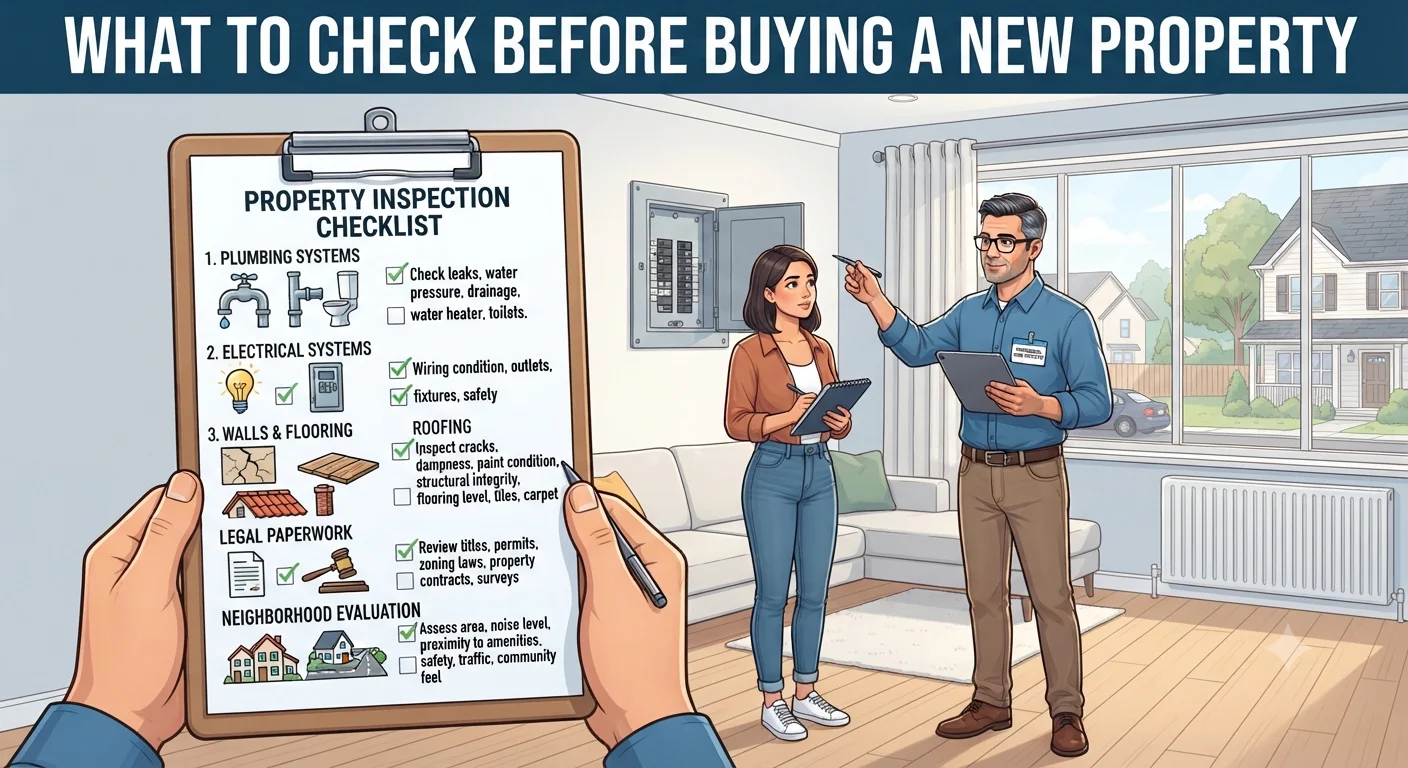
An inspection can reveal expensive problems
A property may look attractive during a viewing while containing problems that are difficult to notice.
An inspection may identify issues involving:
- Roofing
- Plumbing
- Electrical systems
- Heating and cooling
- Structural elements
- Moisture
- Drainage
- Windows
- Insulation
- Appliances
The exact scope depends on the inspection service.
Example of why inspection costs matter
Suppose a buyer is considering a $280,000 house.
A professional inspection costs $500.
That expense may seem unnecessary when compared with the purchase price.
However, if the inspection reveals a major repair requirement that would cost $15,000, the information could materially affect the buyer’s decision or negotiation.
An inspection does not guarantee that every hidden defect will be discovered, but it can reduce some of the uncertainty surrounding the purchase.
Valuation and Appraisal Costs
Lenders may require property valuation
When a buyer finances a property, the lender may want an independent assessment of its value.
The purpose is to determine whether the property provides sufficient security for the loan.
The buyer may be responsible for a valuation or appraisal fee depending on the financing arrangement.
A valuation can affect financing
If a buyer agrees to pay $350,000 but the lender’s valuation is significantly lower, financing may become more complicated.
The buyer may need to:
- Negotiate a lower purchase price
- Increase the down payment
- Find alternative financing
- Reconsider the purchase
This is another reason why the cost of buying a house involves more than the listing price.
Home Insurance
Insurance is part of the cost of ownership
Home insurance can protect against certain covered risks, depending on the policy.
Coverage may relate to:
- Structural damage
- Fire
- Certain weather events
- Theft
- Personal liability
- Other specified risks
Policies differ substantially.
Insurance premiums vary
Insurance costs can depend on:
- Property location
- Building type
- Construction materials
- Property value
- Coverage level
- Deductible
- Local risk factors
- Claims history
- Security measures
A buyer should obtain an insurance quote before finalizing the purchase rather than assuming the cost will be negligible.
Insurance may be required by a mortgage lender
Some lenders require borrowers to maintain specific insurance coverage throughout the loan.
The exact requirements depend on the lender and jurisdiction.
This means insurance can become a necessary recurring property expense rather than an optional service.
Maintenance Costs
Every house requires ongoing maintenance
A common mistake among first-time buyers is assuming that once the property is purchased, the major financial work is finished.
In reality, houses require regular maintenance.
Potential expenses include:
- Plumbing repairs
- Electrical repairs
- Painting
- Roof maintenance
- HVAC servicing
- Appliance replacement
- Pest control
- Landscaping
- Cleaning
- Drainage maintenance
- Window repairs
Maintenance should be treated as a planned expense
Instead of waiting for a major problem, homeowners can establish a maintenance reserve.
For example, if a homeowner decides to reserve $250 per month for maintenance, the annual reserve becomes:
$250 × 12 = $3,000.
Some years may require less.
Other years may require significantly more.
The purpose of the reserve is to reduce the financial impact of unexpected repairs.
read more about family home buying guide
Hidden Costs of Buying a House
What are hidden costs?
Hidden costs are not necessarily secret charges.
They are expenses that buyers often fail to consider because they are less visible than the purchase price.
They may include:
- Moving
- Furniture
- Repairs
- Appliance replacement
- Utility deposits
- Service fees
- Pest treatment
- Window coverings
- Security systems
- Landscaping
- Renovation
- Maintenance equipment
- Temporary accommodation
These costs can be especially significant during the first few months of ownership.
The first year can be unusually expensive
New homeowners often discover that their property needs several improvements shortly after moving in.
A house may require:
- New curtains
- Additional lighting
- Painting
- Furniture
- Storage
- Minor plumbing work
- Appliance upgrades
- Security improvements
Each expense may seem manageable individually.
Together, they can create a substantial financial burden.
Furniture and Interior Setup
Furniture is part of the real move-in cost
A property can be affordable while the cost of furnishing it creates a separate challenge.
A new homeowner may need:
- Beds
- Sofas
- Dining furniture
- Tables
- Chairs
- Wardrobes
- Curtains
- Rugs
- Lighting
- Storage
- Kitchen equipment
Estimate essential furniture separately
It is useful to distinguish between essential and optional purchases.
Essential items might include a bed, refrigerator, basic seating, and necessary lighting.
Optional purchases could include decorative furniture, premium appliances, artwork, or upgraded electronics.
This approach prevents a buyer from confusing the cost of making the home functional with the cost of making it aesthetically complete.
Moving Expenses
Moving can cost more than expected
Moving expenses depend on:
- Distance
- Number of belongings
- Floor level
- Elevator availability
- Packing requirements
- Moving company rates
- Special handling requirements
A buyer should obtain quotes before moving day.
Additional moving costs
Potential additional expenses include:
- Packing materials
- Temporary storage
- Furniture assembly
- Cleaning
- Transportation
- Insurance for belongings
- Temporary accommodation
These costs should be included in the initial ownership budget.
Renovation and Remodeling Costs
Cosmetic changes can become expensive
A property may look acceptable but still require updates.
Common projects include:
- Painting
- Flooring
- Kitchen improvements
- Bathroom renovations
- Lighting
- Doors
- Built-in storage
- Landscaping
Renovations can quickly exceed the initial estimate.
Build a contingency into the renovation budget
Suppose a homeowner estimates that a renovation will cost $20,000.
Rather than budgeting exactly $20,000, the buyer may choose to maintain an additional contingency reserve because material prices, labor requirements, or unexpected issues can change the final cost.
The appropriate contingency depends on the project and local market.
Utilities and Service Expenses
Utility costs begin after ownership
After moving into a property, the homeowner may need to pay for:
- Electricity
- Water
- Gas
- Internet
- Waste services
- Security
- Maintenance contracts
These expenses are not part of the purchase price, but they are part of the cost of living in the property.
Estimate utility costs realistically
If possible, ask the seller or property manager about previous utility usage.
However, previous bills may not perfectly predict future expenses because consumption depends on household size, lifestyle, weather, appliances, and energy efficiency.
Homeowners’ Association and Community Fees
Apartments and planned communities may have additional charges
Some properties require recurring community or homeowners’ association fees.
These may cover services such as:
- Common-area maintenance
- Security
- Landscaping
- Building cleaning
- Shared facilities
- Elevators
- Swimming pools
- Waste management
The fees can vary significantly.
Ask whether fees can increase
A buyer should not assume that the current fee will remain unchanged forever.
Buildings and communities may face increased maintenance costs or major projects.
Understanding the fee structure and what it covers is important before purchasing.
Property Expenses Beyond the Mortgage
The mortgage is not the entire monthly housing cost
A common budgeting error is comparing salary with the mortgage payment alone.
Suppose a buyer has a mortgage payment of $1,400 per month.
Additional monthly-equivalent expenses could include:
- Property tax: $200
- Insurance: $100
- Maintenance reserve: $250
- Community fees: $150
- Utilities: $250
The total housing-related monthly cost becomes:
$1,400 + $200 + $100 + $250 + $150 + $250 = $2,350.
The mortgage represents only part of the total financial commitment.
Creating a Complete Home-Buying Budget
Separate the budget into stages
A useful property budget can be divided into four stages:
- Before purchase
- Closing
- Moving in
- Ongoing ownership
Before purchase, costs may include inspections, valuations, surveys, and legal consultations.
At closing, costs may include taxes, registration, legal fees, financing charges, and other transaction expenses.
After receiving the keys, buyers may face moving, furniture, repairs, and setup costs.
Long-term ownership includes mortgage payments, insurance, taxes, maintenance, utilities, and other recurring expenses.
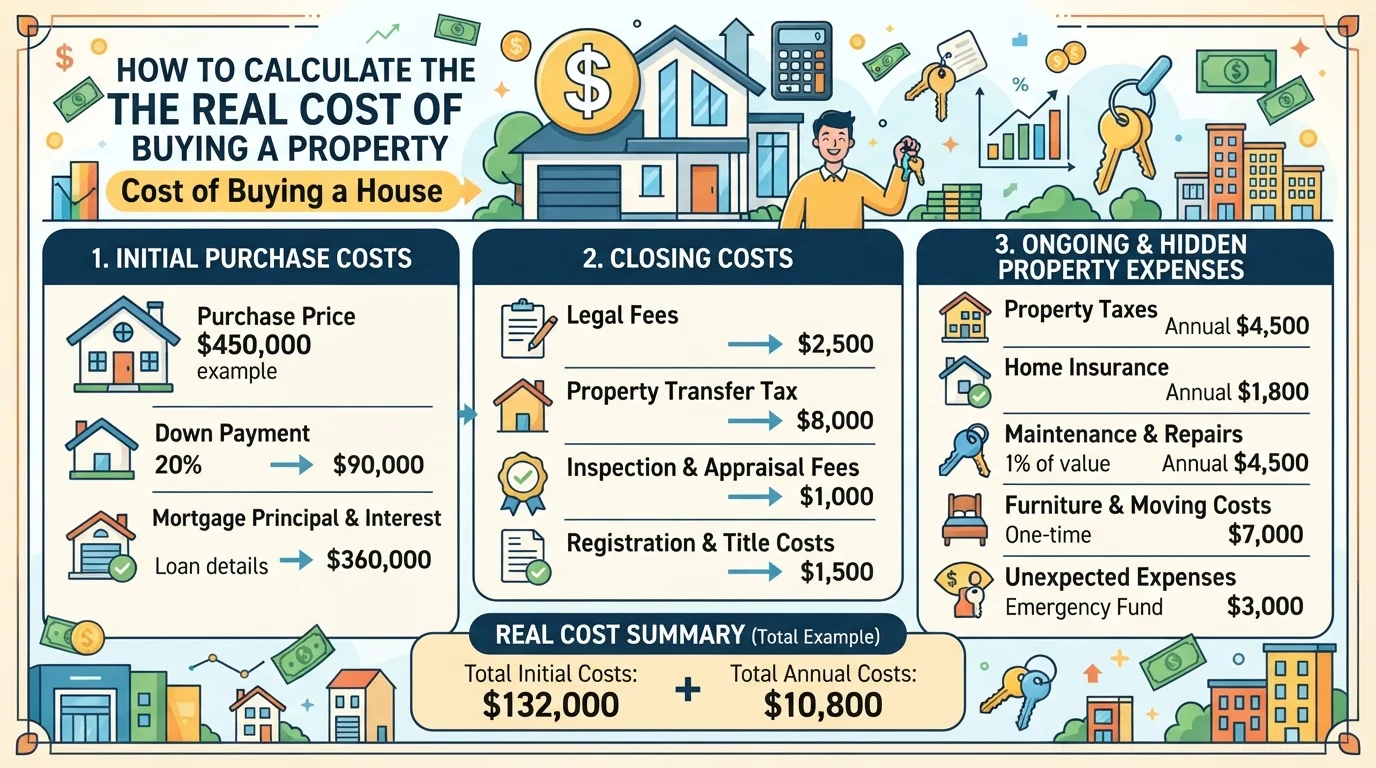
Example of a complete budget
Imagine a property with a purchase price of $300,000.
The buyer makes a 20% down payment:
$300,000 × 20% = $60,000.
The mortgage is therefore:
$300,000 − $60,000 = $240,000.
Suppose the buyer also estimates:
- Transfer and registration costs: $6,000
- Legal fees: $2,000
- Inspection: $600
- Valuation: $500
- Insurance setup: $1,000
- Moving: $1,500
- Essential furniture: $7,000
- Initial repairs: $5,000
The initial cash requirement becomes:
$60,000 + $6,000 + $2,000 + $600 + $500 + $1,000 + $1,500 + $7,000 + $5,000
= $83,600.
The buyer therefore needs to think about approximately $83,600 in initial cash rather than simply the $60,000 down payment.
The actual figures vary by location and transaction, but the example demonstrates why the purchase price alone is not enough for budgeting.
Calculating the Real Cost of a Property
Use a total-cost formula
A simple framework can be:
Real Initial Cost = Down Payment + Closing Costs + Purchase-Related Fees + Immediate Repairs + Moving + Essential Setup
Then calculate ongoing costs separately:
Annual Ownership Cost = Mortgage Payments + Property Taxes + Insurance + Maintenance + Utilities + Community Fees + Other Recurring Expenses
For long-term planning, financing interest and major capital improvements can also be considered.
Why the formula is useful
The formula does not predict every possible expense.
Its purpose is to force the buyer to think beyond the listing price.
It also makes it easier to compare two properties.
A cheaper house may require substantial renovation.
A more expensive house may require little immediate work.
The second property could potentially require less initial cash despite having a higher purchase price.
Comparing Two Properties by Total Cost
Property A
Suppose Property A costs $250,000.
The buyer estimates:
- Closing costs: $7,000
- Immediate repairs: $15,000
- Furniture: $6,000
- Moving: $1,500
The initial acquisition and setup cost is therefore approximately:
$250,000 + $7,000 + $15,000 + $6,000 + $1,500 = $279,500.
Property B
Property B costs $270,000.
Its estimated additional costs are:
- Closing costs: $7,500
- Repairs: $3,000
- Furniture: $4,000
- Moving: $1,500
The estimated total becomes:
$270,000 + $7,500 + $3,000 + $4,000 + $1,500 = $286,000.
Property A has the lower purchase price, but the difference between the two properties is much smaller after considering additional expenses.
This is why buyers should compare the total cost rather than focusing exclusively on the advertised price.
Unexpected Expenses and Emergency Reserves
Why an emergency fund matters
No property budget is completely predictable.
Unexpected costs can include:
- Major appliance failure
- Water damage
- Plumbing problems
- Electrical repairs
- Roof issues
- Heating or cooling failure
- Pest problems
- Security repairs
- Emergency temporary accommodation
These expenses can occur shortly after purchase.
Avoid spending every available dollar on the purchase
A buyer who uses all available savings for the down payment may become financially vulnerable after closing.
Maintaining an emergency reserve can provide flexibility when unexpected property expenses occur.
The appropriate amount depends on income stability, household obligations, property condition, insurance coverage, and personal financial circumstances.
Property Age and Maintenance Costs
Older properties may require more attention
The age of a property can influence maintenance requirements.
Older houses may have:
- Aging plumbing
- Older electrical systems
- Roof wear
- Older windows
- Aging appliances
- Heating or cooling systems nearing replacement
- Outdated insulation
This does not mean older properties are automatically bad investments.
Some older houses are exceptionally well maintained.
The important point is that buyers should evaluate the condition of individual systems rather than relying solely on property age.
Ask about major replacements
A buyer should investigate when important components were last replaced.
Questions may include:
- When was the roof last replaced?
- How old is the heating or cooling system?
- When were major plumbing upgrades completed?
- Are the electrical systems modernized?
- How old are the appliances?
- Has the property experienced water damage?
The answers can help identify future expenses.
Location-Specific Property Expenses
Location affects more than purchase price
Two houses with identical purchase prices can have very different ownership costs.
Location can influence:
- Property taxes
- Insurance
- Utility expenses
- Transportation
- Maintenance requirements
- Community fees
- Flood or weather risk
- Security costs
A cheaper property in a high-cost area may not remain cheaper after all recurring expenses are considered.
Transportation should also be considered
A property farther from work, schools, or essential services may increase transportation costs.
For some households, a lower purchase price could be offset by higher fuel, commuting, or transportation expenses.
The real cost of buying a house should therefore be considered within the broader cost of living.
read more about ready property vs off plan
Buying a New Construction Property
New does not mean zero additional expenses
New properties may have fewer immediate repair requirements, but buyers can still face additional costs.
These may include:
- Registration
- Taxes
- Developer-related fees
- Utility connection
- Furniture
- Appliances
- Window coverings
- Landscaping
- Community charges
- Upgrades
- Customization
A newly built house may also require finishing work that was not included in the base purchase price.
Understand what is included
Before purchasing a new property, buyers should clarify whether the quoted price includes:
- Kitchen appliances
- Lighting
- Air conditioning
- Built-in wardrobes
- Landscaping
- Parking
- Storage
- Fixtures
- Utility connections
A low headline price may exclude important components.
Buying an Older Property
Lower purchase prices can hide renovation requirements
Older properties sometimes appear attractive because they are priced below newer homes.
However, buyers should calculate renovation requirements carefully.
For example, a $220,000 house requiring $40,000 in immediate improvements effectively has an acquisition and initial renovation cost of approximately $260,000 before other fees.
That does not automatically make it a bad purchase.
The renovation could add value or improve the property substantially.
But the costs should be known before committing.
The Cost of Furnishing a Property
Budget room by room
A practical way to estimate furniture costs is to divide the property into rooms.
For a simple home, the buyer may need:
Bedroom: bed, mattress, wardrobe, bedside tables.
Living room: sofa, table, lighting, storage.
Dining area: table and chairs.
Kitchen: appliances, cookware, storage.
Bathroom: storage and basic accessories.
This approach can produce a more realistic estimate than choosing an arbitrary furniture budget.
Avoid unnecessary spending immediately
A new homeowner does not have to purchase everything on the first day.
Prioritize essential items.
Once the household has settled, it becomes easier to determine what is actually needed.
This can protect the emergency fund and reduce financial pressure during the first months of ownership.
Understanding the Difference Between Price and Affordability
A property can be affordable on paper but expensive in practice
Suppose a buyer earns enough to qualify for a mortgage on a $350,000 house.
That does not necessarily mean the property is comfortably affordable.
The buyer must also consider:
- Mortgage payments
- Taxes
- Insurance
- Maintenance
- Utilities
- Transportation
- Existing debts
- Family expenses
- Emergency savings
- Future financial goals
Mortgage approval is not the same thing as a complete personal affordability analysis.
Build a realistic monthly housing budget
A buyer can calculate the expected monthly housing cost by adding:
Mortgage + Property Tax + Insurance + Maintenance Reserve + Community Fees + Average Utilities
The result provides a more realistic picture of monthly ownership expenses.
Hidden Costs When Selling Later
Buying a property also creates future transaction costs
Although the focus is usually on purchasing, homeowners should remember that selling can also involve costs.
Depending on the jurisdiction and transaction, sellers may face:
- Agent commissions
- Legal fees
- Transfer-related expenses
- Taxes
- Repairs before sale
- Staging
- Marketing
- Moving expenses
These costs are relevant when calculating the long-term economics of property ownership.
Consider your expected holding period
If you plan to own a property for only a short period, transaction costs can have a larger effect on the overall financial outcome.
If you plan to remain in the property for many years, those costs may be spread over a longer period.
The appropriate decision depends on personal circumstances and local market conditions.
How to Build a Property Expense Checklist
List every known cost
Before purchasing, create a written list of expenses.
Include:
- Purchase price
- Down payment
- Taxes
- Registration
- Legal fees
- Inspection
- Valuation
- Mortgage fees
- Insurance
- Moving
- Furniture
- Repairs
- Renovation
- Utilities
- Community fees
- Maintenance
- Emergency reserve
Mark each cost as one-time or recurring
This simple distinction can dramatically improve budgeting.
For example:
One-time: inspection, registration, legal closing costs, moving.
Recurring: mortgage, insurance, property tax, utilities, maintenance.
Occasional: major repairs, appliance replacement, repainting, renovations.
This creates a clearer financial picture.
Common Mistakes When Calculating the Cost of Buying a House
Focusing only on the down payment
The down payment may be the largest upfront expense, but it is not the only one.
Buyers should reserve funds for closing and immediate ownership costs.
Ignoring maintenance
A house requires ongoing care.
Even a well-maintained property eventually needs repairs and replacements.
Assuming new properties have no additional costs
New construction can still require furniture, appliances, upgrades, landscaping, and community fees.
Forgetting insurance
Insurance can be a recurring expense and may be required by a lender.
Underestimating furniture
An empty house can require a substantial amount of money to become comfortable.
Spending the entire emergency fund
Using every available saving for the purchase can leave the homeowner vulnerable to unexpected expenses.
Assuming all fees are included in the advertised price
Buyers should ask for a complete cost breakdown.
A Detailed Example of the Real Cost of Buying a House
The scenario
Imagine a buyer is purchasing a house for $400,000.
The buyer plans to make a 20% down payment.
The down payment is:
$400,000 × 20% = $80,000.
The mortgage amount is:
$400,000 − $80,000 = $320,000.
The buyer then estimates the following additional costs:
- Transfer taxes and registration: $8,000
- Legal fees: $2,500
- Inspection: $700
- Valuation: $600
- Initial insurance: $1,200
- Moving: $2,000
- Essential furniture: $10,000
- Immediate repairs: $7,500
The additional initial costs total:
$8,000 + $2,500 + $700 + $600 + $1,200 + $2,000 + $10,000 + $7,500 = $32,500.
The buyer therefore needs approximately:
$80,000 + $32,500 = $112,500
in initial cash, excluding any other applicable expenses or lender requirements.
The property itself costs $400,000, but the initial cash requirement is approximately $112,500.
This distinction is critical for financial planning.
Estimating Annual Property Expenses
Build an annual ownership model
Suppose the homeowner expects:
- Property tax: $3,600 per year
- Insurance: $1,500 per year
- Maintenance: $4,000 per year
- Community fees: $1,800 per year
- Utilities: $3,000 per year
The non-mortgage annual expenses would be:
$3,600 + $1,500 + $4,000 + $1,800 + $3,000 = $13,900.
The monthly equivalent is:
$13,900 ÷ 12 ≈ $1,158.
If the mortgage payment is $2,000 per month, the estimated total housing cost becomes approximately:
$2,000 + $1,158 = $3,158 per month.
Again, actual expenses vary, but this calculation demonstrates why the mortgage alone does not represent the total cost of ownership.
How to Make a More Accurate Estimate
Ask professionals for local figures
Property costs are highly location-specific.
A buyer should obtain estimates from appropriate professionals and authorities for:
- Taxes
- Registration
- Legal fees
- Mortgage costs
- Insurance
- Inspections
- Local service charges
Online examples can provide a general framework but should not replace location-specific information.
Ask the seller about recent expenses
A seller may be able to provide information about:
- Utility bills
- Maintenance
- Community fees
- Property taxes
- Recent repairs
- Major system replacements
Historical information is not a guarantee of future costs, but it can improve the buyer’s estimate.
Inspect before committing
A professional inspection can provide information about the property’s physical condition.
The inspection should be considered part of the cost-planning process rather than an unnecessary expense.
Building a Conservative Budget
Plan for more than the minimum
When calculating the cost of buying a house, it is safer to avoid assuming that every expense will come in at the lowest possible amount.
A conservative budget can include:
- Realistic closing costs
- A repair reserve
- An emergency fund
- Initial furnishing expenses
- Higher-than-expected utility estimates
- Potential maintenance requirements
The goal is not to make homeownership appear unaffordable.
The goal is to reduce unpleasant surprises.
read more about smart home features
the Real Cost of Buying a Property
The cost of buying a house is much more than the number displayed in a property listing. The purchase price is the foundation of the transaction, but the real financial commitment can include closing costs, taxes, registration fees, legal expenses, financing costs, inspections, insurance, moving, furniture, repairs, maintenance, utilities, community fees, and unexpected expenses.
Understanding these costs before purchasing allows buyers to make better decisions.
A property priced at $250,000 may require significantly more cash during the first year once transaction costs, repairs, furniture, and other expenses are included. Another property priced at $280,000 may require less immediate work and therefore have a surprisingly similar overall initial cost.
The most useful approach is to calculate the property in stages.
First, determine the purchase price and financing requirements.
Second, estimate all closing costs, including taxes, registration, legal expenses, inspection, valuation, and lender-related charges.
Third, estimate the costs of moving into the property, including furniture, appliances, immediate repairs, and essential improvements.
Finally, calculate recurring property expenses such as mortgage payments, insurance, taxes, maintenance, utilities, and community fees.
This creates a much more realistic picture of affordability.
The concept of hidden costs is especially important. Most of these expenses are not truly hidden; they are simply easy to overlook because they appear smaller than the purchase price. Yet several smaller expenses can combine into thousands of dollars.
A well-prepared buyer should therefore avoid asking only, “Can I afford this house?”
A better question is, “Can I afford the purchase, the closing costs, the first-year expenses, and the ongoing cost of owning this property while maintaining a reasonable financial reserve?”
That broader calculation provides a stronger foundation for making a property decision based on the real cost of ownership rather than the advertised price alone.