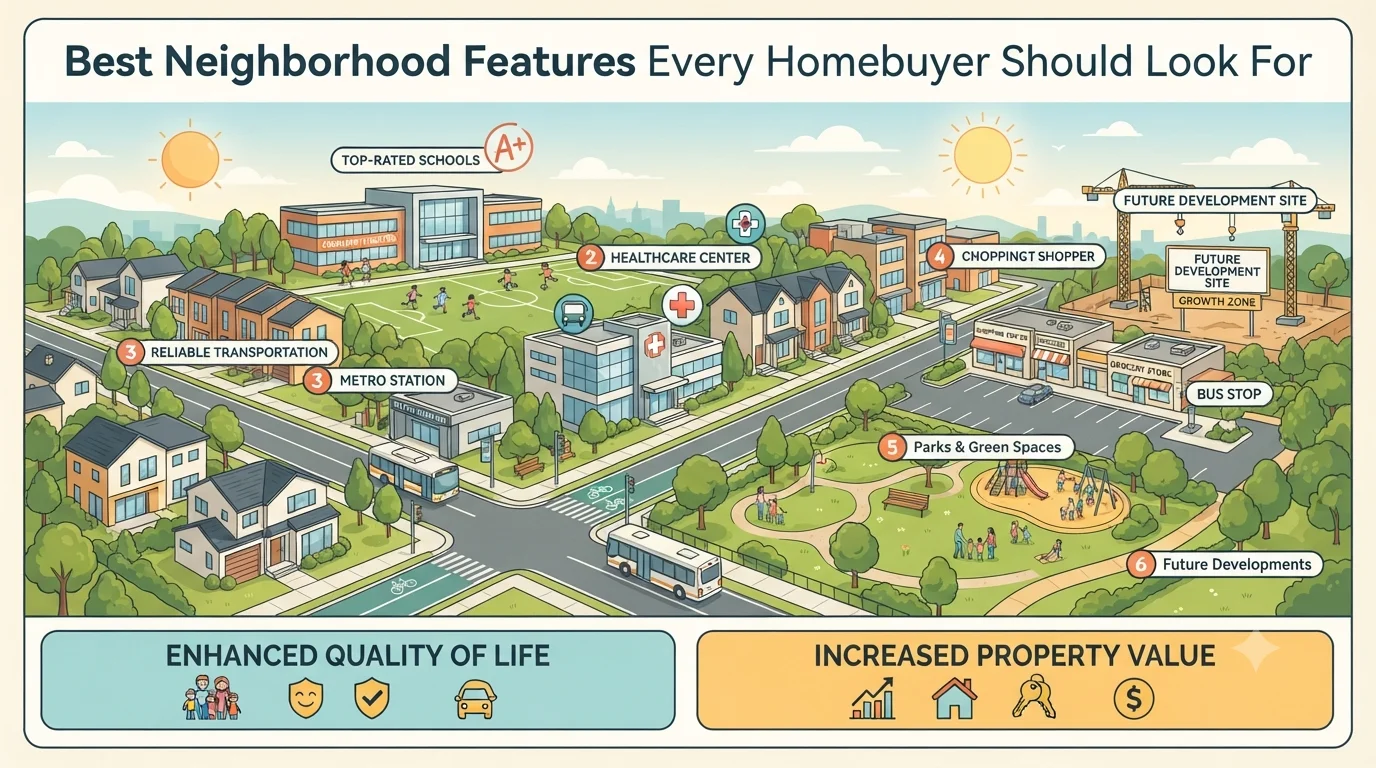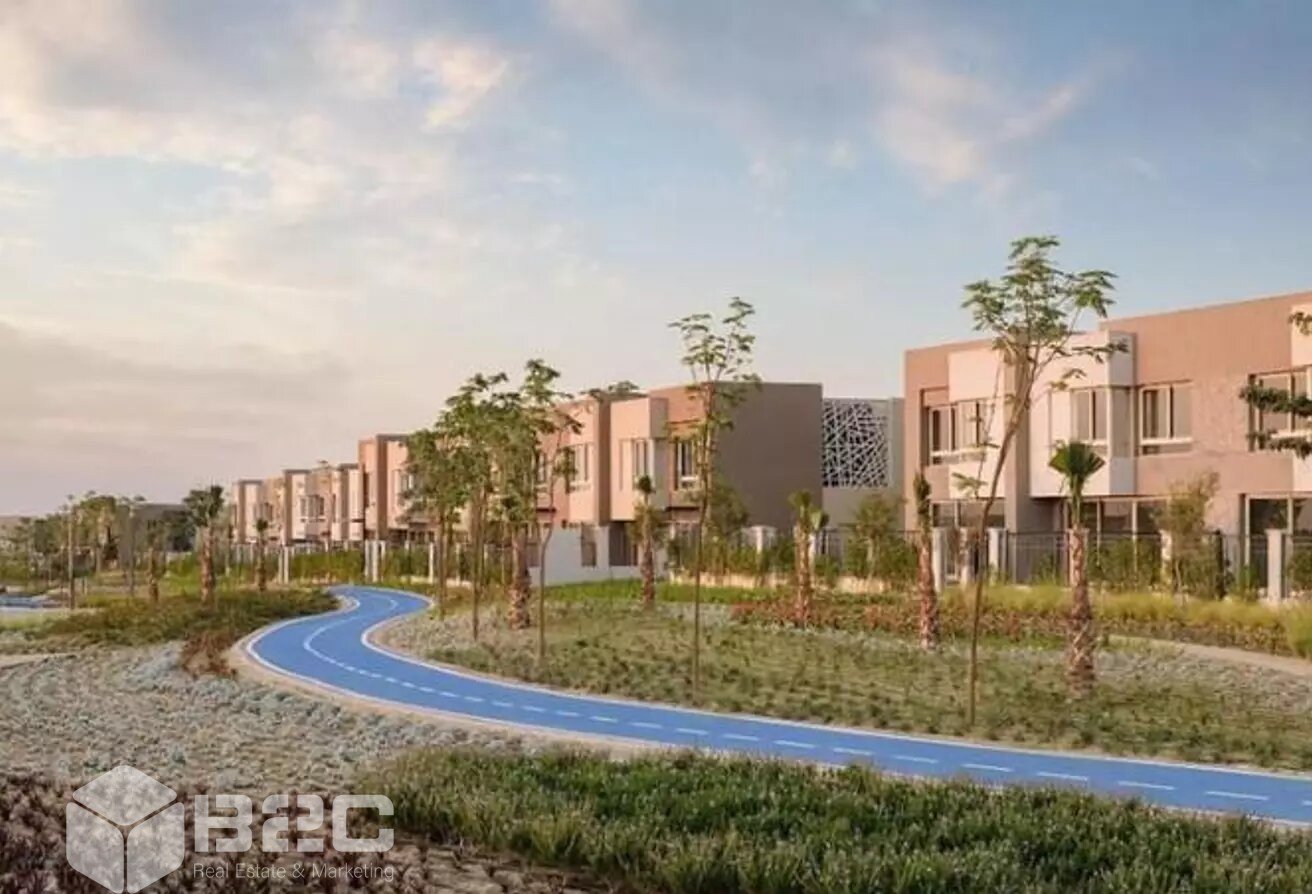
Choosing a home is about much more than finding a beautiful apartment, villa, or townhouse. The surrounding environment can have a major influence on daily comfort, property value, safety, and long-term satisfaction. This is why evaluating the quality of a residential community should be an essential part of any property-buying decision.
A well-designed residential community is not simply a collection of buildings placed next to one another. It is a carefully planned environment where housing, roads, security, green spaces, schools, recreational facilities, commercial services, and future development work together to create a practical and comfortable lifestyle.
Modern buyers are increasingly looking beyond the size of a property or the finishes inside it. They want to know whether the neighborhood is secure, whether infrastructure can support future growth, whether children have access to quality schools, whether there are parks and walking areas, and whether the community is likely to remain attractive several years from now.
In many cases, these factors can be more important than the appearance of a property during the first visit. A stylish home in a poorly planned neighborhood may become less attractive over time, while a home inside a professionally developed master planned community can benefit from better infrastructure, organized services, attractive public spaces, and carefully controlled future development.
This complete buyer’s guide explains the most important characteristics of a high-quality residential community and provides practical questions to consider before purchasing a home.
read more about property investment guide
What Is a Residential Community?
Understanding the concept
A residential community is a developed area primarily designed for people to live in, often combining residential properties with shared facilities, services, roads, landscaping, recreational spaces, and other supporting infrastructure.
The size and structure of a community can vary significantly. Some communities may consist of a small collection of homes, while others can include thousands of apartments, villas, townhouses, schools, retail areas, sports facilities, parks, and entertainment destinations.
The key difference between an ordinary residential neighborhood and a carefully planned community is the level of coordination between different elements.
In a high-quality development, residential buildings are not considered independently. Roads, pedestrian routes, parking areas, utilities, landscaping, security systems, recreational facilities, and commercial services are planned to work together.
Residential community vs. residential neighborhood
The terms residential community and residential neighborhood are sometimes used interchangeably, but they can describe slightly different concepts.
A residential neighborhood may develop naturally over many years and can contain homes constructed by different owners and developers. Its infrastructure and facilities may therefore vary considerably from one section to another.
A planned residential community, on the other hand, is generally developed according to a specific master plan. The developer may determine the location of residential buildings, roads, parks, commercial areas, schools, sports facilities, and other services before construction progresses.
This coordinated approach can create a more consistent environment and make it easier to manage the community in the long term.
What Makes a Good Residential Community?
A clear and thoughtful master plan
One of the strongest indicators of a high-quality community is a well-designed master plan.
A master planned community considers how the area will function not only when the first residents move in, but also years later when the population increases and additional phases are completed.
A strong master plan typically considers:
- Residential zones
- Main and secondary roads
- Pedestrian pathways
- Parking areas
- Green spaces
- Schools and educational facilities
- Healthcare services
- Retail and commercial areas
- Sports and recreational facilities
- Security infrastructure
- Utilities and essential services
- Future expansion areas
The objective is to prevent the community from becoming overcrowded or poorly connected as it grows.
Buyers should therefore ask whether the development has a clear master plan and whether future phases have been considered from the beginning.
Efficient land use
Good planning also means using land efficiently.
A community should provide enough space for buildings while preserving areas for parks, walking paths, recreation, parking, services, and infrastructure.
If too much of the available land is occupied by buildings, residents may eventually experience traffic congestion, limited parking, insufficient outdoor areas, and a lack of privacy.
Balanced land use helps create a community that feels comfortable rather than crowded.
Security Should Be a Top Priority
Controlled access
Security is one of the most important factors when evaluating a residential community.
A good community should have an organized approach to controlling access. Depending on the development, this may include guarded entrances, security gates, visitor management systems, identification procedures, surveillance cameras, and controlled vehicle access.
The goal is not simply to install security equipment but to create a comprehensive system that makes residents feel comfortable while maintaining practical access for visitors, deliveries, emergency services, and workers.
Surveillance and monitoring
Modern communities may use CCTV cameras throughout entrances, parking areas, common spaces, and other strategically important locations.
However, buyers should look beyond the presence of cameras. They should consider whether the system appears properly maintained and whether security personnel actively monitor important areas.
A sophisticated security system that is poorly maintained may not provide the same value as a simpler system that is consistently managed.
Lighting and visibility
Good lighting is another important security feature.
Streets, pedestrian pathways, parking areas, entrances, and shared facilities should be sufficiently illuminated. Proper lighting can improve visibility and make residents feel more comfortable when moving around the community after dark.
Buyers should ideally visit the development at different times of day instead of relying only on a daytime viewing.
read more about home layout ideas
Infrastructure Determines Everyday Comfort
Roads and transportation
Infrastructure may not be as visually exciting as landscaping or architecture, but it has a major effect on daily life.
A high-quality residential community should have properly designed internal roads, clear traffic routes, sufficient parking, and convenient connections to surrounding areas.
Buyers should consider how easy it is to enter and leave the community during peak hours.
A development that looks peaceful on a weekday afternoon may experience significant congestion during morning and evening commuting periods.
Water, electricity, and utility networks
Reliable utilities are fundamental to residential quality.
A community should have properly planned water supply, drainage, electricity, telecommunications, and waste management systems.
Buyers should ask about the capacity of these systems and whether they were designed to accommodate future population growth.
This is particularly important in large developments where additional construction is planned.
Internet and telecommunications
Internet connectivity has become an essential part of modern residential life.
Many residents work remotely, study online, conduct video meetings, stream entertainment, and use smart-home systems. Consequently, telecommunications infrastructure should be considered alongside traditional utilities.
A community that supports reliable high-speed connectivity can be considerably more practical for modern households.
Green Spaces Create a Better Living Environment
Why green spaces matter
Green spaces are among the most valuable features of a well-designed residential community.
Parks, gardens, landscaped areas, tree-lined streets, walking paths, and outdoor seating can make a development feel more pleasant and inviting.
Green spaces can also provide residents with places to walk, exercise, relax, socialize, or spend time with children.
Instead of treating landscaping as simple decoration, buyers should evaluate how effectively outdoor spaces are integrated into the community.
Parks and walking areas
A strong residential community should ideally provide accessible outdoor areas rather than concentrating all green space in one remote location.
Walking paths close to residential buildings can encourage residents to use outdoor areas more frequently.
Shaded pathways and comfortable seating can also be particularly valuable in regions with hot climates.
Landscaping quality and maintenance
Beautiful landscaping at launch does not necessarily guarantee long-term quality.
Buyers should investigate who is responsible for maintaining gardens, trees, public spaces, pools, pathways, and other shared facilities.
Regular maintenance is essential because neglected landscaping can quickly change the appearance and overall atmosphere of a community.
The quality of existing landscaping can also provide clues about how seriously the developer or property management company treats long-term community management.
Schools and Education Matter for Families
Access to schools
For families with children, education can be one of the most important factors when choosing a residential community.
A development may contain schools within its boundaries, or it may be located close to established educational institutions.
Either arrangement can be beneficial, depending on the quality and accessibility of the schools.
Parents should consider the distance, transportation options, educational approach, available facilities, and expected capacity of nearby schools.
Future educational facilities
If a community is still under development, buyers should determine whether schools are part of the approved future plan.
A promise that a school will eventually be built should not automatically be treated as a guaranteed benefit. Buyers should investigate the development schedule and understand which facilities are confirmed and which are only proposed.
Convenience for parents
The location of schools can influence daily routines significantly.
A school located within or close to the community may reduce commuting time and make mornings easier for families.
However, buyers should also consider traffic around school entrances, pedestrian safety, parking arrangements, and whether school-related congestion could affect nearby residential areas.
Community Amenities Add Practical and Lifestyle Value
What are community amenities?
Community amenities are shared facilities and services designed to improve residents’ daily lives.
Depending on the development, amenities may include:
- Swimming pools
- Gyms
- Sports courts
- Clubhouses
- Children’s play areas
- Parks
- Walking and cycling paths
- Restaurants and cafés
- Retail shops
- Community centers
- Event spaces
- Pet-friendly areas
- Outdoor seating
- Entertainment facilities
The number of amenities is not necessarily the most important factor. Their quality, accessibility, maintenance, and usefulness are more significant.
Amenities should serve real needs
A community can advertise dozens of facilities, but buyers should ask whether residents will actually use them.
For example, a small family may place greater value on playgrounds, schools, supermarkets, and green spaces than on specialized sports facilities.
Another household may prioritize gyms, swimming pools, walking trails, cafés, and social spaces.
The best community is not necessarily the one with the longest amenities list. It is the one whose facilities match the needs of its residents.
Location within the community matters
Amenities should also be distributed intelligently.
If a large development has a swimming pool, park, or retail area, residents should not have to travel across the entire community to reach it.
Walkability and accessibility can make amenities much more useful.
Location and Connectivity
Connection to major roads
Even a beautiful residential community can become inconvenient if it is poorly connected to the surrounding city.
Buyers should examine the routes between the development and major roads, business districts, schools, shopping centers, healthcare facilities, airports, and other important destinations.
A community with convenient transportation connections can make daily commuting easier and may remain attractive to future buyers and tenants.
Public transportation
Access to public transportation can also add value.
Depending on the location, this may include buses, trains, metro systems, or other transportation options.
Buyers should consider whether public transportation is available today and whether additional infrastructure is planned for the future.
Walkability
Walkability is increasingly important in modern community design.
A walkable development allows residents to reach parks, shops, recreational facilities, and other destinations without always depending on a car.
Wide sidewalks, safe crossings, shade, lighting, and connected pathways can significantly improve the experience.
read more about questions to ask before buying a house
Future Development Plans Can Affect Property Value
Look beyond today’s appearance
One of the biggest mistakes buyers can make is evaluating a residential community only according to what exists today.
Large developments often take several years to complete. The surrounding environment may therefore change significantly after a buyer purchases a property.
Future construction can bring valuable facilities, new roads, schools, retail destinations, and recreational spaces. However, it can also create temporary noise, traffic, construction activity, or changes in views and privacy.
Understanding the development timeline is therefore essential.
Ask about future phases
Buyers should ask:
- How many phases are planned?
- Which phases are currently under construction?
- When are future phases expected to be completed?
- What facilities will be added?
- Where will future buildings be located?
- Will additional roads be constructed?
- Will commercial areas be introduced?
- Could future construction affect views or privacy?
These questions can help buyers understand what the community may look like several years from now.
Planned development vs. vague promises
There is an important difference between an officially planned facility and a general marketing promise.
Buyers should request clear information about future facilities and distinguish between confirmed development plans and ideas that may change.
This is particularly important when the future project is being used to justify a premium property price.
Property Management Is Often Overlooked
Who maintains the community?
A high-quality residential community needs effective management after construction is completed.
Property management may be responsible for maintaining common areas, landscaping, security systems, lighting, roads, pools, gyms, waste collection, and other shared facilities.
A poorly managed community can lose some of its appeal even if it was originally designed well.
Service charges and maintenance fees
Buyers should understand all recurring costs associated with living in the community.
These may include maintenance fees, security charges, facility fees, parking costs, or other community-related expenses.
A low purchase price can become less attractive if annual maintenance costs are unexpectedly high.
Conversely, reasonable service charges may be worthwhile when they support excellent maintenance and facilities.
Quality of Construction Matters Too
Inspect the property itself
The quality of the surrounding community is important, but buyers should not ignore the individual property.
The home should be inspected for construction quality, finishes, plumbing, electrical systems, windows, doors, insulation, ventilation, and signs of water damage or structural problems.
If possible, buyers should obtain an independent professional inspection before completing the purchase.
Consider building durability
A residential community should be designed with long-term use in mind.
Durable materials, appropriate construction techniques, effective drainage, and proper maintenance systems can contribute to lower costs and better living conditions over time.
Buyers should consider not only how attractive the property looks when new but also how easily it can be maintained as it ages.
Privacy and Density Are Important Considerations
Avoid judging density by appearance alone
A community may look spacious during an initial visit because many buildings have not yet been occupied.
As additional phases are completed, however, the population may increase significantly.
Buyers should therefore investigate the planned residential density.
High density is not automatically negative. Well-designed high-density communities can provide excellent amenities and efficient infrastructure. Problems arise when population density is not matched by sufficient roads, parking, green spaces, schools, and public facilities.
Apartment positioning
For apartment buyers, the position of the unit within a building and the wider community can make a major difference.
Factors to consider include:
- Distance from busy roads
- Proximity to elevators
- Views
- Noise levels
- Privacy
- Distance from playgrounds
- Distance from commercial areas
- Exposure to direct sunlight
- Parking access
- Proximity to community facilities
A slightly more expensive unit may provide substantially better living conditions if it has a quieter location and better orientation.
Environmental Design and Sustainability
Energy efficiency
Modern buyers are increasingly interested in energy-efficient homes and communities.
Features such as efficient lighting, insulation, energy-conscious building design, and smart systems can reduce resource consumption and operating costs.
The exact value of these features depends on the local climate, construction standards, and quality of implementation.
Water management
Water-efficient landscaping, appropriate irrigation systems, drainage infrastructure, and responsible water management can contribute to long-term sustainability.
This is especially important in regions where water resources require careful management.
Waste management
A well-organized waste management system can help keep shared areas clean and improve the overall appearance of the community.
Buyers should consider whether waste collection points are conveniently located without creating unpleasant smells or excessive traffic near residential buildings.
Family-Friendly Design
Safe spaces for children
Families should look for communities that provide safe areas where children can play and move around.
Playgrounds should be appropriately located, maintained, and separated from dangerous traffic routes.
Pedestrian pathways and controlled vehicle speeds can also improve safety.
Social spaces
A good residential community should provide opportunities for residents to interact.
Community centers, parks, cafés, sports facilities, and shared gathering areas can encourage social connections.
This can contribute to a stronger sense of community, particularly for people who are moving into a newly developed area.
Noise Levels and Overall Atmosphere
Visit at different times
Noise can be difficult to evaluate during a short property viewing.
A development may be quiet in the morning but become much louder in the evening because of restaurants, playgrounds, traffic, events, or nearby commercial activity.
Buyers should try to visit the property at different times and, if possible, on both weekdays and weekends.
Identify potential noise sources
Look for:
- Main roads
- Construction zones
- Schools
- Restaurants
- Entertainment venues
- Sports facilities
- Parking entrances
- Delivery areas
- Mechanical equipment
Understanding the location of these facilities can help buyers avoid unpleasant surprises.
read more about property location
Retail and Everyday Services
Convenience within the community
Having essential services nearby can make a major difference in daily life.
Residents may benefit from supermarkets, pharmacies, cafés, restaurants, salons, convenience stores, banks, and other businesses.
However, commercial areas should be planned carefully.
Retail facilities that are too far away can reduce convenience, while poorly positioned commercial zones may create noise and traffic near residential buildings.
Balance is essential
The strongest communities usually create a balance between residential tranquility and convenient access to services.
Residents should be able to reach essential facilities relatively easily while still having quiet residential areas where they can relax.
How to Evaluate a Residential Community Before Buying
Visit the community more than once
Never base a major property decision on a single visit if it can be avoided.
Visit during different times of day and, ideally, on different days of the week.
Observe traffic, noise, parking, security procedures, cleanliness, lighting, and the behavior of residents.
Talk to current residents
Current residents can provide valuable information that may not appear in promotional materials.
Ask them about:
- Maintenance quality
- Security
- Water and electricity reliability
- Noise
- Parking
- Management responsiveness
- Community facilities
- Construction activity
- Service charges
Their experiences can help you identify both strengths and weaknesses.
Study the surrounding area
Do not evaluate the development in isolation.
Check what is located around it and consider how the surrounding area may evolve.
A community surrounded by major roads, industrial facilities, undeveloped land, or future construction sites may experience different conditions from a development surrounded by established residential and commercial districts.
Questions Buyers Should Ask Before Purchasing
Questions about security
Ask whether the community has controlled entrances, security personnel, surveillance cameras, visitor management, emergency procedures, and adequate lighting.
Questions about infrastructure
Ask about electricity, water, drainage, telecommunications, roads, parking, and waste management.
Also ask whether these systems were designed for the community’s final expected population.
Questions about future development
Ask what additional buildings and facilities are planned and when they are expected to be completed.
Find out whether future construction could affect the property’s views, privacy, access, or noise levels.
Questions about maintenance
Ask who manages the community, how maintenance is handled, and how much residents are expected to pay.
Understanding these costs before purchasing can help prevent financial surprises.
Questions about schools and amenities
Ask which schools, parks, sports facilities, retail areas, healthcare services, and other amenities are already operational and which ones are planned.
Do not assume that every advertised facility will be available immediately.
Common Mistakes Buyers Make
Focusing only on the property
One of the most common mistakes is becoming focused on the apartment or villa itself while ignoring the surrounding environment.
A beautiful property cannot compensate for poor infrastructure, difficult access, inadequate parking, or weak community management.
Choosing based only on amenities
Another mistake is assuming that a long list of amenities automatically means a better development.
Quality, maintenance, accessibility, and relevance to your lifestyle matter more than quantity.
Ignoring future construction
Buyers should always understand the community’s future plans.
A property overlooking an empty area may have an attractive view today, but future construction could eventually change that view.
Not calculating long-term costs
Purchase price is only one component of the total cost of ownership.
Maintenance fees, utilities, parking, transportation, repairs, and community charges should all be considered when comparing properties.
Relying entirely on marketing material
Marketing can provide useful information, but buyers should independently verify important claims.
Visit the site, inspect facilities, speak with residents, review contracts, and understand the development plan before making a final decision.
read more about compare properties
Choosing a Residential Community for the Long Term
A good residential community should provide much more than attractive buildings. It should create a balanced environment where people can live comfortably, safely, and conveniently today while remaining suitable for future growth.
Security should be reliable and professionally managed. Infrastructure should be designed to support both current and future residents. Green spaces should be accessible and properly maintained. Schools and essential services should be conveniently located. Community amenities should serve real resident needs rather than simply appearing impressive in marketing materials.
Future development is equally important. Buyers should understand what the community is expected to become, not just what it looks like on the day they visit.
A carefully designed master planned community can offer significant advantages because residential buildings, roads, parks, schools, commercial areas, and other facilities can be coordinated from the beginning. Nevertheless, buyers should evaluate the actual quality of planning and execution rather than relying on labels.
Ultimately, the best residential neighborhood is the one that matches your lifestyle, financial plans, family requirements, and expectations for the future.
Before purchasing, take the time to look beyond the walls of the property. Examine the roads, green spaces, security, schools, infrastructure, amenities, management, surrounding area, and future plans. Talk to residents, visit at different times, calculate the long-term costs, and verify important information.
A home is where you live, but the community around it shapes much of your everyday experience. Choosing the right residential community can therefore be just as important as choosing the right property itself.